

Drain Relining vs Excavation Repair
A cracked drain under a driveway creates two problems at once – the pipe itself needs repair, and the route to reach it can be expensive to disturb. That is why drain relining vs excavation repair is one of the most common decisions property owners face after a CCTV survey reveals damage.
The right answer depends on what has failed, where the pipe sits, how urgent the issue is, and how much disruption the site can tolerate. For some drains, a no-dig lining is the quickest and cleanest fix. For others, excavation is the only sound option. The key is choosing the method that solves the defect properly rather than simply choosing the one that looks cheaper on first glance.
Drain relining vs excavation repair – what is the difference?
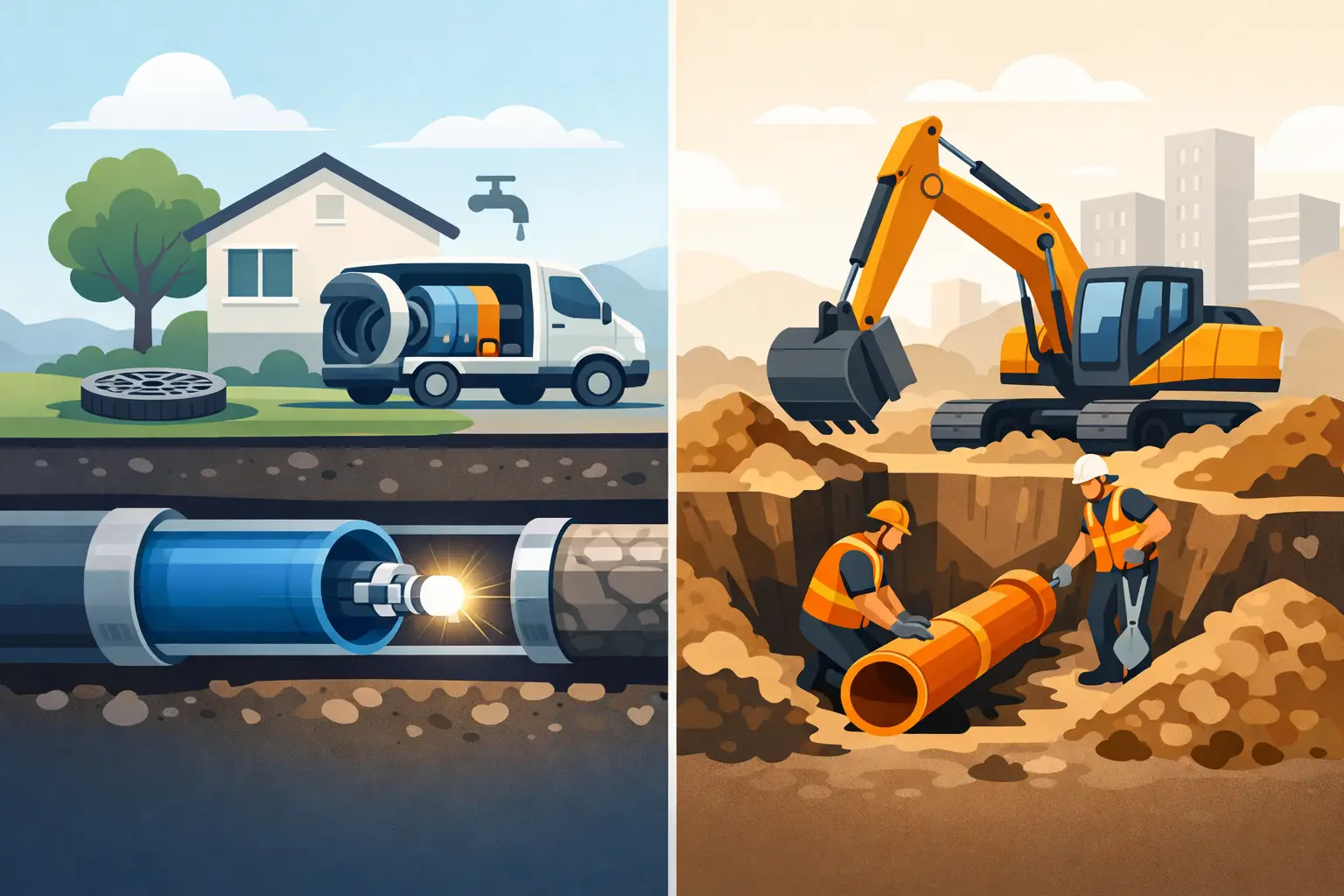
Drain relining is a trenchless repair method. A resin-impregnated liner is inserted into the damaged pipe and cured in place, creating a new lining within the existing drain. In many cases, this avoids the need to dig up patios, tarmac, block paving or landscaped areas.
Excavation repair is the traditional open-cut approach. The ground above the damaged drain is broken out, the faulty pipe section is exposed, removed and replaced, and the surface is then reinstated. It is more invasive, but it gives full access to the pipe and surrounding ground conditions.
Neither method is universally better. A competent contractor will look at pipe condition, access points, depth, alignment, collapse risk and surface reinstatement before recommending one over the other.
When drain relining is usually the better option
Relining works best where the drain is still broadly intact but has localised defects. That might include small cracks, leaking joints, minor root ingress or surface wear inside the pipe. If the drain has kept its shape and flow path, lining can restore serviceability without major excavation.
For homeowners, the main attraction is obvious – less disruption. If a drain runs beneath a driveway, extension, garage access, garden path or finished landscaping, avoiding excavation can save considerable mess and reinstatement work. Commercial sites benefit for the same reason. Less digging often means less impact on parking, access routes and day-to-day operations.
Relining can also be faster. Once the survey confirms suitability, patch lining or full lining may be completed far more quickly than organising a full dig, spoil removal and surface reinstatement. That matters when a landlord needs to reduce tenant disruption or a facilities team needs a repair completed with minimal downtime.
There is also a cost angle, although it is not as simple as saying relining is always cheaper. The drain repair itself may be competitive, but the real saving often comes from not having to break out and rebuild the surface above.
The limits of relining
Relining depends on the host pipe being structurally suitable. If the drain has fully collapsed, has significant deformation, suffers from severe displacement at joints, or has lost line and level, a liner may not be enough. It can repair many defects, but it cannot reliably rebuild a pipe that has already failed beyond a workable shape.
There is also a slight reduction in internal diameter because the liner sits inside the original pipe. In most domestic systems this is not a practical issue, but it still needs to be considered, especially where the drain was already undersized or suffers from poor falls and recurring blockage risk.
When excavation repair is the right call
Excavation becomes necessary when the drain is too badly damaged for trenchless methods to perform properly. A collapsed section is the clearest example. If the pipe has broken away, dropped, flattened or shifted enough to obstruct flow or lose structural integrity, digging down and replacing the damaged section is often the only dependable solution.
Excavation is also appropriate where the defect is linked to surrounding ground movement, poor bedding, voids or other external issues that need to be seen and corrected directly. In those cases, repairing the inside of the pipe alone does not deal with the wider cause of failure.
Sometimes access dictates the method as well. If there are no workable entry points for equipment, or if the pipe arrangement includes bends, junctions or condition issues that make lining impractical, excavation may be the more straightforward route.
For property managers and insurance-related works, excavation can provide a clearer route when a specific section needs full replacement and the condition must be verified visually. It is more disruptive, but it is also comprehensive.
The trade-off with excavation
The obvious drawback is disruption. Breaking out concrete, lifting paving, digging through gardens or accessing drains beneath outbuildings creates mess, noise and reinstatement work. The repair itself may be only part of the overall cost. Replacing surfacing, making good decorative finishes and managing access can push the total higher.
Timescales can also be longer, particularly if the drain is deep, close to other services, or in an area where traffic management, careful hand digging or staged reinstatement is required.
Cost, disruption and lifespan
This is usually where the decision becomes real for customers. They want to know what it will cost, how long it will take, and whether it will last.
In straightforward cases, relining can be more cost effective because it reduces labour, excavation and reinstatement. A drain beneath a garden lawn is one thing. A drain beneath printed concrete, block paving or a resin drive is another. Once surface reinstatement is factored in, no-dig repair can become very attractive.
That said, excavation is not automatically the expensive option in every case. If the damaged section is shallow, easy to reach and in an unmade area, digging out and replacing it may be simple and sensible. Relining becomes less compelling if the set-up is complex but the excavation is easy.
As for lifespan, both methods can provide a long-term repair when used correctly. The issue is not whether one sounds newer and one sounds older. The issue is whether the chosen method matches the condition of the drain. A well-installed liner in a suitable pipe can perform very well for years. A properly excavated and replaced section can do the same. Problems usually arise when the wrong repair is applied to the wrong defect.
How a proper survey decides the method
The decision should not be guesswork. A CCTV drain survey is what separates a temporary-looking fix from the correct repair specification.
The survey shows the type of defect, its exact location, how far the damage extends, and whether the pipe still has the shape and stability needed for relining. It also helps identify contributing issues such as root ingress, displaced joints, scale build-up, partial collapse or standing water caused by poor falls.
For domestic customers, this means clearer quoting and fewer surprises once work starts. For landlords, insurers and commercial clients, it means there is a record of condition to support the repair recommendation. A specialist contractor should be able to explain plainly why patch lining, full lining or excavation is being advised, and what outcome each option is expected to deliver.
Drain relining vs excavation repair for UK homes and sites
Across the North West, one of the biggest factors is surface disruption. Many drains run beneath driveways, extensions, yards and finished external areas where open excavation quickly becomes inconvenient and costly. In those settings, trenchless repair is often the least disruptive route if the pipe condition allows it.
Older properties can be more mixed. Some have ageing clay systems with isolated cracks that respond well to lining. Others have more advanced defects, poor alignment or repeated movement that point towards excavation and replacement. There is no honest one-size-fits-all answer.
At Watermains & Drains UK, this is where specialist assessment matters. The best result is usually the one that restores the drain properly while keeping disruption, reinstatement and repeat visits to a minimum.
So which repair should you choose?
If the drain is cracked, leaking or suffering minor root ingress but still structurally viable, relining is often the smart option. It is tidy, efficient and well suited to properties where preserving the surface matters. If the pipe has collapsed, moved significantly or needs surrounding ground issues addressed, excavation is normally the safer and more complete repair.
The real decision is not trenchless versus traditional as a matter of preference. It is whether the drain can be repaired from within, or whether it needs to be physically uncovered and rebuilt.
A good contractor will tell you when no-dig repair is appropriate and when it is not. That is the standard worth looking for, because the best drain repair is the one that leaves you with a sound system, a clear scope of work and no avoidable disruption.





