

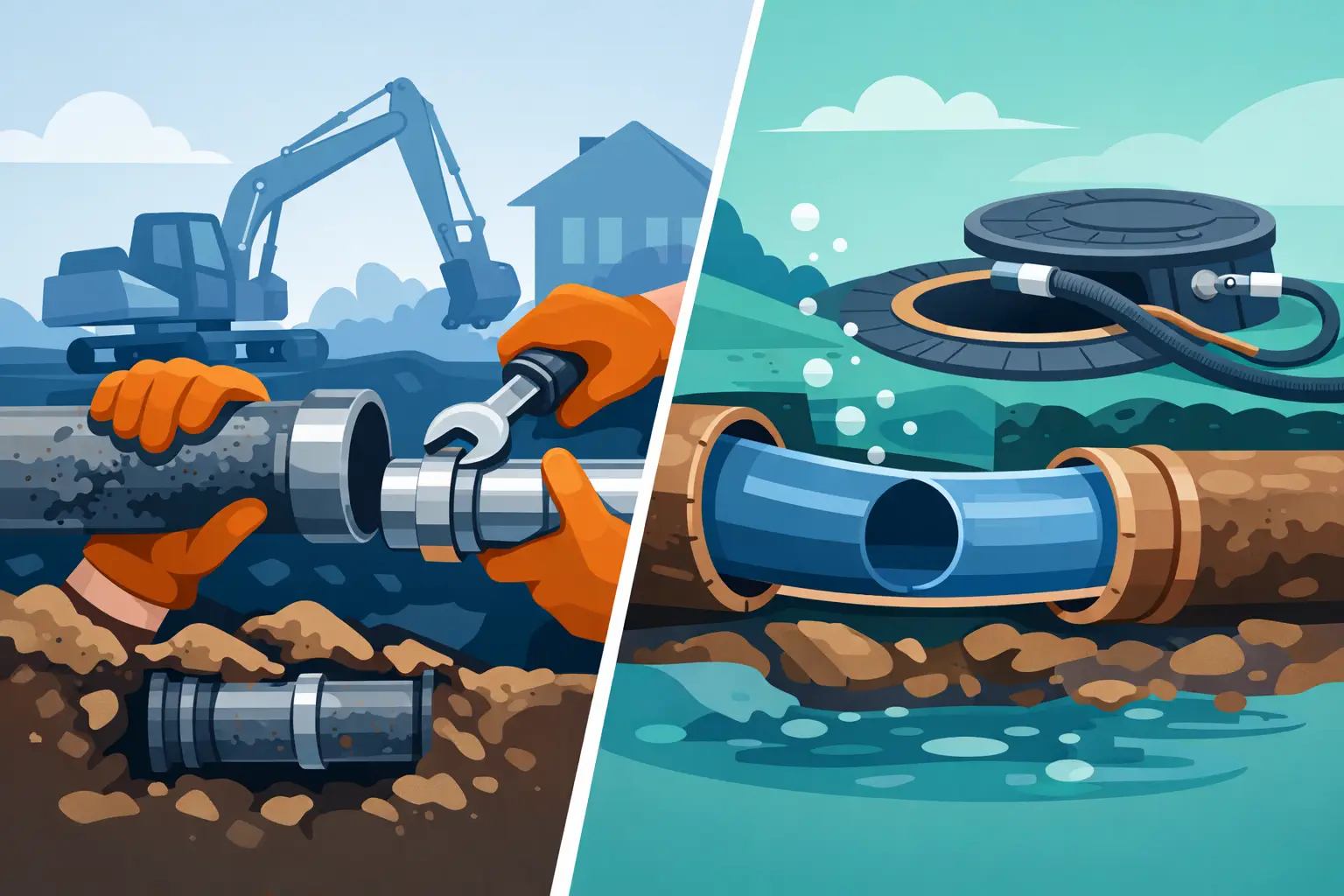
Lead Pipe Replacement vs Pipe Lining
If you have an ageing pipe under the drive, a poor-flowing supply, or concerns about lead entering your drinking water, the question often comes down to lead pipe replacement vs pipe lining. They are not interchangeable solutions, and choosing the wrong one can leave you paying for work that does not properly deal with the problem.
For many UK properties, especially older homes across the North West, the right answer depends on one simple point: are you dealing with a water supply pipe that contains lead, or a drain that is structurally damaged? Pipe lining has a place, but not as a fix for every buried pipe. Where a lead water supply is involved, full replacement is usually the proper route.
Lead pipe replacement vs pipe lining: the key difference
Lead pipe replacement means removing a lead supply pipe from service and installing a new replacement pipe, typically a modern plastic water supply pipe that meets current standards. That tackles the issue at source. You are no longer relying on an old lead pipe to deliver drinking water into the property.
Pipe lining is different. It is a trenchless repair method more commonly used on drains and some non-potable pipe systems where the existing pipe remains in place and a new lining is formed inside it. This can restore structural integrity and reduce leakage, but it does not make a lead water supply pipe an acceptable long-term solution for drinking water.
That distinction matters because homeowners sometimes hear “no-dig” and assume lining is a cleaner alternative to replacement in every case. In reality, lining and replacement solve different problems.
Why pipe lining is rarely the answer for lead water supply pipes
If the pipe bringing water into your home is made of lead, the main concern is not just a crack or localised defect. It is the pipe material itself. Even if you could line it, you would still be trying to extend the life of a pipe that is outdated and generally best removed from service.
For potable water supplies, compliance, water quality and future reliability all matter. A lined lead pipe is unlikely to be the preferred approach where a full new supply can be installed. If you are already opening the discussion because of health concerns, low pressure, poor condition or an insurance-related issue, replacement is usually the cleaner and more dependable decision.
This is especially true where the existing pipe is narrow, partially restricted, or has multiple defects. Lining works within the original pipe diameter, and in some applications that can reduce internal space further. A new water supply pipe gives you a fresh start and often a better long-term flow rate.
When pipe lining does make sense
Pipe lining is a very useful method, just usually not for lead water mains into domestic properties. It is commonly suited to damaged drains where excavation would mean lifting finished surfaces, disrupting access, or carrying out expensive reinstatement.
A cracked foul drain under a patio, a root-damaged section beneath a driveway, or a localised defect identified on a CCTV survey can often be repaired with lining or patch lining. In that situation, the goal is to restore the drain with minimal digging. The existing line is cleaned, inspected and repaired from within.
That is why some property owners get mixed messages. They may have heard that trenchless methods avoid disruption, which is true. But the trenchless method used for a damaged drain is not the same decision as how to deal with a lead drinking water supply.
When full replacement is the better option
In most lead pipe replacement jobs, full replacement is the proper recommendation because it removes the health concern, improves the system and aligns the property with modern practice. If the pipe is old enough to raise concerns about lead, it is often old enough to have issues with wear, scale build-up or reduced performance as well.
Replacement is also the stronger option if the pipe has repeated leaks, poor pressure, shallow burial, awkward previous repairs or uncertain routing. Rather than spending money trying to preserve an obsolete asset, you install a new compliant supply and know what you have.
For landlords and commercial property managers, this can be even more important. A replacement pipe gives clearer evidence of corrective action, helps avoid recurring tenant complaints and reduces the risk of future call-backs. It is easier to manage, easier to document and easier to stand behind.
Disruption: not always as bad as people expect
One reason some owners ask about lining is fear of excavation. They picture trenches through the garden, broken paving and a long, messy job. That can happen with traditional open-cut methods, but it is not the only way to replace a pipe.
Modern trenchless installation methods, including moling, allow a new water supply pipe to be installed with far less surface disruption than many people expect. In practical terms, that can mean small launch and receiving pits rather than a continuous trench across your driveway or lawn.
This is where specialist contractors make a real difference. A replacement does not have to mean major upheaval if the route and ground conditions are suitable for no-dig installation. For many homeowners, that changes the whole calculation. The choice is no longer between “cheap and tidy” lining or “messy and expensive” replacement. In the right setting, replacement can also be tidy, fast and cost effective.
Cost depends on what you are really fixing
On a simple price comparison, lining can appear attractive because it avoids extensive excavation. But cost should be measured against the right outcome. If you need to eliminate a lead supply pipe, then lining a different type of defect-repair method into the conversation can create a false comparison.
A cheaper job is not better value if it does not resolve the core issue. If the concern is lead in the supply, then only replacement properly removes that risk. If the concern is a cracked drain under a finished surface, then lining may well be the most economical solution because it avoids unnecessary digging.
The sensible way to assess cost is to ask what result you need five, ten and twenty years from now. A correctly installed new water supply pipe, backed by recognised approvals and a workmanship guarantee, is often the most economical answer over the life of the asset.
Compliance, approvals and peace of mind
With any buried pipework, but especially drinking water supplies, standards matter. Homeowners may only think about getting the water back on. Landlords, facilities teams and insurers usually need more than that. They want to know the work has been carried out properly, by the right contractor, with the right approvals.
That is another reason lead pipe replacement is usually preferred over trying to adapt an outdated supply. A new installation can be designed and installed to current requirements, pressure-tested and signed off correctly. That gives confidence not only in the pipe itself but in the paperwork behind it.
For customers balancing speed with compliance, that matters as much as the physical repair. Watermains & Drains UK approaches these projects as specialist infrastructure works, not as general plumbing jobs, which is exactly what older underground pipe issues require.
How to decide what your property needs
The first step is identifying what type of pipe you are dealing with. If it is your incoming water supply and there is a suspicion of lead, replacement should be the starting point for discussion. If it is a drain with a localised crack or joint failure, lining may be entirely appropriate.
The second step is understanding condition and route. A contractor should assess where the pipe runs, what surfaces are affected, whether trenchless methods are suitable and whether there are wider defects that make repair uneconomical.
The third step is to think beyond the immediate fault. If you own an older property and the supply pipe is original, this is often the moment to solve the problem properly rather than carry out another temporary-minded fix.
The better question to ask
Rather than asking whether lining is better than replacement, ask which method actually fits the pipe, the use and the long-term outcome you need. For lead drinking water pipes, replacement is usually the correct answer because it removes the material entirely and gives you a modern compliant supply. For damaged drains, lining can be an excellent no-dig repair.
That is why a proper site assessment matters. The right contractor should not force every problem into one method. They should explain what the pipe does, what condition it is in, what regulations apply and how to get the best result with the least disruption.
If you are weighing up lead pipe replacement vs pipe lining, the clearest path is usually the one that fixes the actual problem, not the one that only sounds less intrusive. Where lead is involved, a clean new supply pipe is very often the straightforward answer people wish they had chosen first.





