Drain Unblocking Methods for Landlords
A blocked kitchen sink on a Friday evening is inconvenient. A backed-up soil pipe in a tenanted property is a different matter altogether. For landlords, drain unblocking methods for landlords need to be practical, fast and proportionate – not just a guess with a bottle of chemicals and crossed fingers.
The right response depends on what is blocked, where it is blocked and whether the issue sits inside the property or in the external drainage run. In some cases, a simple manual clear is enough. In others, the blockage is only the symptom, and the real problem is a collapsed pipe, root ingress or poor drain condition that will keep causing call-backs until it is properly identified.
Choosing the right drain unblocking method
Landlords are often balancing three things at once: tenant wellbeing, property damage risk and cost control. That is why the first step is not picking a tool. It is working out the likely cause.
A slow-draining bath or basin usually points to hair, soap residue or localised build-up in a trap or short waste run. A kitchen sink that repeatedly backs up is more likely to involve grease, fats and food waste. If a toilet is gurgling, backing up or causing water to rise elsewhere, the blockage may be further down the foul line. When outside gullies overflow during normal use, the problem is often in the underground drain rather than in a single appliance connection.
That distinction matters because the best method for an internal waste pipe is not necessarily the right method for an external drain. Using the wrong approach can waste time, create mess and sometimes make the blockage harder to clear.
Drain unblocking methods for landlords: what works where
Manual clearing for minor internal blockages
For straightforward sink, bath or basin issues, manual clearing is often the first and most cost-effective option. Removing and cleaning the trap, using a plunger, or carefully working through a small hand auger can solve many minor blockages without invasive work.
This is generally suitable where the blockage is close to the fixture and there is no sign of external overflow, foul odour from multiple outlets, or wastewater backing up elsewhere. For landlords with managing agents or maintenance teams, this can be a sensible first response if carried out safely and hygienically.
The trade-off is that manual methods are limited. They do not tell you much about pipe condition, and they are less effective where grease has coated the line over a longer distance or where the obstruction is deeper in the run.
Mechanical rodding for accessible drains
Drain rods remain useful for certain external blockages, especially where there is direct access through inspection chambers. They can break through soft obstructions such as paper build-up, light silt or organic matter in a straightforward run.
Used properly, rodding is a practical method. Used badly, it can compact the blockage, dislodge joints in older pipework or leave part of the obstruction behind. It is also less reliable where the line has multiple bends, where there is a more stubborn build-up, or where a structural defect is causing recurring issues.
For landlords, rodding makes sense when the blockage appears isolated and access is clear. It is less attractive as a repeat solution for the same drain every few months.
High-pressure water jetting for stubborn build-up
Where grease, scale, wipes, silt or debris have built up through the line, high-pressure water jetting is usually the more effective option. This method clears the obstruction and cleans the pipe wall far more thoroughly than a basic poke through the centre of the blockage.
That is why jetting is often the preferred approach for external drains serving rented houses, flats and mixed-use premises. It is particularly useful when the symptoms suggest a longer section of pipe has narrowed over time rather than being blocked by one isolated item.
Jetting is not automatically the answer in every case. If the drain is damaged, displaced or partially collapsed, aggressive cleaning alone will not fix the reason it keeps blocking. In those cases, a survey after clearance is often the sensible next step.
CCTV drain surveys when the problem keeps returning
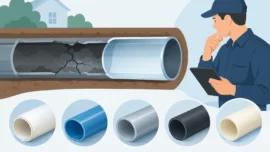
If tenants report the same drainage issue more than once, a CCTV drain survey stops the guesswork. A camera inspection shows whether the problem is caused by roots, fractures, poor falls, scale build-up, displaced joints or a localised defect.
For landlords, this is often the point where reactive maintenance becomes planned maintenance. Rather than paying for repeated call-outs, you get evidence of what is happening in the line and what level of repair is actually needed.
This can also help where responsibility is unclear, especially in shared drainage situations or managed blocks. A proper survey provides a clear basis for deciding the next step instead of relying on assumptions from different parties.
Repair methods after clearance
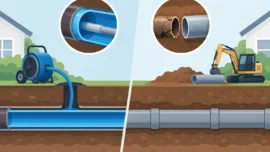
Sometimes the blockage is only the visible part of the issue. If a survey shows a localised defect, patch lining can often repair the pipe internally without excavation. Where there is more extensive damage, a full repair or replacement may be required.
This is where method matters beyond unblocking. A contractor with no-dig capability can often complete repair work with far less disruption to paving, gardens or access routes than traditional excavation-led methods. For landlords, that can mean shorter downtime, tidier completion and fewer complaints from occupants.
What landlords should avoid
Chemical drain cleaners are widely marketed as an easy fix, but they are rarely the best answer for rental property drainage issues. They may shift a minor build-up in a waste pipe, but they often do little for a substantial blockage and can create handling risks for tenants and contractors alike.
There is also the wider management issue. If a tenant has already used multiple off-the-shelf products before reporting the problem, the pipework may contain standing chemicals by the time anyone attends. That is not a reason to panic, but it is a reason to use a more controlled and professional approach.
Repeatedly relying on the cheapest short-term fix is another false economy. If the same drain keeps blocking, the question is no longer how to clear it. The question is why it is happening.
Tenant-caused blockage or underlying drain problem?
This is a common landlord concern, and the answer is not always straightforward. Sanitary products, wipes, excessive toilet paper, fats, oils and food waste do cause many blockages. Equally, long-standing pipe defects, root ingress and poor historic drainage layout can produce the same symptoms.
In practice, the fairest approach is evidence-led. If the blockage is a one-off and caused by inappropriate disposal, that points one way. If the line shows structural defects or chronic build-up linked to pipe condition, that points another. A good drainage contractor should explain what they found in plain terms rather than pushing a vague diagnosis.
For managed properties, that clarity matters. It supports communication with tenants, helps prevent disputes and gives you a better record of property condition over time.
Speed matters, but so does method
Emergency attendance is important when wastewater is backing up or a toilet is unusable. But speed on its own is not enough. The right contractor should be able to decide quickly whether the issue needs a basic clear, jetting, a CCTV survey or follow-on repair work.
That is the advantage of using a specialist contractor rather than treating drainage as a generic maintenance job. You want someone who can resolve the immediate problem, identify any deeper defect and recommend the least disruptive repair route if one is needed. For landlords and property managers, that means less repeat attendance and more certainty over the next step.
Providers such as Watermains & Drains UK work this way because drainage issues rarely sit in neat boxes. A blocked drain can turn out to be a repair job. A recurring repair issue can turn out to be a layout or condition issue. The method has to fit the asset, not the other way round.
A sensible approach for rental properties
The most effective drain unblocking methods for landlords follow a simple logic. Start with the symptoms, confirm the likely blockage location, use the least invasive effective method, and investigate further when the same issue returns. That keeps costs controlled without ignoring the bigger risk.
For a small internal blockage, manual clearing may be enough. For a fouled external run, jetting is often the better choice. For repeated incidents, CCTV inspection is usually the point where guesswork should stop. And where defects are identified, modern repair methods can often put the problem right with far less disruption than many landlords expect.
When drainage problems are handled properly, tenants get a quicker resolution, properties stay in better condition and landlords avoid paying twice for the same issue. That is usually the difference between a cheap fix and a useful one.