

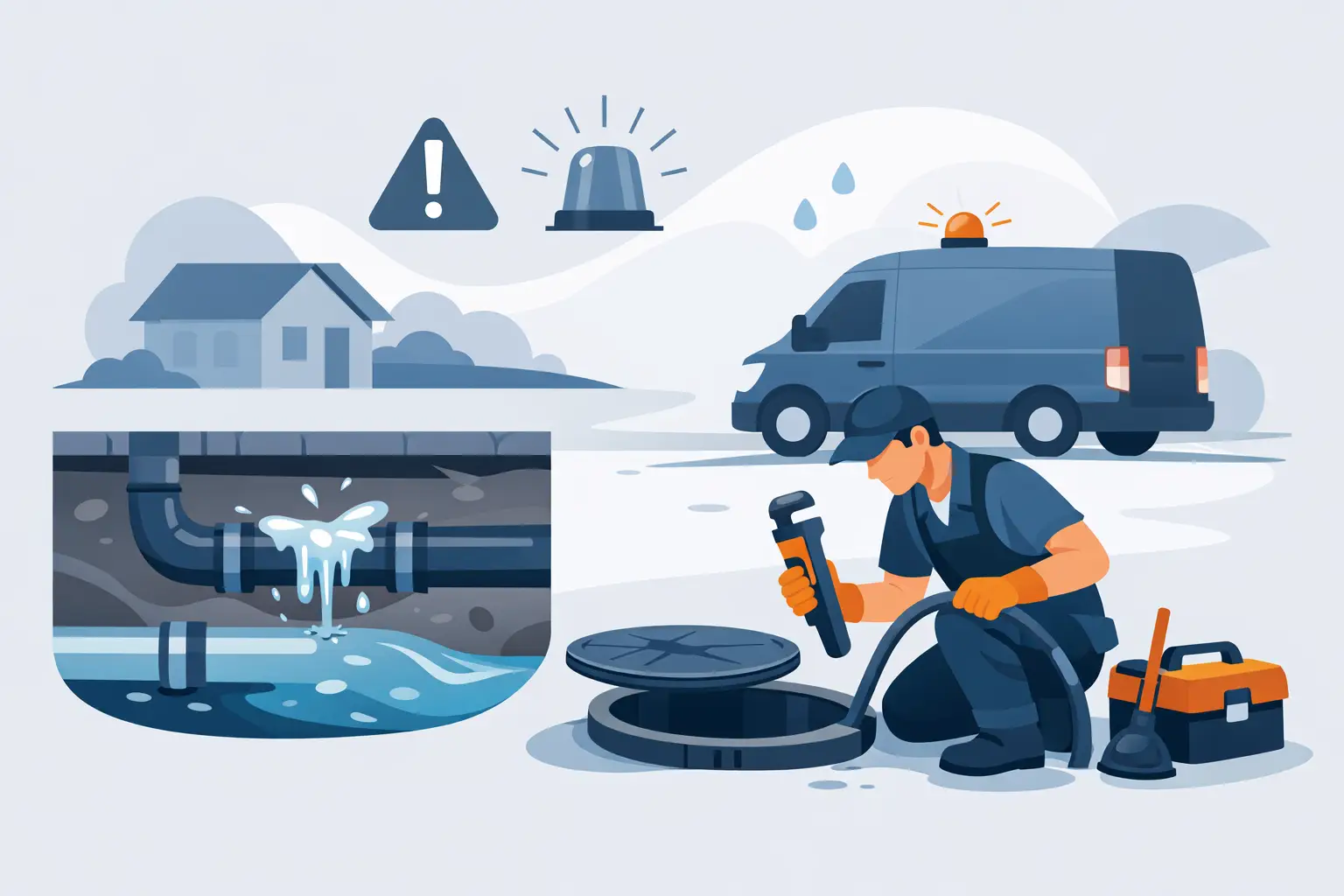
A Practical Guide to Emergency Drain Callouts
A kitchen sink that will not empty is frustrating. A toilet backing up, foul smells rising from outside drains, or wastewater coming back into the property is a different matter entirely. This guide to emergency drain callouts is for homeowners, landlords and property managers who need to act quickly, protect the property, and understand what happens next.
Drain problems rarely arrive at a convenient time. They interrupt households, affect tenants, create hygiene risks and, in commercial settings, can stop normal operations altogether. The right response is not just about getting the blockage cleared. It is about making the area safe, identifying the cause, and choosing a repair that avoids unnecessary digging, repeat visits and further disruption.
When an emergency drain callout is actually an emergency
Not every slow drain needs an immediate visit, but some situations do. If wastewater is backing up into sinks, showers, gullies or toilets, that usually needs urgent attention. The same applies where there is a risk to health, damage to flooring or walls, or loss of access to essential facilities such as the only toilet in the property.
For landlords and commercial sites, the threshold is often lower because tenant welfare, business continuity and compliance come into play. A partially blocked drain at a tenanted property can quickly turn into an out-of-hours issue if ignored. At retail, hospitality or managed sites, even a localised blockage can affect staff, customers and trading.
There is also a difference between a nuisance and a developing structural problem. Repeated blockages, standing water around inspection chambers, and persistent odours can point to cracked pipework, displaced joints or root ingress rather than a one-off obstruction. In those cases, clearing the line is only part of the answer.
What to do before the engineer arrives
The first priority is limiting damage and keeping people safe. Stop using the affected sinks, toilets or appliances connected to the drainage system if wastewater is not clearing properly. If the problem is isolated to one fixture, avoid using nearby fittings until the source is confirmed, because shared branch lines can cause water to reappear elsewhere.
If there is internal flooding, protect nearby belongings and keep children or pets away from contaminated areas. Where safe to do so, note what is happening. Is the issue affecting one appliance or several? Is water rising in the inspection chamber outside? Did the problem begin after heavy rain, or has it built up over several days? These details help the attending engineer decide whether the likely cause is a local blockage, a downstream obstruction or a defect in the drain itself.
It is usually best not to keep trying chemical drain products, especially if several attempts have already failed. They rarely resolve a serious obstruction and can make conditions unpleasant or unsafe for the operative attending site. DIY rods can help in simple cases, but they also carry a risk of worsening pipe damage if the line has collapsed or joints have opened.
What a guide to emergency drain callouts should tell you about the visit
A proper emergency response should be practical and methodical. The aim is to restore function quickly, but also to find out why the drain failed in the first place. That matters because many repeat callouts happen when the immediate blockage is removed but the underlying defect is left untouched.
On arrival, the engineer will usually ask where the issue started, what facilities are affected, and whether there is any history of previous blockages or repairs. From there, the first checks are often simple but important – inspection chambers, flow levels, signs of surcharging, and whether the obstruction appears local or further along the line.
If the problem is a straightforward blockage caused by wipes, grease, scale build-up or debris, mechanical clearing or high-pressure water jetting may be enough. Jetting is effective because it does more than punch a hole through the blockage. It cleans the pipe wall and helps remove residue that would otherwise allow material to build up again quickly.
Where the symptoms suggest damage to the drain, a CCTV survey may be the next step. This is especially useful after the line has been opened up, because it shows whether roots, fractures, displaced joints or deformed sections are contributing to the issue. For landlords, facilities teams and insurance-related claims, CCTV evidence can also support the repair recommendation with something more concrete than guesswork.
Common causes behind urgent drain callouts
In domestic properties, the usual causes are grease in kitchen lines, wipes and sanitary products in toilets, and general build-up in older pipework. Outside, leaves, silt and root ingress are common, particularly where drains run through established gardens or older boundaries.
In rented and commercial buildings, misuse plays a part, but so does volume. A drain serving several flats, washrooms or food preparation areas is under more strain and tends to reveal weaknesses faster. Heavy use does not always mean the system is badly designed, but it does mean maintenance and early intervention matter more.
Weather can be a factor too. Heavy rainfall can expose defects that have been manageable in dry conditions. A partially collapsed section, for example, may cope with ordinary flow but fail when the system is under additional pressure. That is why some “sudden” emergencies have actually been developing for months.
Clearing the blockage is one job. Preventing the next one is another.
This is where experience matters. A contractor focused only on the fastest fix may get water moving again and leave. Sometimes that is all that is required. Often it is not.
If the drain has been blocked before, if the property is older, or if there are signs of structural failure, a more complete assessment is sensible. The trade-off is straightforward. A basic callout can be the lowest immediate cost, but it may not be the most cost-effective route if the same issue returns in weeks rather than years.
For damaged drains, modern repair methods can make a major difference to cost and disruption. Patch lining and other no-dig approaches can often repair localised defects without excavating driveways, paths or landscaped areas. That is particularly valuable where access is tight or reinstatement would otherwise become the expensive part of the job. Where excavation is genuinely needed, it should be because it is the right method, not the only method the contractor offers.
Choosing the right contractor for emergency drain callouts
In an urgent situation, people understandably want the first available help. Speed matters, but so does competence. Drainage work can move from simple unblocking to investigation, repair and reinstatement very quickly, so it helps to use a specialist contractor with the equipment and approvals to take the job further if needed.
Look for clear communication about response times, likely process and what happens if a blockage turns out to be a damaged pipe. For homeowners, that means straightforward advice and a tidy finish. For landlords and commercial clients, it also means documentation, reliable attendance, and a contractor who understands that disruption to tenants or operations has a cost of its own.
Insurance cover, recognised accreditations and workmanship guarantees are not small details. They are part of risk management. If a repair is needed, you want confidence that the method used is appropriate, compliant and built to last. This is one reason many customers prefer specialist civil and drainage contractors over general plumbing callout services for anything beyond the most basic internal blockage.
How to reduce the chances of another emergency
There is no way to remove all risk, particularly in ageing drainage systems, but prevention is usually cheaper than repeat emergency attendance. Households should avoid flushing wipes, fats and food waste that solidifies in pipework. Landlords and facilities teams should take recurring reports seriously, even if they seem minor. A pattern of slow drainage, smells or intermittent gurgling often means the system is warning you before it fails properly.
Properties with a known history of drainage issues may benefit from planned CCTV inspection or maintenance jetting, especially before high-demand periods or where there are trees close to the line. That is not necessary for every building. It depends on age, usage, previous repairs and how disruptive a failure would be if it happened tomorrow rather than next month.
For customers across the North West, that practical, problem-first approach is what matters most. Watermains & Drains UK works as a specialist contractor, not a general trades service, which means the emergency visit can lead directly into survey, no-dig repair or full reinstatement where required, with minimal disruption to the property.
An emergency drain callout is always easier to handle when the response is calm, informed and geared towards a lasting fix. If you know what to expect, ask the right questions and act early when warning signs appear, you give yourself the best chance of turning a messy problem into a straightforward repair.





