

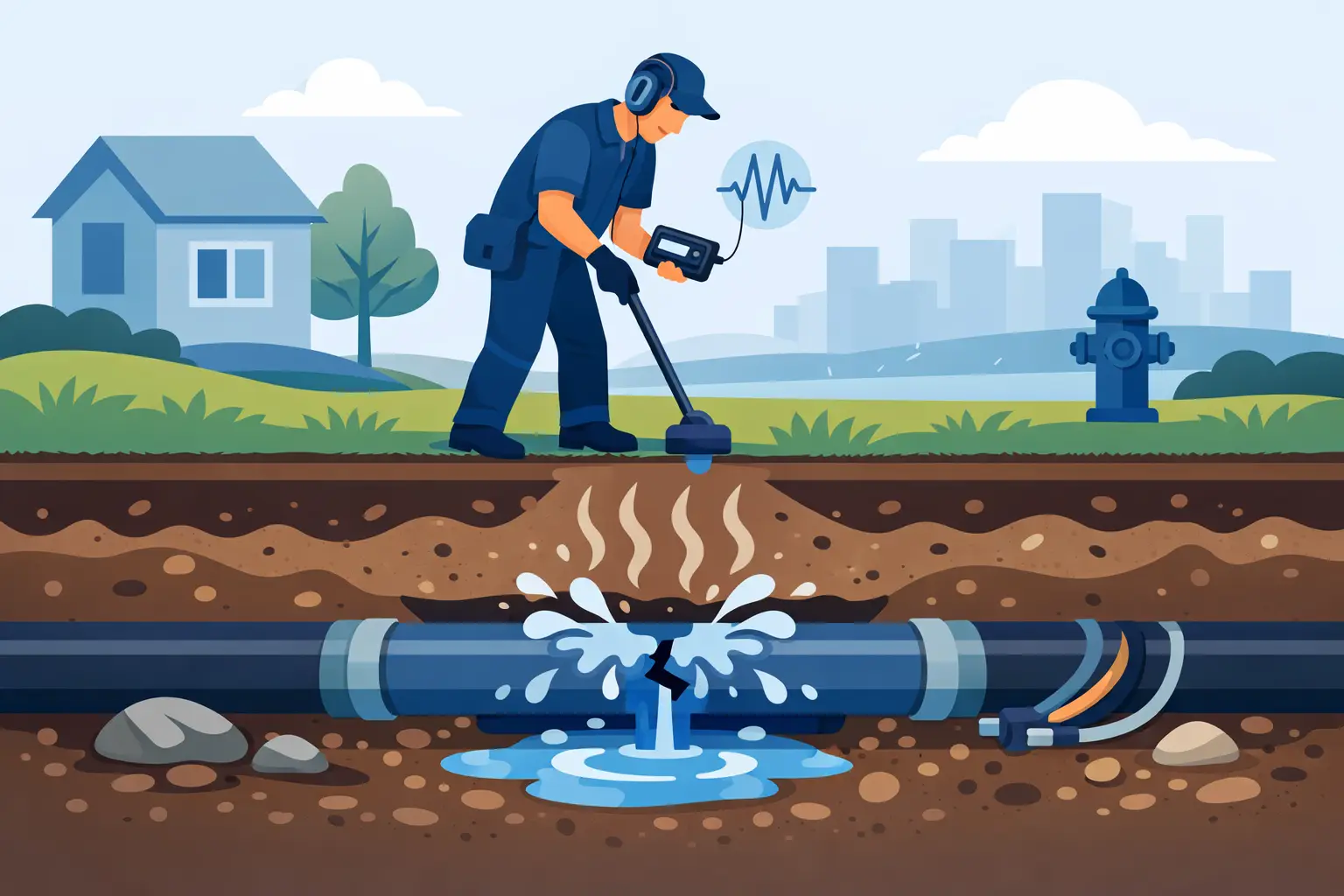
How to Find Hidden Water Leak Underground
A water bill that suddenly jumps, a patch of lawn that never seems to dry out, or a drop in pressure at the kitchen tap often points to the same problem – you may need to find hidden water leak underground before it causes bigger damage. In many properties, the leak is not inside the house at all. It is somewhere on the supply pipe between the boundary and the building, which means the warning signs can be easy to miss until the ground is already saturated.
Underground leaks are rarely obvious at first. Water can travel through soil, appear several metres away from the actual fault, or disappear into drainage runs and make the problem look smaller than it is. That is why a sensible approach matters. The aim is not just to spot wet ground. It is to work out whether the leak is on your private supply, how urgent it is, and what method will locate it with the least disruption.
How to find hidden water leak underground without guesswork
The first step is to confirm whether water is escaping when no one is using the supply. If your property has an internal stop tap and an external water meter, turn off all taps, appliances, and any systems that draw water, including dishwashers and outside taps. Then check the meter. If the dial or indicator is still moving, there is a strong chance water is being lost somewhere on the line.
This test is useful, but it does not tell you exactly where the problem sits. A moving meter could point to an internal leak, a faulty toilet valve, or an underground supply pipe issue. To narrow it down, turn off the internal stop tap that isolates the property. If the meter continues to move after that, the leak is likely between the meter and the house. That usually means the underground supply pipe is at fault.
For homeowners and landlords, that distinction matters because it affects who is responsible and how the repair is planned. In many cases, the private section of pipework is the owner’s responsibility, not the water authority’s.
Signs of a hidden underground water leak
Not every underground leak creates a dramatic puddle. On some sites, especially where the ground drains freely, the signs are subtle. You may notice one area of grass growing faster than the rest, soft ground during dry weather, a driveway edge that stays damp, or a slight hollow forming where the soil has been washed away below the surface.
Inside the property, the signs can be less direct. Lower water pressure, air in the pipework, discoloured water after disturbance, or a boiler topping up more often than expected can all trigger concern, although these symptoms do not always mean the underground supply is leaking. Older properties with ageing MDPE or lead pipework can also show intermittent issues before a leak fully opens up.
Commercial sites and managed properties often present the problem differently. The first sign may be an unexplained rise in usage, water pooling near service yards, or complaints from tenants about poor pressure at peak times. In those cases, a fast diagnosis helps avoid wasted water, surface damage, and unnecessary disruption to occupants.
What can make leaks hard to pinpoint
The depth of the pipe, the type of soil, nearby drains, and surface finishes all affect detection. A leak under tarmac behaves differently from one under a front garden. Water beneath paving may run along the pipe trench and appear some distance away. On properties with drainage nearby, escaping water may disappear into a broken drain and leave little visible evidence at ground level.
That is why digging where the wet patch appears is often the wrong first move. It can increase costs, create avoidable reinstatement work, and still miss the actual fault.
Professional methods used to find hidden water leak underground
Specialist leak detection is about reducing uncertainty before excavation starts. Rather than opening up large areas, contractors use a combination of testing and listening equipment to trace the pipe route and identify the likely leak position.
Acoustic leak detection is one of the most common methods. Pressurised water escaping from a pipe creates sound and vibration. Sensitive listening devices can pick up that noise through the ground or at accessible fittings. This works well in many situations, but results depend on pipe material, depth, background noise, and how severe the leak is. Plastic pipes, for example, can be harder to trace acoustically than metal ones.
Tracer gas testing can be useful when acoustic methods are less reliable. A harmless gas is introduced into the pipe, and specialist sensors detect where it rises through the ground. This is particularly effective on deeper or non-metallic supply pipes, although access and site conditions still matter.
Ground microphones, correlators, and pressure tests may also be used depending on the layout. On more complex sites, there is no single magic tool. Good leak detection comes from choosing the right method for the pipe, the surface above it, and the level of access available.
Why the cheapest approach can cost more
It is understandable to want a quick dig-and-fix, especially when water is being lost daily. But blind excavation is often where costs start climbing. You may open the wrong area, damage nearby services, or end up disturbing a driveway or landscaped frontage unnecessarily.
A proper investigation usually saves time overall because it shortens the repair area and improves the chance of a first-time fix. It also helps when planning reinstatement, especially on block paving, patterned concrete, resin finishes, or commercial yards where tidy completion matters.
When repair is not the best option
Sometimes the leak itself is only part of the story. If the supply pipe is old, undersized, made of lead, or has failed more than once, repairing one section may not be the most cost-effective answer. In those cases, a full replacement can be the better long-term solution.
This is common on older properties across the North West where original supply pipes have reached the end of their serviceable life. Replacing the line can improve flow and pressure as well as resolve the leak. It also removes uncertainty about the rest of the run failing later.
Modern trenchless installation methods, including moling, make replacement far less disruptive than many people expect. Instead of digging a continuous trench across a driveway or garden, the new pipe can often be installed through small launch and reception pits. For the property owner, that usually means faster completion, less mess, and much simpler reinstatement.
What to do if you suspect an underground leak
Start by checking whether the issue is active and whether it affects the private supply line. Take a meter reading, stop all water use, and test again after a short interval. If you can safely isolate the internal supply, use that to help determine whether the leak is outside the building.
Once you have a strong indication that the underground pipe is leaking, avoid unnecessary digging. If the leak is severe, visible at the surface, or affecting access routes, isolate the supply if possible and arrange specialist attendance promptly. For landlords and commercial managers, acting early helps reduce tenant disruption and may limit damage to surfaces and nearby structures.
If the property has older pipework, ask not only how the leak will be repaired, but whether a replacement would be more sensible. A low-price patch repair can be false economy if the line is already deteriorating.
Choosing the right contractor
For underground leaks, general plumbing experience is not always enough. You need a contractor who deals with external water supply pipes, understands trace-and-access issues, and can manage both detection and repair. That includes safe excavation where needed, practical reinstatement, and the option of trenchless replacement when excavation would be disruptive.
Accreditations and assurances matter here. Water industry approval, suitable insurance, and a clear workmanship guarantee all reduce risk for homeowners, landlords, and facilities teams. So does a contractor’s ability to explain the likely route of the pipe, the detection method being used, and whether repair or replacement is the better outcome.
Where a supply pipe crosses driveways, landscaped areas, or commercial frontage, experience with no-dig methods is a genuine advantage. It can mean the difference between a contained job and a week of unnecessary upheaval. On urgent cases in the North West, Watermains & Drains UK is often called for exactly that reason – specialist diagnosis, tidy delivery, and practical repair options without overcomplicating the job.
A hidden underground leak is one of those problems that gets more expensive the longer it is left, but it does not need a rushed or destructive response. The right starting point is to confirm the leak, narrow down where it sits, and bring in a specialist who can locate the fault with the least disruption possible.





