

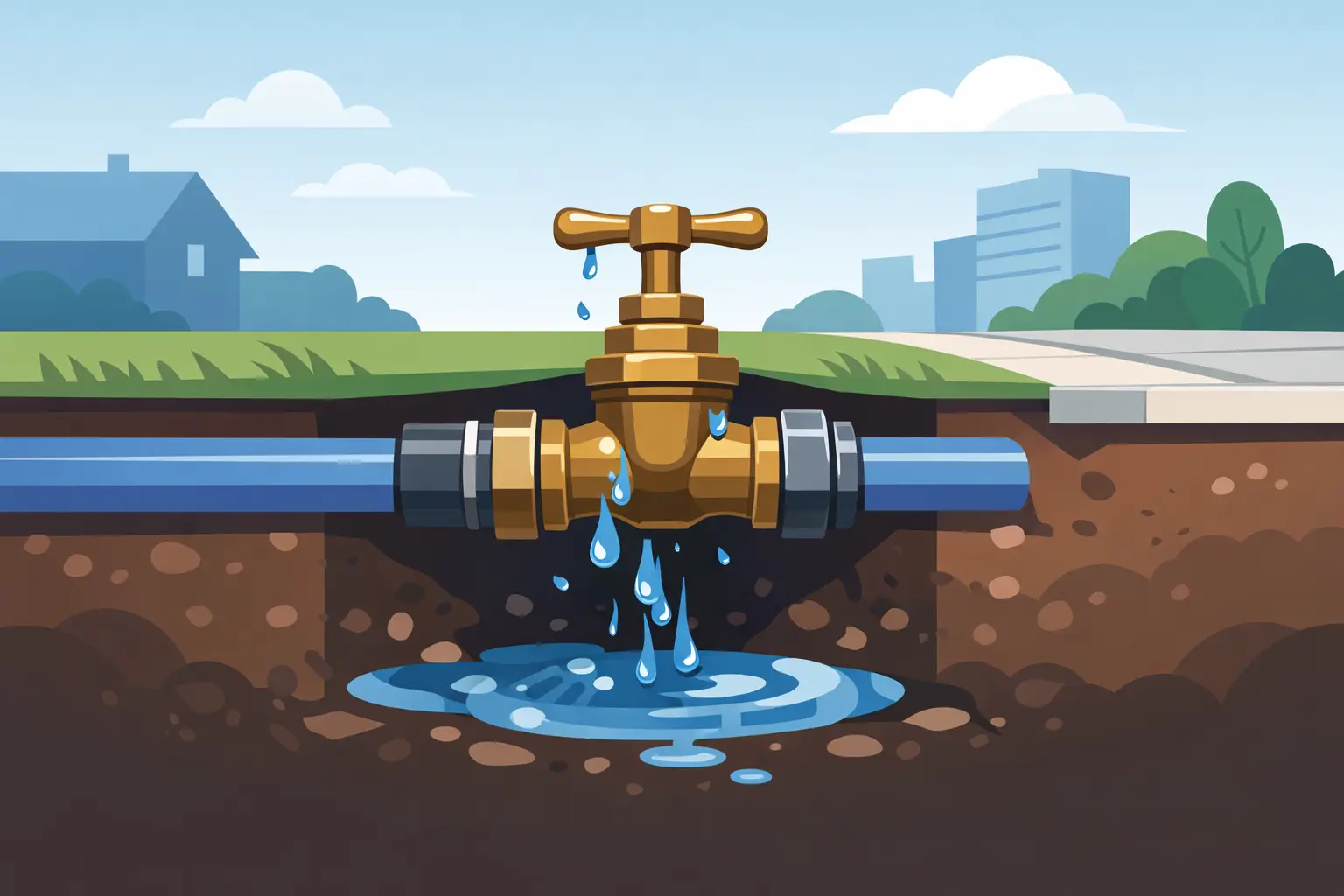
Outside stop tap leaking – what to do
A leaking stop tap outside usually shows up at the worst moment – a wet patch that never dries, water pooling around the boundary box, or a lid that is suddenly harder to lift because the chamber is full. If you are searching for outside stop tap leaking what to do, the first priority is simple: work out whether it is a minor issue in the chamber or a leak that could affect your supply pipe, water bill, or surrounding ground.
In many properties, the outside stop tap sits in a small underground box near the pavement, driveway, or front boundary. It is there so the water supply to the property can be isolated without entering the house. When that chamber is wet, people often assume the stop tap itself has failed. Sometimes that is true. Just as often, the water is coming from a loose gland, a worn fitting, a damaged communication pipe, groundwater entering the box, or a leak further along the supply line.
Outside stop tap leaking – what to check first
Start with a careful look rather than forcing anything. Lift the stop tap cover if it is safe to do so and check whether the water is clean and flowing, or whether the chamber is simply damp. A chamber that is half full after heavy rain may not point to a mains leak at all. A chamber that refills quickly with clear moving water is more serious.
If you can see the tap body, look for water coming directly from the spindle area, around joints, or from the incoming or outgoing pipework. If the leak appears only when the tap is turned, the gland or internal seal may be worn. If water is rising from below the fitting or through the side of the chamber, the problem may sit on the pipe rather than the tap itself.
Do not use excessive force on an outside stop tap. Older fittings can seize, and turning them too hard may cause a larger failure. That is especially true on older properties with ageing metal pipework or where the chamber has been undisturbed for years.
Can you still use the water supply?
That depends on the leak and where it is coming from. A slight weep around the spindle may not stop the house from functioning in the short term, but it still needs attention. A steady flow into the chamber, a noticeable drop in pressure indoors, or ground saturation around the boundary should be treated as urgent.
If the leak is on your private supply pipe after the boundary connection, continuing to use water can make the problem worse and increase waste. If the tap chamber is overflowing towards a path, driveway, or road edge, there is also a safety issue to consider.
For landlords and commercial sites, the balance is often between keeping supply available and limiting further damage. In those cases, a proper inspection matters more than guesswork. The right contractor can determine whether the issue sits with the stop tap itself, the supply pipe, or the water authority side of the connection.
What causes an outside stop tap to leak?
The most common causes are wear, corrosion, movement in the ground, and damage from age. External fittings are exposed to cold weather, soil moisture, and years of use or non-use. If the tap has not been operated for a long time, seals can deteriorate and threads can bind.
On older properties, the chamber may also contain outdated materials, including lead or ageing metal pipe sections. In that situation, the visible leak is sometimes only part of the problem. A stop tap replacement can expose a supply pipe that is already at the end of its serviceable life.
There is also the question of ownership. Some outside stop taps serve as the boundary between the water undertaker’s pipework and the private supply to the property. That means responsibility can vary depending on exactly where the leak sits. The only safe assumption is not to dig or dismantle anything until the source has been properly identified.
Outside stop tap leaking what to do if it is urgent
If water is flowing continuously, the chamber is filling quickly, or you are losing pressure inside the building, treat it as an urgent leak. Keep people away from slippery surfaces around the chamber and avoid attempting a repair with improvised tools.
Where possible, check whether the internal stop tap can shut off water to the property. That will not stop every external leak, but it can help reduce flow in some scenarios. If the internal tap also sticks or fails to operate, leave it alone rather than risking a second fault.
Take a few clear photos of the chamber and note any changes in water pressure, noise, or visible pooling. That helps a specialist assess likely causes before attending. For homeowners, this can speed up diagnosis. For landlords and property managers, it also creates a record if the issue affects tenants, insurers, or shared access areas.
When it is a simple repair and when it is not
A straightforward repair is usually limited to the fitting itself – for example, tightening or repacking a gland, replacing a faulty stop tap, or renewing accessible joints in the chamber. If the surrounding pipework is sound and the chamber is in reasonable condition, that can be a quick job.
The job becomes more involved when the leak is linked to a damaged supply pipe, poor historic repairs, corroded metalwork, or restricted access. A tap chamber at the edge of a driveway or beneath hardstanding may need careful excavation and reinstatement. If the supply pipe is old lead or failing MDPE connections are found, it can make more sense to repair the leak and upgrade the line properly rather than return to the same issue later.
This is where specialist contractors differ from general plumbing call-outs. External water supply leaks often need excavation knowledge, utility-safe working, and a clear understanding of responsibility at the property boundary. If the repair sits close to paved areas, trenchless methods can also reduce disruption compared with traditional digging.
Why not to ignore a leaking boundary stop tap
Even a modest leak can lead to bigger costs over time. Constant water loss may affect bills if the leak is on the private side. Saturated ground can undermine paving, soften sub-bases beneath driveways, and create recurring wet patches that are difficult to trace later. In winter, standing water around a chamber also increases the chance of freezing and further damage.
There is a practical issue too. If your outside stop tap is leaking and then fails completely, isolating the property in an emergency becomes much harder. That matters during internal plumbing leaks, vacant property periods, and tenant changeovers.
For commercial premises and managed residential sites, delays can also turn a small external defect into a service disruption issue. Access routes, customer entrances, and landscaped areas are not places where you want water escaping unchecked.
Who should you call?
If the leak appears to be on the public side of the connection, your water supplier may need to be involved. If it is on the private supply side, you will usually need a specialist water main or underground supply pipe contractor rather than a general handyman.
The benefit of using a contractor experienced in external water infrastructure is that they can identify the fault properly, carry out compliant repairs, and advise if replacement is the better long-term option. That is particularly useful on older homes, rental stock, and sites where reinstatement quality matters as much as the repair itself.
For properties across the North West, Watermains & Drains UK deals with external water supply leaks, stop tap issues, supply pipe replacement, and low-disruption installation methods. That matters when the fault is not just a leaking fitting, but part of a larger underground water supply problem.
What to expect from a proper repair visit
A competent repair should begin with locating the exact source of the leak, not just replacing the most obvious component. The contractor may inspect the chamber, test the fitting, assess the incoming and outgoing pipework, and check whether there are signs of further leakage along the line.
If excavation is required, the method should match the site. In a garden, access may be simple. In a finished driveway or paved frontage, the priority is usually to keep disruption and reinstatement work to a minimum. If a full replacement is recommended, you should be told why a repair is unlikely to hold.
Clear quoting matters here. Homeowners want to know whether this is a contained repair or a wider supply issue. Landlords and facilities teams need the same clarity for approvals, tenant communication, and scheduling.
A sensible next step
When an outside stop tap starts leaking, the safest approach is not to force it, patch it, or hope it settles down on its own. Check the chamber carefully, limit risk around the area, and get the leak properly assessed so you know whether it is the fitting, the pipe, or something further upstream. A quick, tidy repair is often possible, but the right answer depends on what is happening below ground.





