

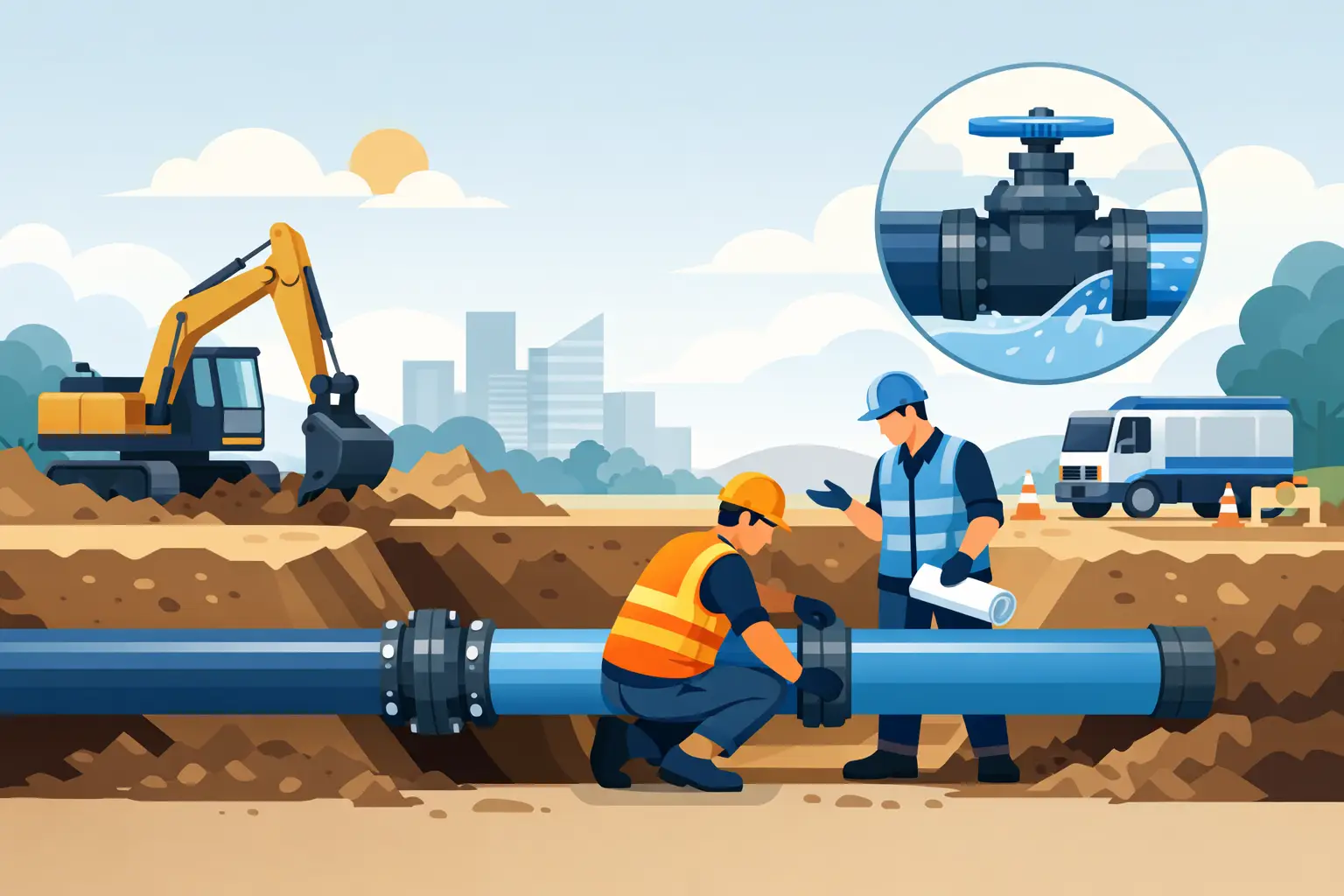
Water Main Installation: What to Expect
If your property needs a new supply, a larger connection, or a damaged main replacing, water main installation is usually less about the pipe itself and more about how the job is planned. The difference between a smooth project and a drawn-out one often comes down to permissions, ground conditions, traffic management, and whether the contractor can install with minimal disruption.
For homeowners, that usually means one thing – keeping driveways, gardens and paths intact where possible. For landlords and commercial sites, it means avoiding delays, protecting access, and making sure the work is compliant from the outset.
When water main installation is needed
A new water main is not only for new-build sites. It is often required when an existing pipe has reached the end of its serviceable life, when repeated leaks make repair poor value, or when the current supply is undersized for the property’s demand.
Older properties can also run into issues where legacy pipework no longer meets current expectations for reliability or water quality. In some cases, a lead supply or ageing metal pipe may be part of a wider upgrade, especially where owners want a safer, more dependable incoming supply.
Commercial properties tend to face a slightly different set of pressures. A facilities team may need a new main because of redevelopment, a changed site layout, additional welfare units, or an insurance-driven requirement to address recurring failures. In those situations, installation method and scheduling matter just as much as the pipe specification.
What happens before installation starts
A proper water main installation starts with surveying, not excavation. The route needs to be assessed, existing utility services identified, and the required pipe size confirmed against the property’s demand and network conditions.
This early stage is where experienced contractors save clients time and avoid costly changes later. A short, direct route may look best on paper, but that is not always the cheapest or least disruptive option. Tree roots, retaining walls, cellars, shared accessways, buried services, and reinstatement obligations can all change the approach.
Permissions and approvals also need to be dealt with correctly. Depending on the scope, this may involve liaison with the relevant water authority, notices for work in the highway, and method planning for excavation or trenchless installation. For homeowners, these steps can feel opaque. For commercial clients, they are often a key part of procurement because compliance failures create programme risk.
Trenching or trenchless water main installation?
This is usually the question clients ask first, and the honest answer is that it depends on the site.
Traditional trenching is still the right choice in some situations. If the route is open, access is straightforward, and the reinstatement is simple, excavation can be the most practical and cost-effective method. It also allows full visibility of the ground and existing services as the work progresses.
But where the route passes under a driveway, garden, paved area, or other finished surface, trenchless methods are often the better option. Moling and horizontal directional drilling can install new pipework with far less surface disruption. That means fewer excavations, quicker reinstatement, and less mess around occupied properties.
That does not mean trenchless is always possible. Ground conditions, route length, changes in level, and congestion from existing services all need checking first. A responsible contractor will not push a no-dig method where it is unsuitable. The aim is not to use a fashionable technique. The aim is to get a reliable new supply installed cleanly and safely.
What affects the cost?
There is no sensible fixed price for water main installation because site conditions vary too much. A short run across soft ground is very different from a connection that crosses hardstanding, public footway and a busy access point.
The main cost factors are route length, pipe size, ground type, excavation depth, reinstatement requirements, and the complexity of the final connection. Traffic management can add significantly where work affects the highway. So can difficult access or the need to work around tenants, business hours or shared property boundaries.
For domestic customers, the biggest hidden cost is often reinstatement. Digging the trench is only part of the job. Matching paving, making good tarmac, reinstating decorative surfaces, and leaving the site tidy all matter. For landlords and facilities managers, downtime and disruption can be just as important as the quoted figure. A cheaper price is not always better value if it creates complaints, delays or return visits.
How long does water main installation take?
The installation itself can be relatively quick. What extends timescales is usually planning, approvals and coordination.
A straightforward domestic installation on private land may be completed in a short window once everything is agreed. More complex works involving highway access, larger pipework, multiple stakeholders or difficult ground conditions take longer. Connection dates can also depend on third-party attendance where the local water network is involved.
This is why realistic scheduling matters. Clients are better served by a contractor who gives a clear sequence and sticks to it than by one who promises an unrealistically fast start. Good planning reduces disruption more effectively than rushed work ever does.
Common issues that can delay a project
Underground work rarely rewards assumptions. Uncharted services, old foundations, unexpected changes in ground conditions, and restricted access are all common causes of delay.
On older properties, it is not unusual to uncover abandoned pipework or non-standard previous repairs. On commercial sites, traffic routes, delivery windows and tenant access can affect how and when the work is carried out. Poor weather can also slow excavation and reinstatement, particularly where surfaces need to be left safe and serviceable at the end of each day.
The practical answer is not to pretend these risks do not exist. It is to work with a specialist contractor who plans for them, communicates early, and keeps the site controlled and tidy throughout.
Choosing the right contractor for water main installation
This is specialist work, not general groundworks with a pipe added in. The contractor you appoint should understand water infrastructure, site safety, compliance, reinstatement standards and the practical realities of working around occupied homes or live commercial premises.
Accreditations matter because they show the contractor is working to recognised standards. Insurance cover matters because underground works carry obvious risk. Experience with trenchless methods matters because minimal disruption only happens when the team knows when and how to use them properly.
It is also worth paying attention to the basics. Do they explain the method clearly? Can they quote promptly? Will they leave the site clean? Do they understand that a homeowner may be worried about their driveway, while a facilities manager may be worried about access, documentation and programme certainty? Competence is not only technical. It shows in communication and conduct as well.
For clients in the North West, Watermains & Drains UK positions this as a specialist service rather than a generic excavation job, which is the right way to look at it. A new main should solve a problem for the long term, not create a trail of avoidable disruption around the property.
Preparing your property or site
A little preparation helps. Domestic customers should make sure access points are clear and raise any concerns about paving, planting, outbuildings or shared boundaries before work starts. If the water supply needs isolating during the connection, it is sensible to plan around that in advance.
For commercial sites, preparation is usually more formal. Access permits, welfare arrangements, traffic routes, and communication with tenants or staff may all need coordinating. If the site has restricted hours or sensitive operating periods, that should be agreed early rather than managed day by day.
The more clearly the route, method and programme are set out in advance, the easier the installation tends to be.
Why the installation method matters long after the job ends
Clients often focus on getting the new main in place, which is understandable. But long-term performance depends on more than the final connection.
Pipe material, route protection, jointing quality, testing, and reinstatement all affect how the asset performs over time. A poorly planned installation may technically deliver a new supply while leaving weak reinstatement, awkward access chambers, or future maintenance headaches. A well-executed one should be reliable, tidy and unobtrusive once complete.
That is why specialist delivery is worth it. The best outcome is not simply a connected pipe. It is a properly installed water main that supports the property for years without repeated disruption.
If you are weighing up a new connection or replacement, the right starting point is a clear site assessment and a method that suits the ground, the property and the people using it. Get that right, and the rest of the job becomes far more straightforward.





