

Moling Under Driveway Project Example: What to Expect
A moling under driveway project example is often the easiest way to understand why homeowners choose trenchless installation. Rather than lifting a wide strip of block paving, tarmac or concrete to replace a water pipe, a specialist contractor can create a controlled underground route from small access pits. The result is usually a faster, cleaner installation with far less reinstatement to manage.
This is particularly useful where an old lead supply pipe runs beneath a driveway, front path or landscaped entrance. It can also suit properties that need a new water supply pipe installed between the external stop tap and the water meter or connection point.
The typical driveway moling project
Consider a semi-detached home with a block-paved driveway in Greater Manchester. The homeowner has low water pressure and has been advised that the original lead communication pipe should be replaced. The existing pipe travels from the boundary stop tap, beneath approximately eight metres of driveway, and into the house near the front elevation.
Traditional excavation would mean lifting a channel through the driveway, storing blocks on site, digging around existing services, installing the new pipe, backfilling, and carefully relaying the paving. That approach can be appropriate where ground conditions or pipe routes demand it, but it brings more disruption and a higher reinstatement requirement.
In this example, the route is suitable for pneumatic moling. The work starts with a site survey to confirm the proposed line, identify visible services, assess access and establish whether the driveway construction is likely to allow a safe trenchless crossing. The contractor also confirms the required pipe size, connection points and any water-company requirements before work is booked in.
Small pits, not a driveway trench
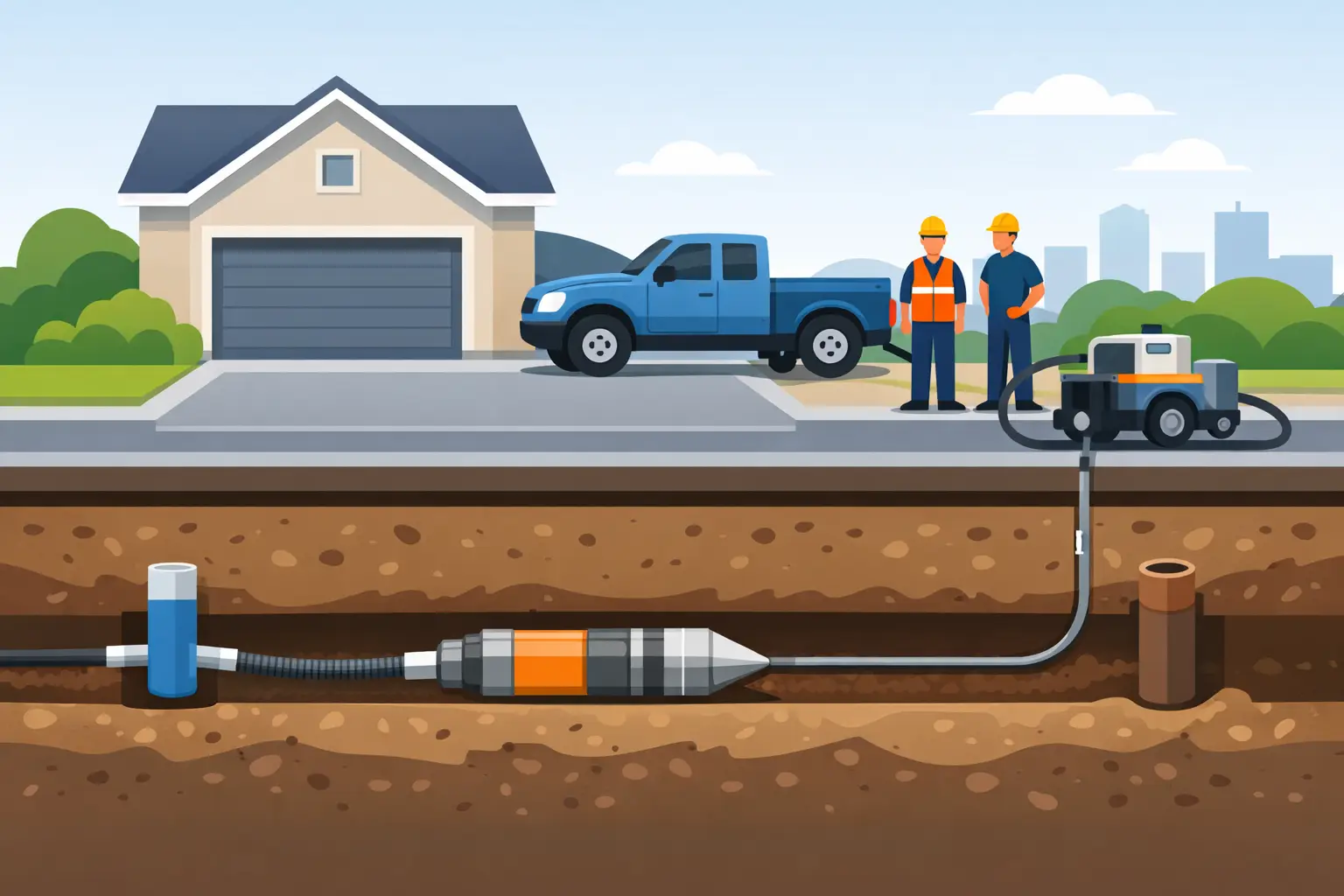
On the day, the team exposes a small launch pit near the boundary stop tap and a receiving pit close to where the new supply will enter the property. These pits provide working space for the mole and allow the pipe to be drawn through once the underground bore has been made.
A pneumatic mole is then driven through the soil on the planned route beneath the driveway. It creates a narrow bore rather than an open trench. The new polyethylene water pipe is installed through this route, protecting the driveway surface above and avoiding the need to disturb most of the blocks.
Once the pipe is in place, the team makes the required connections, pressure tests the installation and flushes the new supply. The small access areas are backfilled and reinstated. Depending on the location of the stop tap and the internal entry point, there may still be minor excavation or a small core-drilled entry through an external wall. The difference is that the driveway itself remains largely intact.
Why moling under a driveway can be the simple solution
The main benefit is reduced disruption. A driveway is often the only parking area at a property, and it may include expensive paving, resin-bound surfacing, decorative edging or drainage channels. Avoiding a full excavation can protect both the appearance of the property and the time needed to return it to normal use.
For landlords, this can mean less inconvenience for tenants. For commercial premises, it can help keep entrances, visitor parking and pedestrian routes operational. It is also a practical option where a homeowner has recently paid for a new driveway and does not want a long reinstated strip across it.
Moling can also shorten the physical works. There is less spoil to remove, fewer materials to relay and a smaller work area to manage. This does not mean every project can be completed in a single visit, as connection arrangements, ground conditions and water-company approvals can affect the programme. However, the on-site impact is usually much lower than a conventional dig.
What determines whether driveway moling is suitable?
A trenchless method is not selected simply because there is a driveway. The route has to be safe and technically appropriate. Experienced contractors assess this before giving a fixed recommendation.
Ground conditions matter. Moling works best in suitable soil where a controlled bore can be formed. Very stony ground, heavy obstructions, old foundations, shallow bedrock or unstable made ground may make traditional excavation or another trenchless technique more suitable.
The route matters too. The proposed bore must avoid known gas, electricity, telecoms and drainage services. Utility drawings, site observations and careful planning all play a part. A drainage survey may be sensible where the route is close to drains, particularly at older properties with undocumented alterations.
Driveway construction is another consideration. A block-paved surface may tolerate small, carefully positioned pits very well. Concrete may need a localised saw cut, while resin and patterned surfaces need particular care to avoid visible damage. The goal is always the least disruption, but a professional contractor will be clear where limited opening-up work is necessary.
The water pipe is only part of the job
A good installation is more than getting pipe underground. The pipe must be correctly sized for the property, installed at an appropriate depth, protected where it enters the building and connected in line with relevant requirements. It should also be tested before the work is signed off.
For a lead pipe replacement, the homeowner may be responsible for the private supply pipe within their boundary, while the water company is responsible for its section of network. The exact ownership point varies, so it is worth confirming this early. In some areas, the water company may have requirements for the pipe material, connection process or inspection.
Watermains & Drains UK uses modern trenchless methods alongside water-industry approved installation practices, helping homeowners replace ageing supplies without turning a driveway project into a major excavation. WIAPS and Watersafe credentials provide added assurance that the work is being carried out by appropriately qualified specialists.
Reinstatement should be agreed before work starts
Even the best no-dig project normally involves two small excavations. Ask where these will be positioned and how they will be reinstated. If the driveway has matching blocks, spare materials can be useful. Where access pits sit in turf or a border, the contractor should explain what finish is achievable and whether seasonal ground conditions may affect the final appearance.
Clear communication at this stage prevents surprises. It also helps the team protect parking arrangements, gates, planted areas and any cables or pipes that may cross the front garden.
Questions to ask before approving the work
Before booking a moling project beneath a driveway, ask the contractor whether they have surveyed the route and how they will check for buried services. Confirm exactly where the launch and receiving pits will be located, what pipe material and diameter will be used, and whether pressure testing is included.
You should also ask who is arranging any water-company connection, whether the quote includes reinstatement, and what guarantee applies to the workmanship. For commercial sites, request a method statement, proof of insurance and a plan for maintaining safe access during the works.
The cheapest quote is not always the most cost-effective one if it excludes connections, testing, spoil removal or proper reinstatement. A detailed quote gives you a clearer comparison and makes it easier to plan around the work.
When an open trench may still be better
Moling is highly effective, but it is not the answer to every underground pipe problem. If a route contains multiple unknown services, needs extensive repair over a short distance, or crosses ground that will not support a reliable bore, excavation may be the safer option.
An open trench can also make sense if a driveway is already due to be replaced, or if other works such as drainage repairs and duct installation need to happen along the same route. In that situation, coordinated excavation can be more economical than separate projects.
The right method follows the survey, not a sales preference. A specialist should explain the options in plain terms, including the likely disruption, cost implications and any risks that need to be managed.
If your supply pipe runs below a driveway, do not assume the surface must be dug up from end to end. A proper site survey can establish whether moling offers the clean, practical route to a renewed water supply while keeping your property usable and tidy.





