

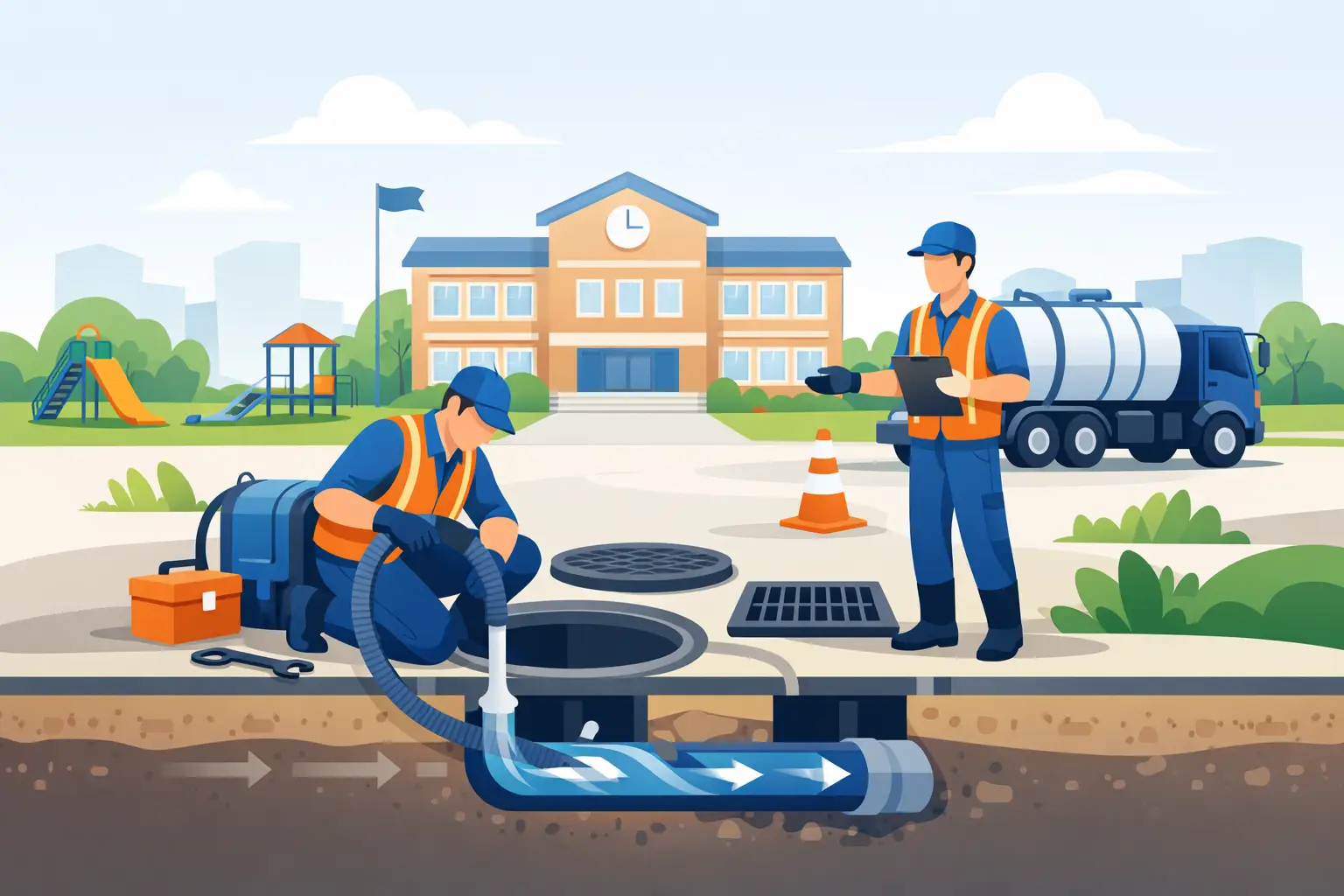
Pre-Planned Drainage Maintenance for Schools
A blocked toilet block at 8am, a foul odour near the dining hall or surface water pooling across a playground can quickly become a safeguarding, hygiene and operational problem. Pre-planned drainage maintenance for schools gives site teams control over those risks, replacing disruptive emergency call-outs with scheduled inspection, cleaning and repair work that fits around the school calendar.
For estates managers, business managers and academy trust facilities teams, the objective is straightforward: keep toilets, kitchens, rainwater systems and external drainage working properly without interrupting teaching or creating unnecessary disruption on site. The right maintenance plan identifies developing faults early, records what has been found and sets out practical next steps before a minor defect becomes a closure.
Why school drainage needs a planned approach
School drainage works harder than many commercial systems. Toilets and washrooms experience concentrated use at break times; kitchens produce fats, oils and food debris; and external gullies must cope with leaves, litter and heavy rainfall. Older school buildings may also have drainage runs that have been altered over decades, with incomplete records, damaged pipework or connections that are no longer suitable for current use.
Reactive work still has its place. A blocked drain, overflowing manhole or backed-up toilet needs immediate attention. However, relying solely on emergency visits usually means work is carried out at the least convenient moment, often with pupils and staff on site. Access is harder, disruption is greater and the facilities budget can be put under pressure by urgent repairs that could have been anticipated.
Planned maintenance creates a clearer picture of the network. It allows a contractor to inspect known problem areas, remove debris before it causes a blockage and use CCTV drainage surveys to investigate sections that cannot be assessed from ground level. It also gives decision-makers evidence for budgeting, asset planning and approval of repair work.
What a pre-planned drainage maintenance programme should cover
There is no single schedule that suits every school. A small primary school with modern drainage will not have the same requirements as a large secondary school, historic campus or site with a commercial kitchen and extensive hard landscaping. Frequency should reflect the building layout, the age and condition of the drainage, previous incidents, pupil numbers and how exposed the site is to leaves and surface-water runoff.
A practical programme normally starts with a site review and a record of existing issues. This may include drainage drawings where available, reports from prior call-outs, known slow-draining fixtures and areas that flood after rain. From there, the maintenance schedule can be targeted rather than treating every drain as if it carries the same risk.
Internal drainage and washroom systems
Toilets, urinals, sinks and associated pipework should be checked where there is a history of slow drainage, recurring blockages or unpleasant smells. Regular cleaning and jetting can remove build-up before it restricts flow. If blockages repeatedly return in the same area, simply clearing them is not enough. A CCTV survey may show displaced joints, root ingress, scale, a damaged section or an item lodged further down the line.
Schools should also consider how access will be managed. Work in toilet blocks and changing areas is best arranged outside teaching hours, during inset days or in holiday periods wherever possible. A professional contractor should agree access arrangements in advance, work safely around a live school environment and leave the area clean and usable.
Kitchens, canteens and food preparation areas
Catering drainage needs particular attention. Food waste, grease and detergents can create deposits in pipework that gradually narrow the bore. The result may be a slow drain at first, then a blockage at the point when the kitchen is busiest.
Grease management is not only about avoiding an inconvenient blockage. It helps protect the wider drainage system and supports good hygiene standards in a space where food is prepared. The required service interval depends on usage, the type of catering operation and whether the site has grease traps or interceptors. These assets should be included explicitly in the maintenance plan, not left until a problem is reported.
External gullies, channels and surface-water drainage
External drainage is often overlooked until heavy rain exposes a problem. Gullies outside entrances, playground drainage channels, downpipes and manholes collect leaves, soil, litter and loose material from surrounding grounds. When they block, water can pool near doors, create slip risks and, in severe cases, enter the building.
Autumn inspections are particularly useful on tree-lined sites, but they are not the only time to act. A good schedule considers seasonal conditions and checks known low points before periods of expected heavy rainfall. Clearing debris is relatively straightforward; dealing with water damage to classrooms, corridors or electrical areas is not.
Drainage surveys and targeted repairs
CCTV surveying is one of the most useful tools in pre-planned drainage maintenance for schools. A camera survey provides a visual condition report from inside the pipe, helping to distinguish between a simple obstruction and a structural fault. It can identify cracks, open joints, root ingress, deformities and collapsed sections without unnecessary excavation.
Where a repair is required, the least disruptive method should be considered first. Localised patch lining can repair suitable defects internally, reducing the need to dig through paths, playgrounds or landscaped areas. This is not appropriate for every problem – severely collapsed pipework, incorrect gradients or extensive deterioration may need excavation and replacement – but it can be a fast, cost-effective option where conditions allow.
Building a schedule around the school year
The best time for intrusive drainage work is often during school holidays, when access is simpler and there is more scope to isolate facilities. Yet a maintenance programme should not consist only of annual holiday work. Smaller inspections and preventative cleans during term time can stop faults developing between major visits.
A sensible plan might combine a detailed annual review with seasonal gully clearance, scheduled kitchen-drain servicing and additional inspections at known risk points. Schools with a record of flooding, repeated toilet blockages or mature trees close to drainage routes may need more frequent attention. Conversely, a newer site with good drainage records may require a lighter programme, supported by clear monitoring and rapid response arrangements.
The contractor should provide agreed visit dates, a clear scope of work and reports that are useful to the person responsible for the estate. Photographs, CCTV footage where relevant, findings, recommendations and prioritised repair costs make it easier to explain decisions to governors, trustees or central facilities teams.
Choosing a contractor for school drainage maintenance
Schools need more than a company that can clear a blockage. They need contractors who understand controlled access, safeguarding expectations, safe working procedures and the need to protect busy sites. Before appointing a provider, check that they can supply appropriate insurance documentation, method statements and risk assessments where required, and that their operatives communicate clearly with site staff.
It is equally important to ask how repairs will be carried out. A contractor with CCTV diagnosis, drain jetting and trenchless repair capability can often investigate and resolve issues with less excavation, less noise and less reinstatement work. Where digging is necessary, the scope should include a clear plan for making good surfaces and securing the work area.
Watermains & Drains UK supports planned and reactive drainage work with CCTV surveys, drain repairs, patch lining and full drainage installations. For schools, the practical value is a single specialist contractor able to investigate the cause, recommend proportionate work and minimise disruption to paths, grounds and day-to-day operations.
When to bring a survey forward
A scheduled plan should remain flexible. Do not wait for the next planned visit if staff report persistent odours, recurring blockages, gurgling fixtures, unexplained damp patches or surface water that does not clear after rain. These signs do not always mean a major failure, but they warrant investigation before a small drainage issue affects a classroom, kitchen or access route.
The most effective maintenance programme is one that gives the school a record of its drainage, a realistic repair budget and a trusted route to rapid help when conditions change. Put the plan in place before the next busy term, and drainage maintenance becomes another managed part of running a safe, clean school site rather than an urgent problem at the gates.





