

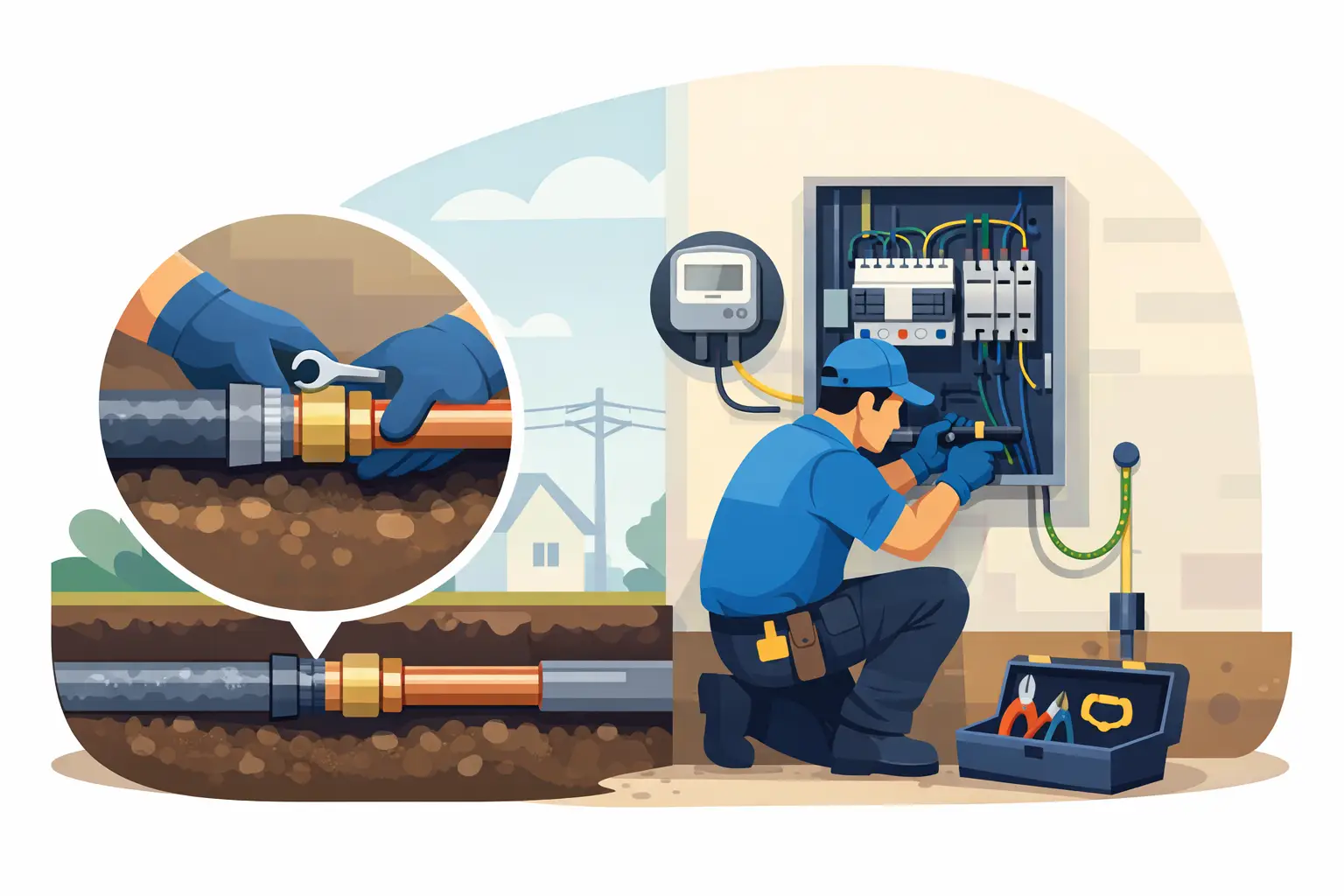
How to Replace Lead Incoming Main Safely
A lead water pipe is easy to ignore until you start planning a renovation, dealing with poor water flow, or asking a simple question about what is actually feeding your kitchen tap. If you need to replace lead incoming main safely, the job starts well before any excavation. It begins with confirming what pipe you have, where responsibility sits, and how the new supply can be installed with the least disruption to your home or premises.
For many older properties across the North West, lead supply pipes are still present either in full or in part. That matters for two reasons. First, lead is an outdated material that most owners understandably want removed. Second, older incoming mains are often undersized, which can mean weak pressure, restricted flow, and a supply that no longer suits modern household demand.
Why replacing a lead incoming main needs a proper plan
This is not a cosmetic upgrade. Your incoming main is the pipe that brings clean water from the network towards your property, and replacing it affects excavation, water regulations compliance, reinstatement, and often coordination with the water authority. If the work is approached casually, the result can be unnecessary damage to driveways, missed approval requirements, or a new pipe route that is harder to maintain in future.
The safe approach is to treat the replacement as an infrastructure job rather than a basic plumbing repair. That means identifying the existing material, checking the pipe run, selecting a suitable replacement pipe, and planning how the connection will be completed and tested. For landlords and commercial property managers, it also means keeping records, reducing tenant disruption, and making sure the contractor is properly insured and accredited.
How to replace lead incoming main safely at your property
The first step is to confirm that the pipe is actually lead. In many homes, the pipe can be inspected where it enters the property, often near the internal stop tap. Lead has a dull grey appearance and is softer than copper or plastic. It may also show scratch marks easily if lightly scored. That said, visual checks only tell part of the story. Some properties have a mixed arrangement, with one section replaced and another left in place underground.
A proper site assessment gives a clearer answer. This usually includes tracing the likely route from the boundary to the building, checking access points, and identifying surfaces that need protecting or reinstating. If there are concerns about leakage, poor pressure, or pipe depth, further investigation may be needed before any replacement method is agreed.
Once the route is understood, the next question is how the new main will be installed. Traditional open-cut excavation is sometimes necessary, especially where the route is short and fully accessible. But it is not always the best option. If the pipe passes under a driveway, landscaped front garden, pathway, or paved area, trenchless methods such as moling can often install the new supply with far less disruption. That means fewer excavations, quicker completion, and less reinstatement afterwards.
Choosing the right replacement method
There is no single method that suits every property. A straight run from boundary to house with clear ground conditions may be ideal for trenchless installation. A site with existing services, restricted access, or unusual ground makeup may need a different approach. Safety is not just about using the newest technique. It is about choosing the method that fits the property and completing it to the right standard.
For domestic owners, the main benefit of a well-planned trenchless installation is obvious – less mess. For commercial sites, the benefit is often programme control. Reduced excavation means less interference with entrances, foot traffic, parking, and day-to-day operations. In either case, the objective is the same: install a compliant new supply while keeping disruption to a minimum.
Understanding who is responsible for what
One area that often causes confusion is ownership. In simple terms, the section of pipe within your boundary is commonly the property owner’s responsibility, while the water company may be responsible for the communication pipe outside the boundary. Exact arrangements can vary depending on the site and local network setup, so it is worth confirming this early.
That matters because a lead replacement project may involve both private-side work and a new connection arrangement at the boundary. If approvals, inspections, or notifications are required, those should be built into the programme from the start rather than dealt with halfway through the job.
What a safe lead main replacement should include
A competent contractor should do more than dig a hole and lay pipe. The work should include a clear scope, suitable materials, proper depth and bedding, secure connections, pressure testing where required, and tidy reinstatement. If the route crosses finished surfaces, the reinstatement standard matters almost as much as the pipe installation itself.
For homeowners, this is where cheap quotes can become expensive. A low initial price may not include full reinstatement, spoil removal, or the right approvals. It may also rely on extensive digging that causes more damage than expected. A clear quotation should explain the installation method, what is included, and whether any exclusions apply.
For landlords and facilities teams, documentation is equally important. You may need evidence of accreditation, public liability insurance, and confirmation that the installation meets current water industry requirements. Using a specialist contractor helps reduce that risk because lead supply replacement sits at the point where civil works, water compliance, and property reinstatement all meet.
Common issues uncovered during replacement
Lead pipes are rarely replaced in isolation from every other problem. Once work starts, other issues can come to light. The old pipe may be shallower than expected, the route may pass close to drains or other buried services, or there may already be a small leak that was not visible at ground level.
In some cases, the existing stop tap arrangement is poor or inaccessible. In others, the supply route is simply not practical for modern replacement and a new alignment is the better option. None of this means the job becomes unmanageable, but it does underline why experience matters. The safest projects are the ones where these possibilities are considered upfront rather than treated as surprises.
Minimising disruption during the work
Most customers are less worried about the new pipe itself than about what the process will do to their property. That is reasonable. Front gardens, block paving, tarmac drives, and internal floor finishes all add cost if disturbed unnecessarily.
A well-managed replacement should keep excavation small, protect surfaces where possible, remove waste promptly, and leave the site tidy at the end of each day. Watermains & Drains UK typically approaches these projects with minimal-disruption methods because customers want a practical result, not a long-running building site at the front of the house.
There is still some disruption with any incoming main replacement. Access pits may be needed, external works can be noisy, and the water supply will usually need to be isolated for part of the job. The point is not to pretend otherwise. The point is to plan those stages properly so the work is completed quickly, cleanly, and with as little inconvenience as possible.
When should you replace a lead incoming main?
If you know the supply is lead, replacing it is usually a sensible improvement rather than something to postpone indefinitely. It becomes more urgent if you are already experiencing poor pressure, recurring leaks, planned extension works, or a change in occupancy such as letting the property or refurbishing for sale.
There is also a practical timing advantage in dealing with it during other external works. If you are already resurfacing a driveway, landscaping the front, or carrying out drainage repairs, coordinating the supply replacement at the same time can reduce overall disruption and cost.
For landlords and commercial properties, timing often comes down to risk management. Replacing a known lead service in a planned way is generally easier than dealing with an unexpected failure, tenant complaint, or urgent excavation later.
What to ask before appointing a contractor
The right questions are straightforward. Ask how the pipe route will be assessed, whether trenchless installation is possible, what approvals are required, and how reinstatement will be handled. Ask if the contractor is properly accredited for water supply work, what insurance they carry, and what guarantee supports the workmanship.
You should also ask how long the work is likely to take and whether the quotation includes everything needed to complete the replacement. Clear answers usually indicate a contractor who handles this type of job regularly. Vague answers often mean the opposite.
Replacing an old lead incoming main is one of those jobs that pays off in more ways than one. You are not just changing a pipe. You are improving the reliability of the water supply, reducing the risk of future issues, and bringing an older property closer to modern standards without turning the outside space into a major excavation. Done properly, it is a straightforward upgrade with a long-term benefit – and the safest route is always to have it assessed and installed by specialists who know how to keep the work compliant, tidy, and under control.





