

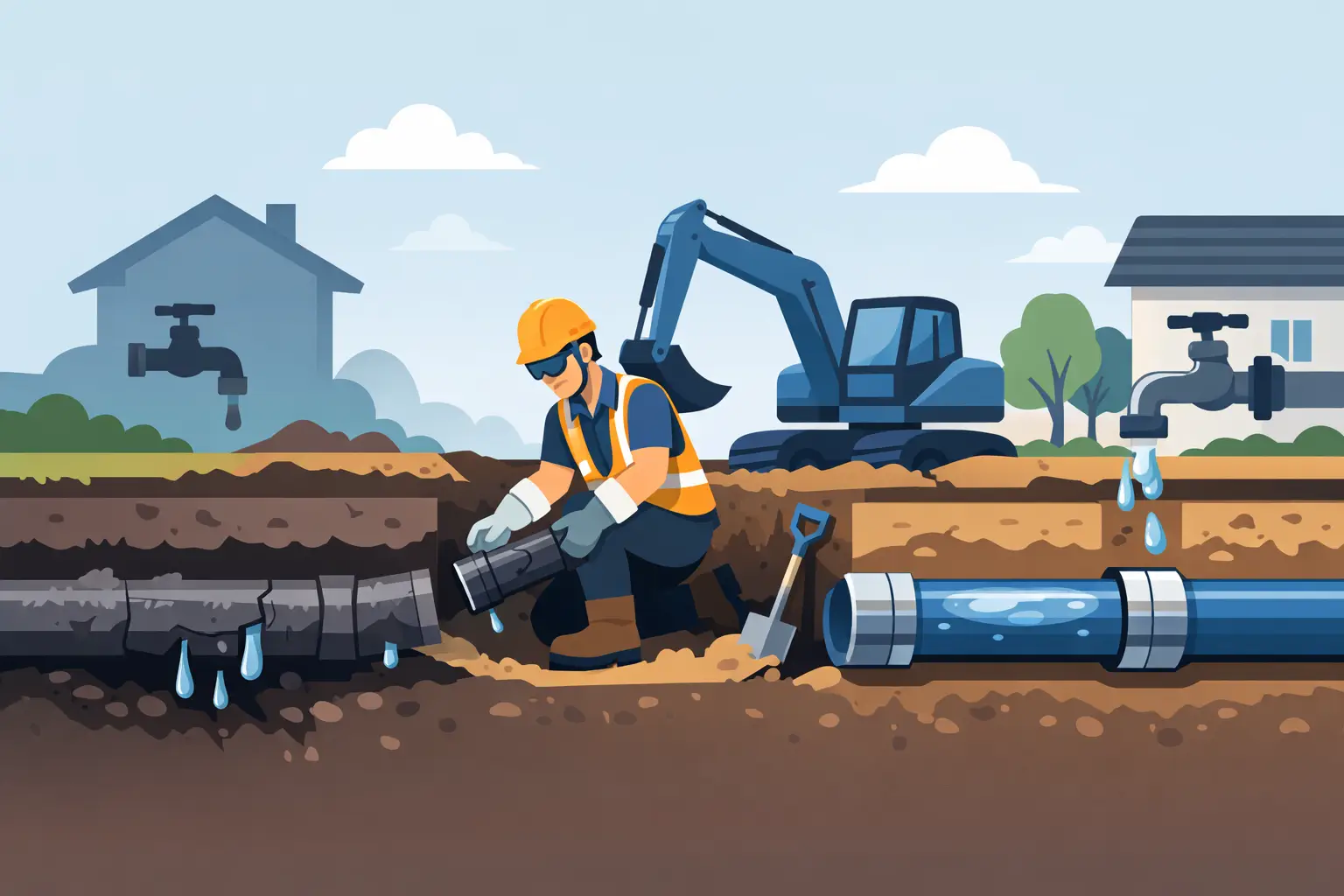
How to Replace Lead Water Pipe Safely
A lead water supply pipe is easy to ignore until the signs become hard to miss – poor water quality, low pressure, repeated leaks, or a water company recommendation to upgrade. If you need to replace lead water pipe safely, the job is not just about digging out old pipework and fitting plastic. It needs the right method, the right approvals, and a clean, compliant connection from boundary to property.
For homeowners and landlords, the biggest concern is usually disruption. For facilities teams and commercial property managers, it is often compliance, scheduling, and making sure the site is left tidy and operational. In both cases, the safest replacement is the one planned properly from the start.
Why lead pipe replacement needs a careful approach
Many older UK properties still have lead communication or supply pipes, particularly homes built before the 1970s. Lead was widely used because it was flexible and durable, but it is no longer considered suitable for drinking water systems. Even where the pipe appears intact, age, scale build-up, movement in the ground, or previous poor repairs can create ongoing issues.
Safety starts with understanding that replacing a lead pipe affects more than the visible section inside the home. The incoming supply may run beneath a front garden, footpath, driveway, or internal floor before reaching the internal stop tap. That means the work has to consider the full route, nearby services, pipe depth, ground conditions, and how the new supply will be connected and tested.
A rushed excavation can damage other utilities or leave reinstatement issues behind. An unapproved installation can cause problems with water regulations and connection sign-off. That is why this is specialist work, not a general plumbing job.
How to replace lead water pipe safely on a live property
The safest route usually begins with a site assessment. This establishes where the existing lead pipe runs, whether the full length can be replaced, and which installation method causes the least disruption. On some properties, a traditional open trench is sensible. On many others, trenchless methods such as moling provide a faster and cleaner solution, especially where there is paving, landscaping, or limited access.
Before any work starts, the contractor should confirm service locations, identify the entry point into the building, and check what is needed for a compliant new supply. This includes suitable pipe material, correct depth, insulation where required, and a properly installed internal stop tap if the existing arrangement is outdated.
For properties in the North West, where driveways, front paths, and established gardens are common, trenchless installation can make a significant difference. Rather than excavating the full route, the contractor creates launch and reception pits and installs the new pipe underground. The result is less mess, fewer reinstatement issues, and a quicker turnaround.
That said, no-dig is not automatically the best option in every case. If the ground is heavily obstructed, if access is too restricted, or if the route needs major alteration, excavation may still be the better method. A competent contractor will explain that trade-off rather than forcing a single approach.
What a compliant replacement should include
Replacing a lead supply properly is about more than swapping one pipe for another. The finished installation should meet current water regulations and be suitable for long-term use. In practice, that means the pipe route, materials, fittings, depth, and final connection all need to be right.
A professional contractor should also be able to deal with the practical details that matter to property owners – excavation control, spoil removal, pressure testing, chlorination where required, and tidy reinstatement. If the work involves the external supply and connection arrangements, approvals and sign-off matter just as much as the physical installation.
For homeowners, this often comes down to a simple question: will the water supply be safe, reliable, and accepted by the relevant authority when the job is finished? For landlords and commercial clients, the same point extends to records, method statements, insurance cover, and confidence that the works have been completed by a properly accredited specialist.
That is why credentials matter. Using a contractor with recognised approvals such as WIAPS and Watersafe helps reduce risk, especially where compliance and connection standards are under scrutiny.
Common mistakes when people try to cut corners
The biggest mistake is assuming only the visible lead section needs replacing. If part of the old pipe remains in service, the benefits of replacement can be reduced, and future leaks may still occur on the retained section.
Another common issue is choosing the cheapest excavation-led option without considering the reinstatement cost afterwards. Digging across a finished driveway or landscaped frontage may look straightforward at quotation stage, but the true cost includes making those surfaces good again. In many cases, a trenchless installation is more cost effective overall because it limits damage from the outset.
There is also the problem of poor route planning. If the new pipe is installed on an awkward line, too shallow, or in a way that complicates future maintenance, short-term savings can create long-term problems. Safe replacement should improve the supply, not just patch over the issue.
Finally, some installations fail on paperwork rather than workmanship. If the contractor cannot demonstrate suitable insurance, approvals, or water industry knowledge, the job may become harder than it needs to be once inspections or sign-off are involved.
Signs it is time to replace a lead water pipe safely
Some customers contact a specialist after receiving water quality advice. Others get in touch because of practical problems – recurring leaks, low pressure, discoloured water, or an ageing pipe that has already been repaired once or twice.
On tenanted or managed properties, the trigger may be different. A landlord may want to modernise an older incoming supply during refurbishment. A facilities manager may need a compliant upgrade before handover, insurance works, or planned maintenance. In all these cases, the safest time to act is before a minor issue becomes an emergency call-out.
If the property is being extended or the external areas are being resurfaced, it often makes sense to review the water supply at the same time. Replacing a lead pipe before a new driveway or patio goes down is usually far simpler than reopening finished surfaces later.
Choosing the right contractor for the job
A safe lead pipe replacement depends heavily on who carries it out. You are looking for a specialist contractor with direct experience in external water supply work, not a business that only handles internal plumbing or general groundworks.
Ask practical questions. Can they trace the route properly? Do they offer trenchless installation where suitable? Are they WIAPS or Watersafe accredited? Can they provide clear quoting, public liability cover, and a workmanship guarantee? Can they complete the job with minimal disruption and proper reinstatement?
Those points matter because they directly affect the outcome. A well-run replacement should leave you with a reliable new supply, a tidy site, and no lingering doubt about whether the work was done correctly. That is exactly why many property owners choose specialist contractors such as Watermains & Drains UK for lead pipe replacement and new water supply installations – the job is completed with the right approvals, modern methods, and a clear focus on disruption, compliance, and finish quality.
Cost, disruption and what to expect on site
Every property is different, so cost depends on pipe length, access, ground conditions, surface type, and connection requirements. A straight run across a garden is rarely priced the same as a supply running beneath concrete, walls, or finished paving.
The same applies to timescales. Some replacements can be completed quickly with minimal excavation. Others need more planning, particularly where access is tight or the route must avoid multiple services. What matters is that the contractor explains the method clearly and gives a realistic programme rather than promising an unrealistically fast fix.
On site, good standards should be obvious. Work areas should be controlled, the team should communicate clearly, and the property should not be left unnecessarily exposed or messy. For occupied homes and commercial premises alike, professionalism on site is part of safety.
Replacing a lead water pipe is one of those jobs worth doing once and doing properly. The best outcome is not just a new pipe underground. It is the confidence that your supply is modern, compliant, and installed with the least disruption practical for the site. If your current supply is ageing, leaking, or still lead, acting early usually gives you more options and a cleaner result.





