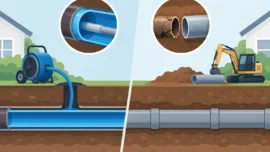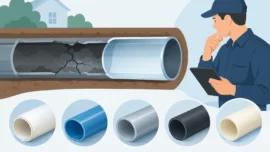
Water Moling Versus Pipe Bursting Compared
A failed or ageing water supply pipe does not automatically mean digging up the whole driveway. When considering water moling versus pipe bursting, the right choice depends on the existing pipe, the route into the property, ground conditions and how much disruption can realistically be tolerated. Both are trenchless methods, but they solve different problems.
For many homes with an old lead supply pipe, moling is the straightforward answer: a new pipe is installed underground with only small access pits. Pipe bursting can be highly effective in the right circumstances, but it is not a like-for-like replacement for moling and is not suitable for every domestic water supply.
What water moling does
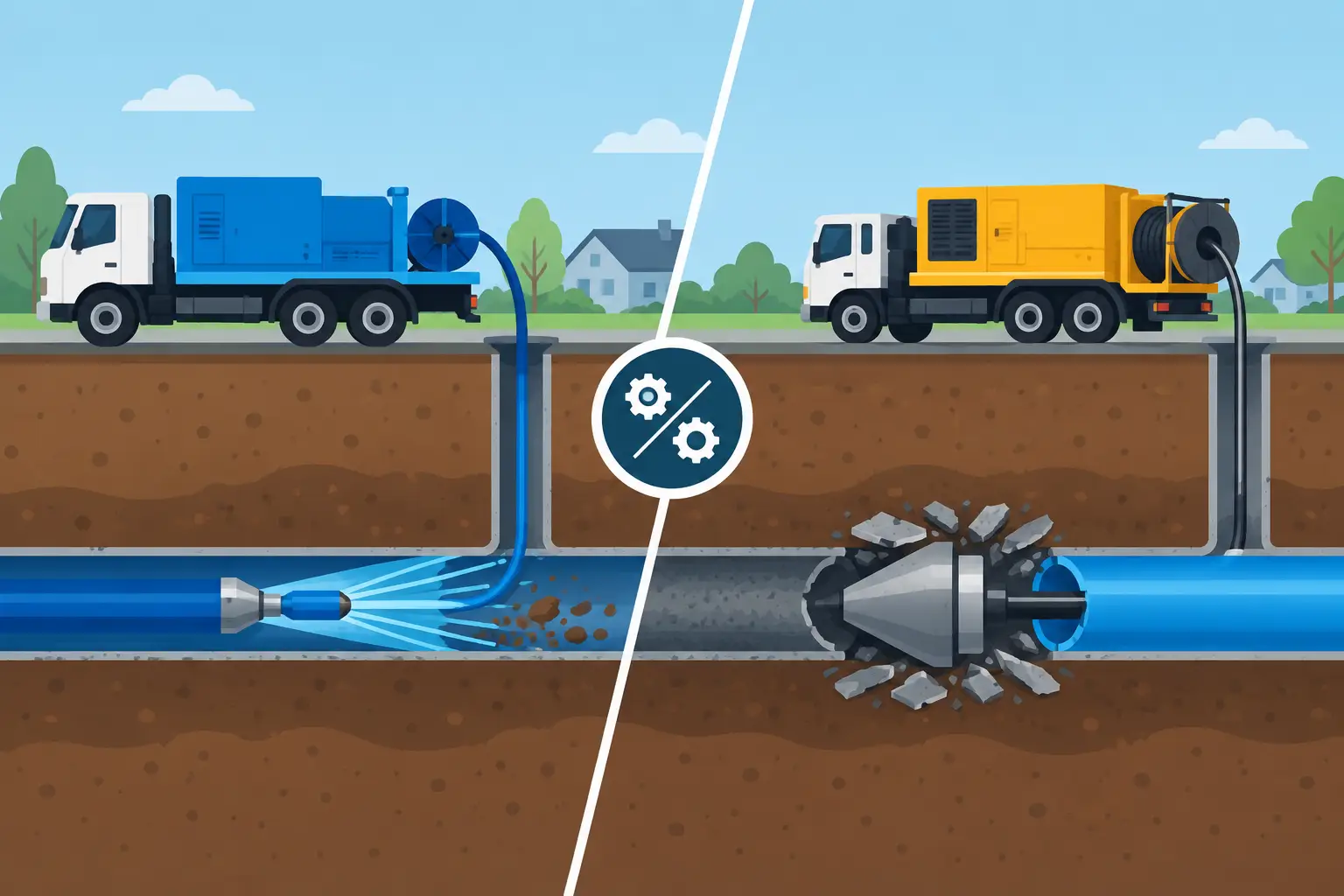
Water moling uses a pneumatic machine, often called a mole, to create a narrow underground bore between two small excavations. A new blue polyethylene water supply pipe is then pulled through the bore and connected at each end.
This method is commonly used for lead pipe replacement between the external stop tap or boundary and the internal stop tap. Rather than excavating a continuous trench through a front garden, driveway or path, the contractor usually needs access at the start and finish points only. The existing lead pipe can be left safely in the ground once the new supply has been commissioned.
For homeowners, the main benefit is clear: less digging means less mess, less reinstatement and a quicker route to a modern water supply. A carefully planned mole route can often pass beneath lawns, paving and many driveways without disturbing the surface.
Moling does have limits. The machine needs a workable route with enough space for launch and reception pits. Dense obstructions, large tree roots, shallow foundations, unknown services, solid rock or a route that turns sharply may require a different approach. A proper site survey and service check should always come before work starts.
What pipe bursting does
Pipe bursting replaces an existing buried pipe by using it as the route for the new one. A bursting head is pulled through the old pipe, breaking or splitting it outward as a replacement pipe follows behind. The old pipe is effectively displaced while the new pipe takes its place.
It is often used where an existing pipe has failed and following the same alignment is beneficial. Because the new pipe generally remains on the original route, pipe bursting can avoid opening long sections of ground. It can be particularly useful on certain larger-diameter drainage or water-main projects where the existing line is known, reasonably direct and suitable for the equipment.
However, pipe bursting needs more than an old pipe in the ground. The pipe material, diameter, depth, condition, bends, connections and surrounding ground all matter. Severe collapses, significant directional changes, unsuitable joints or unknown obstructions can prevent a bursting head from travelling as planned. The technique also creates outward force, so nearby utilities and structures need careful consideration.
Water moling versus pipe bursting: the practical difference
The simplest distinction is that water moling installs a new pipe on a chosen underground route, while pipe bursting replaces a pipe by following its existing route.
That difference affects almost every part of the job. With moling, the contractor can often choose a sensible path around known obstacles and create a direct route from the boundary to the building. This is particularly helpful when replacing lead supply pipes, which may have an uncertain route, multiple repairs or awkward bends after decades underground.
With pipe bursting, the existing pipe dictates the route. That can be an advantage where the route is proven and difficult to replicate by excavation. It can also be a drawback where the old pipe is poorly mapped, damaged beyond use as a guide, or runs too close to other services.
For a typical householder replacing a lead water supply pipe, moling is usually the more commonly specified trenchless method. It allows a modern pipe to be installed without relying on the condition of a decades-old lead line. Pipe bursting may be considered where site conditions and the existing pipe make it a sound engineering option, but it should not be selected simply because it appears to avoid excavation.
Which method causes the least disruption?
Both methods are designed to reduce disruption compared with open-cut trenching, but the answer depends on the site.
Water moling is often the least disruptive option for a domestic supply upgrade because it requires small pits rather than a full trench. A front path, lawn or driveway may remain largely intact, with localised reinstatement around the access points. It can also be quicker to complete, provided the route is suitable and connections are accessible.
Pipe bursting avoids a long open trench too, but it still requires access pits and sufficient working room for pulling equipment. The old pipe route must be suitable throughout. If the pipe cannot be burst in one operation, or if a collapse is discovered, further excavation may be needed. It is therefore not automatically the cleaner or faster option.
Neither method should be promised as completely dig-free. Small excavations are normally necessary for safe connections, inspection and installation. A professional contractor will explain where these will be before work begins, protect the working area and agree how surfaces will be reinstated.
Cost is about the site, not just the method
It is tempting to ask which technique is cheaper, but a meaningful answer needs a survey. The cost of water moling or pipe bursting is influenced by pipe length, depth, access, ground type, the number of connections, traffic management, utility searches and the condition of the existing installation.
Moling can offer strong value where it prevents extensive excavation and costly replacement of paving, tarmac or landscaping. Pipe bursting can be cost effective where an existing route is suitable and the alternative would involve major excavation through hard surfaces or a busy commercial area.
Conversely, either method can become less economical where access is restricted, the ground contains difficult obstructions, or additional excavation is needed to deal with unknown services. The lowest initial quote is not always the lowest overall cost if it excludes connections, testing, reinstatement or dealing with problems found during the works.
A clear quotation should set out the proposed method, the access pits required, what is included in reinstatement and any site-specific assumptions. For landlords, property managers and commercial clients, it should also cover scheduling, resident or tenant considerations, risk controls and any required approvals.
Choosing a method for lead pipe replacement
Lead pipes are still found on many older UK properties, particularly between the water main in the street and the internal stop tap. Replacing the private section with a compliant polyethylene supply pipe can improve reliability and remove the concern associated with an ageing lead line.
In most cases, moling is well suited to this work because the installer does not need the old lead pipe to remain intact. The new pipe can be routed between carefully selected pits, then connected and pressure tested. This is useful when the lead service has corroded, has been repaired several times or does not follow a predictable straight line.
The final connection arrangements still need to be planned properly. There may be separate responsibility for the private supply pipe and the water company-owned communication pipe. The required pipe size, depth, insulation, ducting and fittings should meet the relevant water regulations. Using a suitably approved contractor helps ensure the installation is completed correctly and can be documented where needed.
When open excavation may still be the better answer
Trenchless work is not a cure for every buried-pipe problem. If there is no viable mole route, the existing pipe is too damaged for bursting, or a leak or collapse needs direct investigation, targeted excavation may be the safest option.
Open excavation can also be preferable where several pipes need rerouting, drainage and water services are congested in one area, or a new supply must be installed alongside other planned groundwork. The key is to excavate only where necessary, rather than treating a full trench as the default solution.
A specialist contractor should be comfortable recommending excavation when it is genuinely the better method. The objective is not to use a particular machine. It is to install a reliable pipe with the least reasonable disruption and a finish that does not leave the property owner with avoidable repair work.
What a proper survey should establish
Before choosing between methods, the site should be assessed for the existing pipe route, internal and external stop tap positions, access for equipment, visible utility services and likely ground conditions. On commercial sites, the survey may also need to consider working hours, pedestrian routes, vehicle access and the consequences of interrupting water supply.
Watermains & Drains UK assesses each installation on its own merits, using trenchless moling where it offers the cleanest, most cost-effective route and advising on alternatives where conditions demand them. Work should be planned around safe connections, a tidy site and durable reinstatement, not assumptions made from the pavement.
The best choice is the one that gives you a compliant new supply pipe, clear accountability and the fewest unnecessary holes in the ground. A site survey turns that choice from a guess into a practical plan.