WIAPS Approved Contractor Review: What Matters
If you are comparing firms for a new water supply, lead pipe replacement or external pipework, a wiaps approved contractor review should start with one simple question: what does the approval actually tell you? Many property owners see the badge, assume every approved business delivers the same standard, and stop there. That can be a mistake, because approval matters, but so do experience, methods, insurance, communication and how the work is finished on site.
For homeowners, landlords and facilities teams, this is usually not an academic choice. You may be dealing with low pressure, an ageing lead supply, a leak under a driveway or a project where poor reinstatement creates more cost than the original problem. In those situations, the best contractor is rarely just the one with the right accreditation. It is the one that combines compliance with practical delivery.
WIAPS approved contractor review – what WIAPS really means
WIAPS stands for the Water Industry Approved Plumbers’ Scheme. In practical terms, it is an approval scheme linked to water regulations compliance. If a contractor is WIAPS approved, that tells you they have met scheme requirements relevant to carrying out certain works on water supply systems.
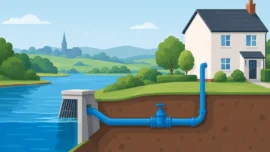
That matters because work on private water supplies and connections can affect water quality, system integrity and regulatory compliance. An approved contractor should understand the standards that apply to materials, installation methods and the protection of the public water supply.
What WIAPS does not tell you, on its own, is whether a contractor is the best fit for your particular job. It does not guarantee fast mobilisation, tidy reinstatement, clear pricing or specialist capability in trenchless installation. It also does not tell you how often that contractor handles the sort of work you need, whether that is moling beneath a driveway, replacing a lead communication pipe or managing a commercial water main diversion.
That is why any fair wiaps approved contractor review needs to look beyond the badge.
What to look for beyond the approval
The first thing to check is whether the contractor actually specialises in the work you need. Some approved contractors carry out general plumbing works, while others focus on external underground services. If your issue involves excavation, external pipe routing, leak location or reinstatement, that distinction matters.
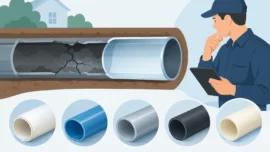
A specialist contractor should be able to explain the route of the new supply, the depth of installation, how existing services will be avoided, what material will be used, and whether trenchless methods are suitable. If they cannot talk you through that clearly, approval alone is not enough reassurance.
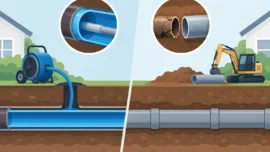
Experience with minimal-dig methods is another big differentiator. Traditional excavation still has its place, especially where access is limited or the ground conditions are poor, but it is often not the best first option. A contractor with moling or directional drilling capability can often install a new pipe with far less disturbance to gardens, driveways and paths. For occupied homes and busy commercial premises, that can make a real difference to time, mess and final cost.
Insurance and workmanship guarantees should also form part of your review. A properly insured contractor gives you protection if something goes wrong. A meaningful workmanship guarantee shows confidence in the quality of installation, not just the ability to complete the job and leave site.
How reviews help when comparing approved contractors
Customer reviews are useful because they reveal the parts of the job that accreditations do not cover well. In this sector, the most valuable reviews usually mention punctuality, communication, cleanliness and reinstatement. Those details may sound secondary until your driveway has been opened up or your tenants are without water.
Look for patterns rather than one-off praise. If several reviewers mention that the team arrived when promised, kept disruption down and left the area tidy, that is a strong sign of dependable delivery. The same applies if commercial clients mention proper paperwork, clear method statements or jobs completed around operational constraints.
Negative reviews need context. A complaint about timing during severe weather or emergency workload may not be a red flag on its own. Complaints about poor communication, unresolved defects or careless reinstatement are more serious. They suggest operational issues that can affect the whole project, not just the schedule.
In a practical wiaps approved contractor review, reviews are not there to replace technical checks. They are there to show how the contractor behaves once the work starts.
Questions worth asking before you appoint
A good contractor should be comfortable answering direct questions in plain English. Ask whether they regularly carry out external water supply installations rather than occasional one-off jobs. Ask if trenchless installation is an option and under what site conditions it may not be suitable.
You should also ask who handles notification and compliance requirements where needed, what reinstatement is included in the quote, and whether the price allows for likely ground conditions or only the easiest scenario. This is where quotes can differ sharply. One contractor may price for a straightforward dig and then add costs later. Another may build in the practical realities from the outset.
For landlords and facilities teams, ask about access management, tenant communication and scheduling around occupied properties. For homeowners, ask how long the water will be off, what areas of the property will be affected and what the finished surface will look like afterwards. These are often the questions that matter most once the works are under way.
When a cheaper quote is not the better choice
Water supply and underground drainage work is one of those areas where the cheapest quote can become the most expensive job. That does not mean the highest quote is always best. It means you need to understand what is included.
A low price may exclude proper reinstatement, tracing of existing services or the use of trenchless methods that reduce disruption. It may also come from a contractor who is approved on paper but not set up for efficient external works. If the result is delays, damaged surfaces or repeat visits, the saving disappears quickly.
By contrast, a detailed quote from a specialist may look higher at first but offer better value overall. Faster completion, less excavation and fewer remedial works often matter more than the headline figure. This is especially true for landlords managing occupied homes and commercial sites where disruption has a direct cost.
WIAPS approval and specialist delivery
The strongest contractors in this market tend to combine compliance with operational capability. That means they do the work to the required standard, but they also have the equipment, training and site discipline to complete it properly. For external underground services, that combination is what separates a compliant contractor from a genuinely dependable one.
For example, a business such as Watermains & Drains UK is not simply offering approval status as a trust marker. The value comes from pairing recognised approvals with practical delivery – lead pipe replacement, new water supply installation, leak detection, drainage repairs and no-dig methods that keep sites cleaner and reduce excavation. That is the part customers feel on the ground, especially when time and disruption matter.
This is also why reviews often highlight things like respectful teams, tidy completion and clear updates. Those points are not cosmetic. They reflect whether the contractor understands that underground works happen at people’s homes, rental properties and active business sites, not in a vacuum.
A balanced WIAPS approved contractor review
A balanced review should give credit where it is due. WIAPS approval is a meaningful positive. It shows a contractor has met a recognised standard and takes regulated work seriously. That is a stronger starting point than hiring an unapproved firm for water supply works.
At the same time, approval is not a shortcut around due diligence. You still need to assess whether the contractor is experienced in your type of job, properly insured, capable of keeping disruption down and likely to leave the site in good order. The more external and groundworks-heavy the project is, the more important those practical factors become.
In other words, the right question is not just, “Are they WIAPS approved?” It is, “Are they WIAPS approved and clearly set up to deliver this job well?” That is the standard worth using whether you are replacing a lead pipe at a house in Stockport, tracing a leak at a rental property in Warrington or planning utility works for a commercial site in Cheshire.
The best choice usually comes from joining two things together: formal approval and proven site performance. When both are in place, you are far more likely to get what you actually need – compliant work, minimal disruption and a finished result you do not have to chase up afterwards.