How Long Does Drain Lining Last?
A drain that has started leaking or letting roots in rarely fails at a convenient time. For most property owners, the first question after the survey is simple: how long does drain lining last, and is it worth doing properly now rather than facing another repair in a few years?
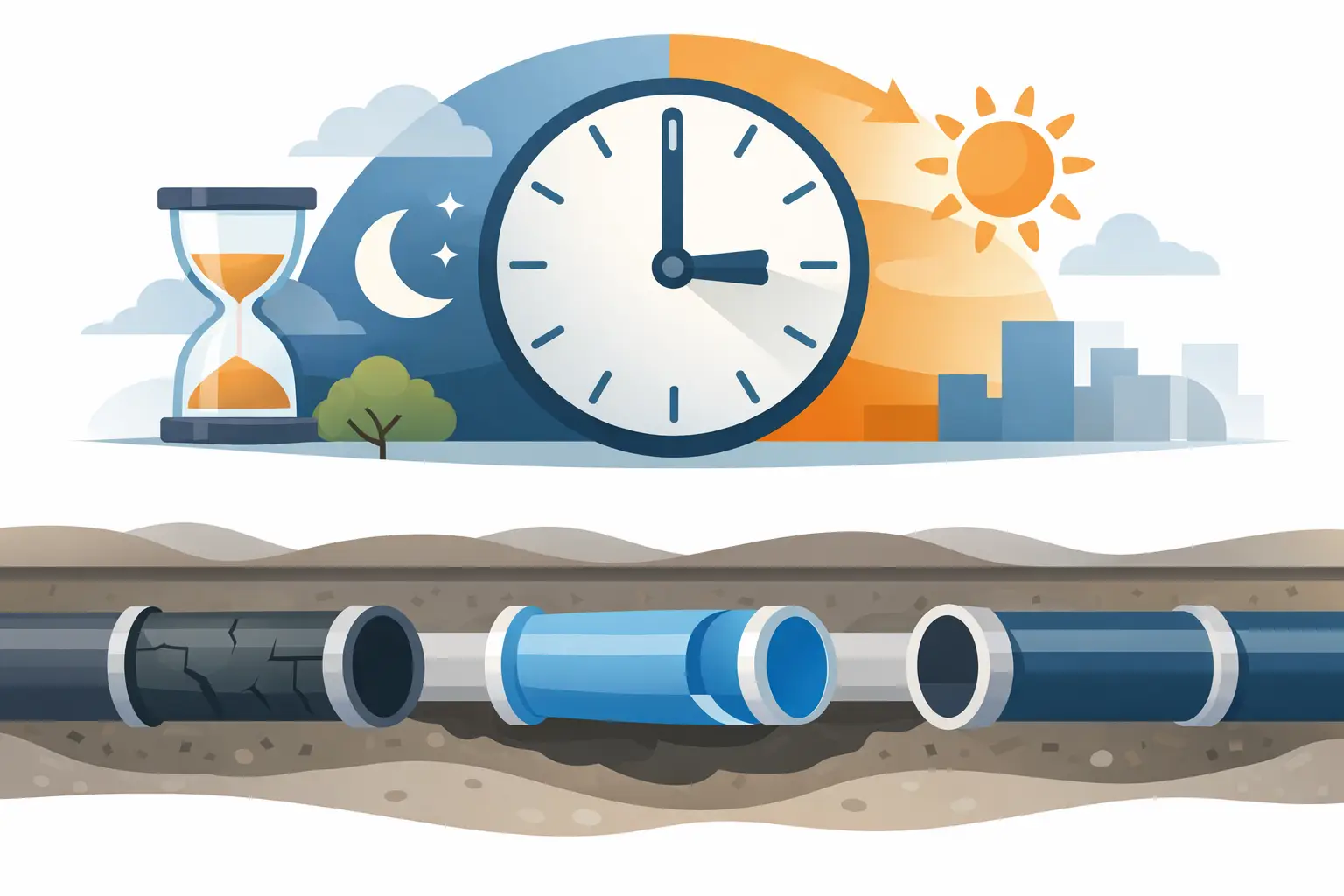
The short answer is that a professionally installed drain liner can last for decades. In many cases, you can reasonably expect 30 to 50 years of service from a quality lining system. That said, the real answer depends on the condition of the host pipe, the standard of preparation before lining, the type of damage being repaired, and how the drain is used afterwards.
That is why lifespan should never be judged by the resin alone. Drain lining is a system, not just a product. If the survey, cleaning, installation and final checks are all carried out properly, it is a long-term repair that can save a driveway, garden or internal floor from unnecessary excavation.
How long does drain lining last in practice?
For most domestic and commercial drainage systems, a correctly specified liner is considered a durable long-term solution rather than a temporary fix. Many manufacturers quote design lives in the region of 50 years, and that is realistic when the pipe is structurally suitable for lining and the installation is done to a professional standard.
In practice, some lined drains will perform well beyond that, while others may have a shorter service life if the original pipe was already badly deformed, suffering from ongoing ground movement, or affected by repeated misuse. A lined section under a typical house drain carrying normal foul water is not under the same stress as a heavily trafficked commercial line or a drain already compromised by poor falls and regular blockages.
So when customers ask whether drain lining is permanent, the sensible answer is that it is intended as a long-lasting repair, but not every drain is a candidate for the same outcome. A proper CCTV survey is what separates a repair likely to last decades from one that only masks a bigger issue.
What affects how long drain lining lasts?
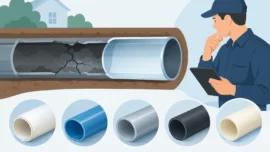
The biggest factor is the condition of the original pipe. Drain lining works by creating a new pipe within the old one, so the host pipe still matters. If the existing drain has cracks, minor displaced joints, root ingress or local wear, lining can be an excellent solution. If the pipe has collapsed, significantly flattened, or lost alignment altogether, excavation or replacement may be the better option.
Preparation is just as important. Before any liner is installed, the drain needs to be thoroughly cleaned and assessed. Scale, grease, loose debris and root growth can all prevent the liner from bonding properly to the host pipe. Poor preparation is one of the most common reasons for early failure.
The installation method matters as well. Patch lining and full-length lining both have their place, but they solve different problems. A short patch repair can last very well when the defect is localised, such as a single cracked joint. If defects are spread along a run, a full liner may offer a better long-term result. Choosing the wrong repair for the defect is where lifespan can be reduced.
Then there is workmanship. Resin mixing, curing times, inversion pressure, temperature control and reopening connections all need to be handled correctly. A neat-looking repair on camera is not enough if the liner has not cured properly or if junctions have been cut back badly. This is where using specialist drainage contractors, rather than a generalist trying to offer every service under the sun, makes a real difference.
When drain lining is a good long-term option
Drain lining is particularly effective where the pipe is still broadly intact but has defects that cause leaks, root ingress or snagging. Older clay drains with cracked joints are a common example. So are pitch fibre drains that have started to deform but are still suitable for rehabilitation, depending on survey findings.
It is also a strong choice where disruption is a major concern. If the damaged section runs beneath a driveway, extension, landscaped garden or finished floor, lining can often restore the drain without the time, mess and reinstatement cost of open excavation. For landlords and commercial sites, that can mean less disruption to tenants, staff and day-to-day operations.
Where lining performs best is in the middle ground between a simple unblocking job and a full replacement. It is not magic, and it does not fix every drainage problem, but when the defect and the method are properly matched, it is a very efficient repair with a long service life.
When lining may not last as long as expected
Not all poor outcomes come from the liner itself. Sometimes the underlying problem has not been solved. If a drain regularly blocks because of wipes, fat build-up or incorrect use, a new liner will not stop that misuse. It may improve flow by smoothing the internal bore, but it is not a substitute for proper maintenance and sensible drain use.
Tree roots are another example. If root ingress is caused by defects in the pipe, lining can seal those entry points effectively. But if there is wider movement in the ground or severe pressure from nearby trees, the surrounding conditions may still affect the drain over time. That does not automatically mean lining is wrong, only that expectations need to be realistic.
There are also cases where a drain is technically lineable but not economically the best choice. If the pipe has multiple collapses, standing water from poor gradient, or major deformation, repeated lining repairs can become false economy. A straightforward replacement may offer better value over the long term.
How to get the maximum lifespan from a lined drain
The first step is accurate diagnosis. A proper CCTV drain survey should identify not just where the defect is, but what caused it and whether the pipe is structurally suitable for lining. That includes checking for displacement, deformation, infiltration and access issues.
The second step is proper cleaning and preparation. High-pressure jetting, root cutting and descaling are not optional extras if the drain needs them. They are part of achieving a repair that bonds correctly and cures as intended.
After installation, the drain should be re-surveyed to confirm the liner is seated correctly and any laterals or junctions have been reopened cleanly. This gives the property owner a clear record of what has been done and confidence that the repair is not just hidden out of sight and hoped for.
Once the drain is back in service, everyday care still matters. Avoid flushing wipes, sanitary items, excessive grease or anything likely to cause repeat blockages. If the system has a history of scale or fat build-up, periodic maintenance can help protect the investment. A lined drain is durable, but it should still be treated as part of a wider drainage system, not as something that no longer needs attention.
Drain lining vs excavation for lifespan
A common assumption is that excavation must always last longer because it replaces the whole pipe. Sometimes that is true, particularly where the original drain has failed structurally. But lifespan is only one part of the decision.
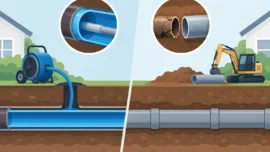
A well-installed liner can offer decades of service with far less disruption, lower reinstatement costs and quicker completion. If the alternative is digging through a finished driveway, paved yard or internal slab, the practical value of lining becomes obvious. The right comparison is not just repair life on paper, but total cost, site disruption, reinstatement risk and the condition of the existing drain.
For many homeowners and property managers, the best result is the one that restores function quickly, keeps the site tidy and avoids unnecessary excavation while still delivering a reliable long-term repair.
Choosing the right contractor matters
If you want a lined drain to last, the contractor matters as much as the material. Good drainage repairs start with evidence, not guesswork. That means CCTV confirmation, honest advice on whether lining is suitable, and a repair method matched to the defect rather than pushed as a one-size-fits-all answer.
It also helps to use a contractor with the capability to offer both trenchless and excavation options. That way, the recommendation is more likely to be based on what the drain actually needs. Watermains & Drains UK takes that approach because the aim is not simply to install a liner, but to deliver the most practical repair with the least disruption and a clear long-term outcome.
If you are weighing up drain lining after a survey, the useful question is not just how many years it might last on paper. It is whether the pipe has been assessed properly, the repair method suits the defect, and the work will leave you with a sound drain rather than a delayed problem.