When Should Lead Pipes Be Replaced?
If your property was built before 1970 and the incoming water pipe has never been upgraded, the question is usually not whether lead is present, but when should lead pipes be replaced. For many homeowners and landlords, that question comes up after a water quality concern, a renovation, a leak, or a sale survey. The right answer depends on risk, condition, and how practical it is to carry out the work properly with minimal disruption.
When should lead pipes be replaced in the UK?
In straightforward terms, lead pipes should be replaced as soon as they are identified on a drinking water supply. That is the safest long-term position. Lead was commonly used in older service pipes, and while treatment processes can reduce the amount of lead entering the water, they do not remove the pipe itself or the underlying risk.
There are also practical reasons to act sooner rather than later. Older lead pipework can be undersized, prone to restriction, and more vulnerable when other utility or groundwork is carried out nearby. If you are already planning external works, landscaping, an extension, or a driveway replacement, that is often the most cost-effective time to replace the supply pipe as well.
For landlords and property managers, replacement is usually the sensible option once lead is confirmed. Even if there is no active leak, leaving known lead pipework in service can create avoidable concerns around tenant safety, future maintenance, and compliance expectations.
Why lead pipes are a concern
The main issue is water quality. Lead can enter drinking water as it passes through old pipework, particularly where pipes have been in place for decades or where water sits in the system for long periods. The health risk is the reason lead supply pipes are no longer considered acceptable for modern installations.
Some properties are more sensitive than others. Homes with babies, young children, or pregnant women should treat lead pipe replacement as a priority. Commercial settings such as schools, care environments, and rented accommodation also need a more cautious approach because of the duty to manage risk sensibly.
There is a second issue that often gets overlooked. Lead pipes are old infrastructure. Even if the immediate concern starts with water quality, the pipe itself may also be nearing the end of its reliable working life. Replacing it can improve both safety and performance in one job.
Signs your lead pipe should be replaced now
Sometimes the trigger is obvious. A leak, poor flow, repeated repair history, or visible lead pipework under the kitchen sink or at the stop tap is usually enough to move replacement from a future idea to a current job.
Water pressure problems are common in older supply pipes. Lead service pipes are often smaller than modern replacements, and internal build-up can reduce flow further. If your incoming supply feels weak, especially at peak times, replacing the old pipe can make a noticeable difference.
Property works are another clear trigger. If you are opening up floors, digging a driveway, installing a new kitchen, or upgrading other buried services, it makes little sense to leave a lead pipe in place simply because it has not failed yet. Replacing it during planned works is usually cleaner, quicker, and better value than revisiting the same area later.
A house purchase can bring this issue into focus too. Survey findings, searches, or visible old pipe materials often prompt buyers to ask when should lead pipes be replaced rather than whether they can wait a few more years. If you know lead is present before completion, it is worth factoring the work into your budget and timeline.
Cases where replacement becomes urgent
Urgency increases when lead pipework is damaged, disturbed, or supplying a higher-risk household. If there is an active leak on a lead supply, patch repairs are rarely the best long-term answer. In most cases, full replacement is the more dependable solution.
You should also move quickly if water test results show elevated lead levels, or if your water company has raised concerns about the material of the communication or supply pipe. While not every property will have the same reading or exposure level, a confirmed issue removes most of the argument for delay.
Urgent replacement can also be the right call where there are repeated call-outs, recurring low pressure, or signs that the pipe route is affecting the property. A reactive repair might restore service for the day, but it does not modernise the system or remove the original problem.
Can lead pipes ever be left in place?
Technically, some lead pipes remain in service, particularly where owners are unaware of them or where no immediate defect has appeared. But from a contractor’s point of view, keeping a known lead drinking water supply in place is usually a short-term decision, not a good long-term one.
The usual reasons for delay are budget, access, or uncertainty over ownership boundaries. For example, part of the pipe may run under hard landscaping, a shared access, or a section of ground that makes excavation awkward. That does not mean replacement should be avoided. It means the method needs to be planned properly.
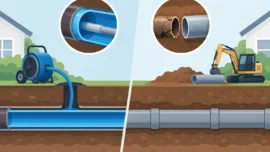
This is where trenchless installation can make a major difference. Modern moling methods allow new water supply pipes to be installed with far less surface disruption than traditional open trench excavation. For homeowners who are worried about damage to gardens, paths, or driveways, that often turns a delayed job into a practical one.
How replacement is usually assessed
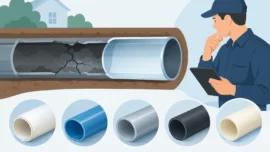
A proper assessment starts with identifying the pipe material, route, depth, and condition. In some homes, lead is visible where the pipe enters the property. In others, confirmation requires a site survey and tracing the supply route from the boundary to the internal stop tap.
The contractor also needs to look at access, reinstatement requirements, and whether a trenchless approach is suitable. Not every site is identical. A small front garden is different from a paved forecourt, a tenanted property, or a commercial site with traffic and service constraints.
For that reason, the best answer to when should lead pipes be replaced is often: once lead is confirmed and a practical installation method has been agreed. Waiting for a failure is rarely the most cost-effective route.
What replacement involves
In most cases, the old lead supply is abandoned and a new approved water pipe is installed from the boundary connection to the property. The exact arrangement depends on the site and the local water authority requirements, but the aim is simple – provide a clean, compliant, reliable new supply with as little disruption as possible.
Where access allows, trenchless moling is often the preferred option because it reduces excavation and reinstatement. Instead of opening a long trench across the full route, the new pipe can be installed through small launch and receiving pits. That keeps the job tidier and usually gets the property back to normal faster.
This is particularly valuable on finished driveways, landscaped gardens, and commercial premises where downtime and mess matter. Specialist contractors such as Watermains & Drains UK will normally assess whether no-dig methods are viable before recommending a more invasive excavation-led approach.
Why early replacement often saves money
Many owners delay replacement because the existing pipe is still working. That is understandable, but it can be a false economy. Emergency leaks cost more to deal with than planned works. Reinstatement after an unplanned excavation is rarely convenient. And if the pipe is restricting flow or causing repeat concerns, you are already paying for the old system in other ways.
Planned replacement gives you control over timing, access, and cost. It also reduces the chance of damage to finished surfaces because the route and method can be chosen properly in advance. For landlords, that usually means fewer complaints and fewer disruptive visits. For homeowners, it means solving the problem once rather than chasing it in stages.
Choosing the right contractor matters
Lead pipe replacement is not just about digging and reconnecting. It needs the right approvals, the right installation method, and a clear understanding of water industry standards. That matters even more where the route crosses driveways, shared accessways, or commercial areas that need careful reinstatement.
A specialist contractor should be able to explain the likely route, confirm whether trenchless installation is possible, and set out what disruption to expect. They should also be able to demonstrate suitable accreditations, insurance, and workmanship guarantees. For property owners, those details matter because they reduce risk as much as the new pipe itself.
If you suspect your property still has a lead supply, the sensible next step is not to wait for a worse problem. Confirm what is there, get the route assessed, and find out the least disruptive way to replace it. A modern water supply pipe is one of those upgrades you rarely regret once it is done properly.