7 Top Signs of Lead Plumbing at Home
If your property was built before the 1970s and the incoming water pipe has never been upgraded, there is a fair chance the top signs of lead plumbing are already there – they are just easy to miss until you know what to look for. For many homeowners and landlords, the issue only comes to light during a renovation, a leak investigation, or a water quality concern. By that point, replacing the pipe is usually the simplest and most reliable fix.
Lead supply pipes are most often found on the private water main running from the boundary of the property into the home. In older streets across the North West, that is still a common setup. The challenge is that lead plumbing does not always announce itself with a dramatic failure. More often, it shows up through the age of the property, the appearance of the pipework, or repeat water-related problems that never seem fully resolved.
Top signs of lead plumbing you should not ignore
One of the clearest indicators is the age of the building. If your house or commercial premises dates from before lead was phased out for water supply use, the original incoming main may still be in place. Plenty of owners assume a kitchen refit or bathroom upgrade means the whole plumbing system has been modernised, but internal pipework can be replaced while the old lead supply remains underground and untouched.
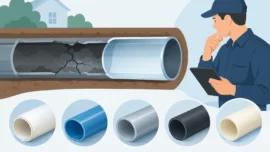
Another strong sign is the look and feel of the pipe itself. Lead pipes are usually dull grey rather than bright copper or modern blue plastic. They also feel comparatively soft. If gently scraped, they can reveal a shinier silver-coloured surface underneath. That softness is one reason lead pipework is more vulnerable over time, especially where ground movement, age, or previous patch repairs are involved.
You may also notice odd fittings or outdated stop tap arrangements near the point where the supply enters the property. In some homes, the pipe comes through a floor void, cellar, understairs cupboard, or front reception room wall. If that visible section is grey and slightly swollen or uneven in shape, it is worth having it checked properly rather than guessing.
Water quality clues that point to lead pipework
Water appearance and taste can sometimes raise the first red flag. Not every property with lead pipes will have obvious discolouration, but some occupiers report water that tastes metallic, especially first thing in the morning or after the property has been vacant for several hours. Stagnation can make the issue more noticeable.
Poor pressure is another clue, although it depends on the condition and size of the pipe. Older lead supply pipes can be narrow and may have internal build-up that restricts flow. If the pressure has never felt particularly good, or if it drops badly when more than one outlet is in use, the supply pipe may be part of the problem. This is especially relevant in older terraced properties where the incoming main has simply never been upgraded.
Recurring leaks outside the property line can also point towards ageing lead pipework. A damp patch in the front garden, unexplained water loss, or a supply pipe repair that keeps turning into another repair are all signs the line may be at the end of its serviceable life. In those cases, replacement is often more cost effective than continuing to patch sections of old pipe.
The property age check matters more than many people think
When people search for the top signs of lead plumbing, they often expect a visible symptom inside the house. In reality, the age and history of the property tell you a lot. If the building predates modern plastic water services and there is no record of a lead replacement, that alone justifies a closer inspection.
This matters for landlords and facilities teams as much as owner-occupiers. If you manage older rented housing or small commercial units, lead supply pipes can become a compliance and tenant-confidence issue as well as a practical maintenance issue. Waiting for a major failure rarely saves money once emergency access, excavation, reinstatement, and disruption are factored in.
It also depends on past works. Some properties have had partial upgrades over the years, which can leave a mix of old and new materials on the same supply route. That is better than no upgrade at all, but it is not always the best long-term arrangement. A full replacement from the correct connection point to the property usually gives a cleaner result, stronger flow, and fewer weak points underground.
Simple ways to check for lead without making assumptions
A visual check near the internal stop tap is a sensible starting point, provided the pipe is accessible. If you can see the incoming main before it branches off to newer plumbing, check the colour and material. Lead tends to look matt grey and does not have the rigid appearance of copper or the clean finish of MDPE plastic.
That said, not every homeowner will feel confident identifying pipe materials correctly, and some sections may be boxed in, painted over, or hidden below floors. There is also no value in disturbing old pipework unnecessarily. If there is doubt, a professional assessment is the safer option.
For higher-risk or higher-occupancy properties, water testing may also be appropriate. This can help confirm whether lead is affecting water quality. Testing has its place, but from a practical contractor point of view, if an older lead supply is already present, the answer is often straightforward. Replacement removes the uncertainty and deals with the underlying issue rather than monitoring it indefinitely.
Why replacement is usually the right fix
Lead pipe replacement is not only about health concerns. It is also about reliability, water flow, and avoiding repeat maintenance on outdated infrastructure. Modern replacement pipes offer a better standard of service and reduce the risk of future leaks and restrictions.
For many customers, the concern is disruption. They picture trenches across the drive, damage to paving, and days of mess. That was once a fair concern, but modern trenchless methods have changed the job significantly. In many cases, new water supply pipes can be installed using moling with very limited excavation, which keeps gardens, paths, and hardstanding far more intact than traditional open-cut digging.
That matters when the property is occupied, tenanted, or customer-facing. A faster, tidier installation reduces inconvenience and makes planning easier. It also helps when there are reinstatement-sensitive surfaces that owners understandably want to protect.
Where access is more complex, the right approach depends on the site. Some jobs still require excavation, and some need coordination with utility positions, building entry points, or internal alterations. A proper survey is what turns that into a clear scope of work instead of an estimate based on guesswork.
What to do if you suspect lead plumbing
Start with the age of the property and any visible incoming pipework. If there is a realistic chance the supply is lead, arrange for it to be inspected by a specialist contractor with experience in lead pipe replacement rather than treating it as a general plumbing call-out. The work often involves the external supply route, compliance requirements, and reinstatement – not just changing a section of pipe indoors.
It helps to get a clear quotation that explains the proposed method, likely excavation points, and whether a trenchless installation is suitable. For landlords, property managers, and commercial clients, contractor approvals and insurance matter as well. Watermains & Drains UK handles these projects with modern installation methods, recognised accreditations, and a practical focus on keeping disruption to a minimum.
If the pipe is confirmed as lead, delaying replacement rarely improves the situation. Even if the supply is not leaking today, it remains an ageing asset with known limitations. Replacing it on a planned basis is almost always easier than dealing with it under pressure after a failure.
A good rule is this: if your property is older, the incoming main looks suspiciously grey, or the water supply has never felt quite right, trust that instinct and have it checked. The best time to sort an outdated lead pipe is before it turns into a bigger problem beneath your driveway, your floor, or your tenant’s feet.