

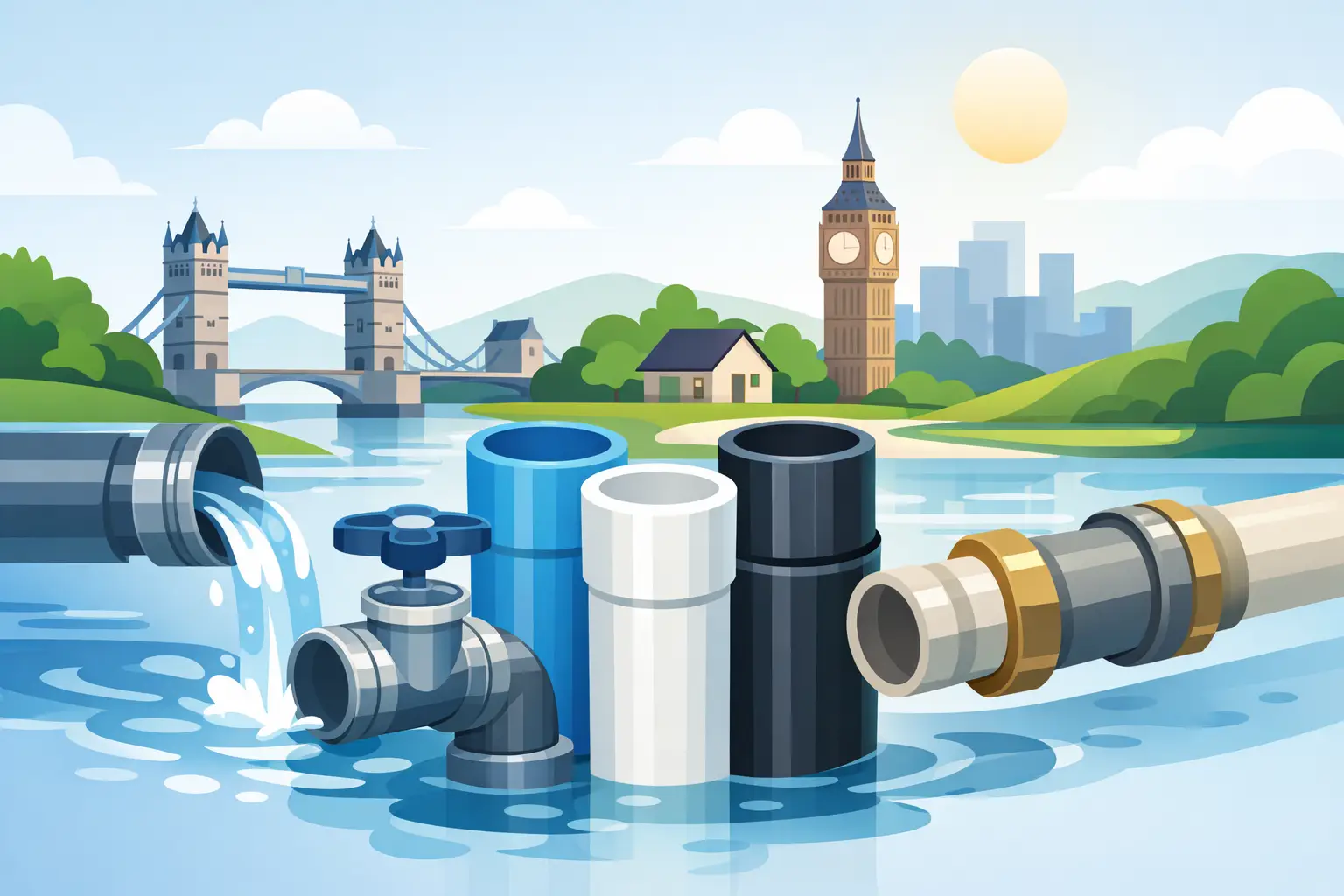
Best Pipe for Water Supply in the UK
If your water supply pipe needs replacing, the question usually comes up after a leak, low pressure issue or a lead pipe discovery. At that point, finding the best pipe for water supply is not really about theory – it is about choosing a material that is safe, durable, compliant and practical to install with as little disruption to the property as possible.
For most underground external water supply replacements in the UK, blue MDPE is now the standard answer. It is flexible, corrosion resistant, cost effective and well suited to modern installation methods, including trenchless moling where ground conditions allow. That said, it is not the right answer in every part of a system, and there are still situations where copper or other approved materials make sense.
What is the best pipe for water supply?
For the majority of domestic properties, the best pipe for water supply from the boundary to the house is MDPE, which stands for medium-density polyethylene. It has become the preferred material because it performs well underground, resists scale and corrosion, and can often be installed faster and more cleanly than rigid alternatives.
That matters to homeowners and landlords because the pipe itself is only part of the job. The method of installation affects the real cost. A material that works well with no-dig or low-dig techniques can reduce damage to driveways, gardens and paths, which often makes a bigger difference than a small saving on pipe price alone.
Inside the property, or on final connections where regulations and layout require it, other materials may be used. The best choice depends on where the pipe is going, what it is connecting to and whether the job is a full new supply, a lead replacement or a localised repair.
Why MDPE is usually the first choice
Blue MDPE is widely used for below-ground potable water services for good reason. It is designed for mains water supply applications and has the flexibility needed for long runs without numerous joints. Fewer joints underground generally means fewer potential failure points.
It also handles ground movement better than more rigid materials. In older areas across the North West, ground conditions can be mixed and access can be awkward. A flexible pipe is often a practical advantage, especially where the route passes under paving, landscaping or shared access areas.
Another benefit is corrosion resistance. Older metal pipes can degrade over time, especially where soil conditions are aggressive. MDPE does not rust and is not affected in the same way by electrochemical corrosion. That helps with long-term reliability.
From an installation point of view, MDPE suits modern trenchless methods very well. If a new water supply can be molled beneath a driveway or garden instead of excavating the full route, the overall job is often quicker, tidier and less disruptive. For many property owners, that is a major part of the value.
How copper compares
Copper still has a place in water supply work, but usually not as the main underground service pipe over longer distances. It is strong, well understood and suitable for internal plumbing, final connections and visible pipework where a rigid material is preferred.
The drawback is that copper is more expensive, less flexible and generally less forgiving to install underground. It may also require more fittings and joints depending on the route. In practical terms, that can mean more excavation, more labour and a higher overall cost.
There are also ground condition considerations. In some environments, copper can be vulnerable unless properly protected. For external supply replacements, contractors often prefer MDPE underground and then transition to copper where the pipe enters the building or where internal distribution begins.
So if the question is the best pipe for water supply to the house from the street, copper is rarely the first recommendation today. If the question is about a short internal section or a visible connection, it can still be a good option.
What about PEX and other plastic pipe?
PEX and similar plastic plumbing systems are common inside properties, particularly for hot and cold water distribution. They are useful, flexible and efficient for internal plumbing layouts. However, they are not usually the go-to material for the buried external supply pipe bringing water into the property.
This is where confusion often happens. People hear that plastic pipe is good and assume all plastic pipes are interchangeable. They are not. External below-ground water supply pipes must be suitable and approved for that specific use. MDPE is the usual choice for underground service runs, while PEX is more commonly seen inside the building envelope.
The key point is simple. The best material depends on location and purpose, not just the broad category of metal versus plastic.
Best pipe for water supply when replacing lead
If you have an older property, especially one built before the 1970s, lead may still be present on part or all of the incoming supply. In that case, the best pipe for water supply replacement is almost always a modern approved plastic service pipe such as blue MDPE for the underground run.
Lead replacement is about more than improving flow. It addresses a health concern and helps bring the supply up to modern standards. In many cases, the most sensible approach is a complete replacement from the boundary stop tap to the point of entry into the property, rather than repairing small sections and leaving old material in place.
A full replacement also gives a cleaner result from a pressure and reliability point of view. Piecemeal repairs can leave weak points behind, particularly if the remaining pipe is old, restricted or already showing signs of wear.
Pipe size matters as much as pipe material
Choosing the right material is only part of the decision. Pipe diameter has a direct effect on flow and pressure performance. A well-installed supply in the wrong size can still lead to poor results.
For many domestic replacements, 25mm MDPE is commonly used, but that does not mean it is right for every property. The correct size depends on the length of the run, expected demand and the incoming mains conditions. Larger homes, commercial premises, or buildings with higher simultaneous demand may need a different specification.
This is one reason professional assessment matters. A proper site survey should look at route, depth, entry point, existing supply conditions and reinstatement requirements, not just quote for whatever pipe happens to be on the van.
Installation method changes the real answer
There is a difference between the best pipe on paper and the best pipe for the actual job. Access restrictions, surface finishes, other buried services and water authority requirements all affect what is practical.
For example, if a supply runs beneath a finished driveway, mature garden or paved frontage, a flexible pipe that can be installed by moling may be the best overall option because it keeps excavation to a minimum. If the route is short and fully exposed during wider building works, the installation method may matter less.
This is where specialist contractors add value. The material choice should be tied to a compliant, efficient installation plan that protects the property as well as the water supply. Watermains & Drains UK regularly sees customers who are less worried about the pipe specification than they are about whether the job will be done quickly, tidily and without unnecessary digging. Fair enough – that is usually the part they have to live with afterwards.
Compliance, approvals and long-term reliability
Any water supply pipe replacement should use appropriate approved materials and be installed to the relevant standards. For homeowners, the practical takeaway is that cheapest and best are not the same thing, especially on an underground service that you do not want to revisit in a few years.
Accreditations, workmanship guarantees and proper insurance matter because the work affects a critical service entering the property. The pipe needs to be safe for drinking water, suitable for the ground conditions and correctly connected and tested.
A good installation should also consider future maintenance. Clear routing, sensible entry points and quality reinstatement all make a difference. The best job is not just one that passes on the day – it is one that stays trouble-free.
So which pipe should you choose?
In most UK domestic situations, blue MDPE is the best pipe for water supply where the pipe is buried externally and runs from the mains connection or boundary into the property. It offers the best balance of durability, compliance, flexibility and installation efficiency.
Copper remains useful in specific parts of the system, particularly internal or exposed sections, and there are other approved products for specialist situations. But for a straightforward external replacement, especially where lead is being removed or disruption needs to be kept down, MDPE is usually the strongest all-round choice.
The right next step is not guessing from photos online. It is getting the route, pipe size and installation method assessed properly. A well-specified supply pipe should give you reliable water flow for years, with the least disruption on the day and fewer worries after the ground is reinstated.





