

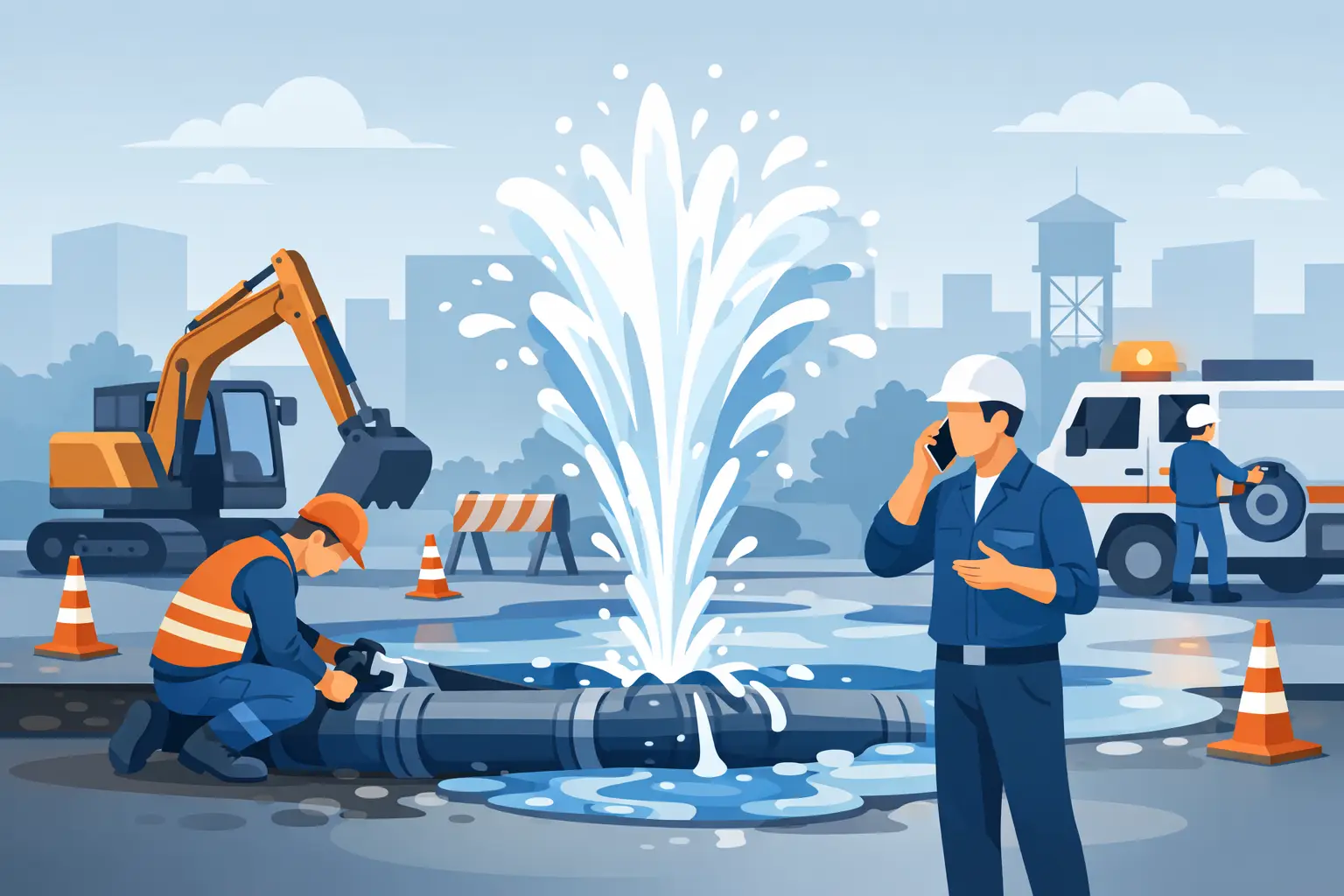
How to Handle Burst Water Main Fast
Water coming up through a driveway, pooling in the road, or suddenly dropping pressure throughout the property usually means one thing – you need to know how to handle burst water main problems quickly. This is not a job to leave and monitor for a few hours. A burst main can undermine hardstanding, affect neighbouring properties, interrupt supply, and turn a small external leak into a costly repair.
The first priority is safety. The second is limiting damage. After that, the focus shifts to getting the right contractor and the right repair method in place with as little disruption as possible.
How to handle burst water main issues safely
If you suspect a burst water main, keep people away from the affected area first. Standing water can hide slips, washouts, sharp debris and, in some cases, nearby utility risks. If water is surfacing near a road, footpath, meter chamber or boundary box, do not start lifting covers or digging to investigate. Ground conditions can be weaker than they look.
If the burst is affecting your private supply pipe rather than the public main, you may be able to isolate the water using your internal stop tap or external stop valve. If you know where it is, turn it off straight away. If you do not, avoid forcing old fittings, especially in older properties where valves may be seized or brittle.
Where water is entering a building, move valuables, lift soft furnishings clear of wet areas and isolate electrics only if it is safe to do so. If sockets, consumer units or wiring are near the water, leave them alone and seek urgent professional help. Water and electricity are not worth taking chances with.
Burst water main or private supply leak?
This matters because responsibility can change depending on where the pipe has failed. In simple terms, a public water main is usually the water company’s asset. A private supply pipe serving a house, flat conversion, rental property or commercial unit is often the owner’s responsibility from the property boundary onwards, though exact arrangements can vary.
For homeowners and landlords, the signs can look similar. You might see unexplained water in the street, hear running water with no taps on, notice a sudden pressure drop, or find wet ground that does not dry out. The difference is usually in the pipe location and who controls it.
If the leak appears to be in the road or beyond your boundary, report it to your water undertaker immediately. If it is within your boundary, affecting your incoming supply, or you are not sure where the fault sits, a specialist water contractor can trace the issue and advise on the next step. Guesswork often causes delays, and delays usually mean more damage.
What to do in the first hour
The first hour is about control, not permanent repair. If you can safely isolate the supply, do so. Take clear photos and short videos of the leak location, water spread, and any visible damage to paving, walls or internal finishes. This helps with insurance, landlord reporting and contractor assessment.
If you manage property, let occupiers know what is happening and whether they should stop using water. In commercial settings, that communication matters because toilets, kitchens, wash areas and process water can all be affected. It also helps you reduce unnecessary call-backs and confusion on site.
Avoid digging into driveways, gardens or verges yourself. A burst pipe can be deeper than expected, and there may be other buried services nearby. Damaging electric, petrol or telecoms infrastructure turns a repair into a much bigger incident.
Why burst mains cause more damage than people expect
A visible leak is only part of the problem. Pressurised water can travel underground, eroding soil, washing out bedding beneath paving, and finding the weakest route to the surface. That is why a small bubbling patch in one spot can relate to a failed section of pipe somewhere else.
On private supply pipes, older materials are often part of the issue. Ageing lead and galvanised pipework, poor historic joints, root ingress near boundaries, and ground movement can all contribute to sudden failure. In winter, freezing conditions raise the risk, but bursts also happen in warmer months where shallow pipes, previous repairs or traffic loading have weakened the line.
For landlords and facilities teams, there is another trade-off to consider. A quick patch can restore service, but it may not be the most cost-effective answer if the pipe is already deteriorating along its length. Repeated reactive repairs can cost more than replacing the affected run properly.
When to call a specialist contractor
You need a specialist when the leak is on a buried supply, when the location is unclear, when excavation needs to be controlled, or when reinstatement matters. That includes driveways, paved forecourts, landscaped gardens and shared access areas where disruption quickly becomes the main complaint.
A general plumber is not always the right fit for external underground water infrastructure. Burst supply pipes and mains-related issues often need leak detection, excavation planning, safe isolation, compliant repair methods and proper reinstatement. For commercial sites and managed properties, it may also require method statements, scheduling, and a contractor with the right insurance and approvals.
This is where accredited specialists make a difference. WIAPS and Watersafe approval, strong public liability cover, and clear workmanship guarantees reduce risk for the property owner and help keep the job moving.
Repair or replace – what is the better option?
It depends on the age of the pipe, the material, the location of the failure, and how easy it is to access. A localised repair can be sensible where the pipe is otherwise sound and the damage is clearly limited. If the line is old lead, has had previous leaks, or is undersized for current demand, replacement is often the better long-term answer.
For many homes in the North West, replacing an ageing supply pipe also improves flow and pressure while removing a recurring leak risk. That matters even more for landlords and commercial owners, where repeated outages affect tenants, staff and customers.
A proper assessment should consider not just the immediate burst, but the condition of the full run from boundary to building. Fixing one weak point on a failing pipe is sometimes only buying time.
Minimising disruption during repair works
Most customers are not just worried about the leak. They are worried about the mess. Torn-up drives, trenches through gardens and a long reinstatement programme put people off acting quickly. That is why repair method matters.
Modern trenchless techniques can reduce excavation considerably on suitable sites. Moling and other no-dig methods allow new supply pipes to be installed with minimal surface disturbance, which is particularly useful under driveways, lawns and paved paths. It is not right for every site – existing utility congestion, depth and ground conditions can affect the method – but where it fits, disruption is far lower than with full open-cut excavation.
A good contractor should explain the likely route, whether temporary water arrangements are needed, what surfaces will be affected, and how reinstatement will be handled. Clear expectations at the start usually lead to a smoother job.
Insurance, landlords and commercial reporting
If the burst has caused property damage, notify your insurer early and keep records. Photos, times, contractor reports and proof of mitigation all help. For landlords, it is sensible to document tenant communication and any temporary loss of supply. For commercial sites, record the impact on operations and any health and safety controls introduced while the issue is being managed.
Not every underground water leak will be an insurance claim, especially where it is classed as wear and tear rather than a sudden insured event. Even so, documented evidence is useful. It gives you a clearer position on liability and helps avoid disputes later.
Choosing the right contractor
Speed matters, but so does capability. Look for a contractor that handles underground water infrastructure routinely, not as an occasional add-on. You want someone who can locate the defect, isolate and repair or replace the pipe, and leave the site tidy and properly reinstated.
For homeowners, that means clear quoting, practical advice and a clean finish. For landlords and facilities teams, it means reliable attendance, compliance, insurance backing and a contractor who understands occupied sites. Watermains & Drains UK is one example of the kind of specialist contractor customers look for when they need a fast response and minimal disruption rather than a trial-and-error approach.
If you are dealing with a suspected burst water main, act early, keep the area safe, and get the right people involved before a manageable repair turns into a bigger excavation and a longer period without water. The quickest route back to normal is usually the one that starts with proper diagnosis.





