

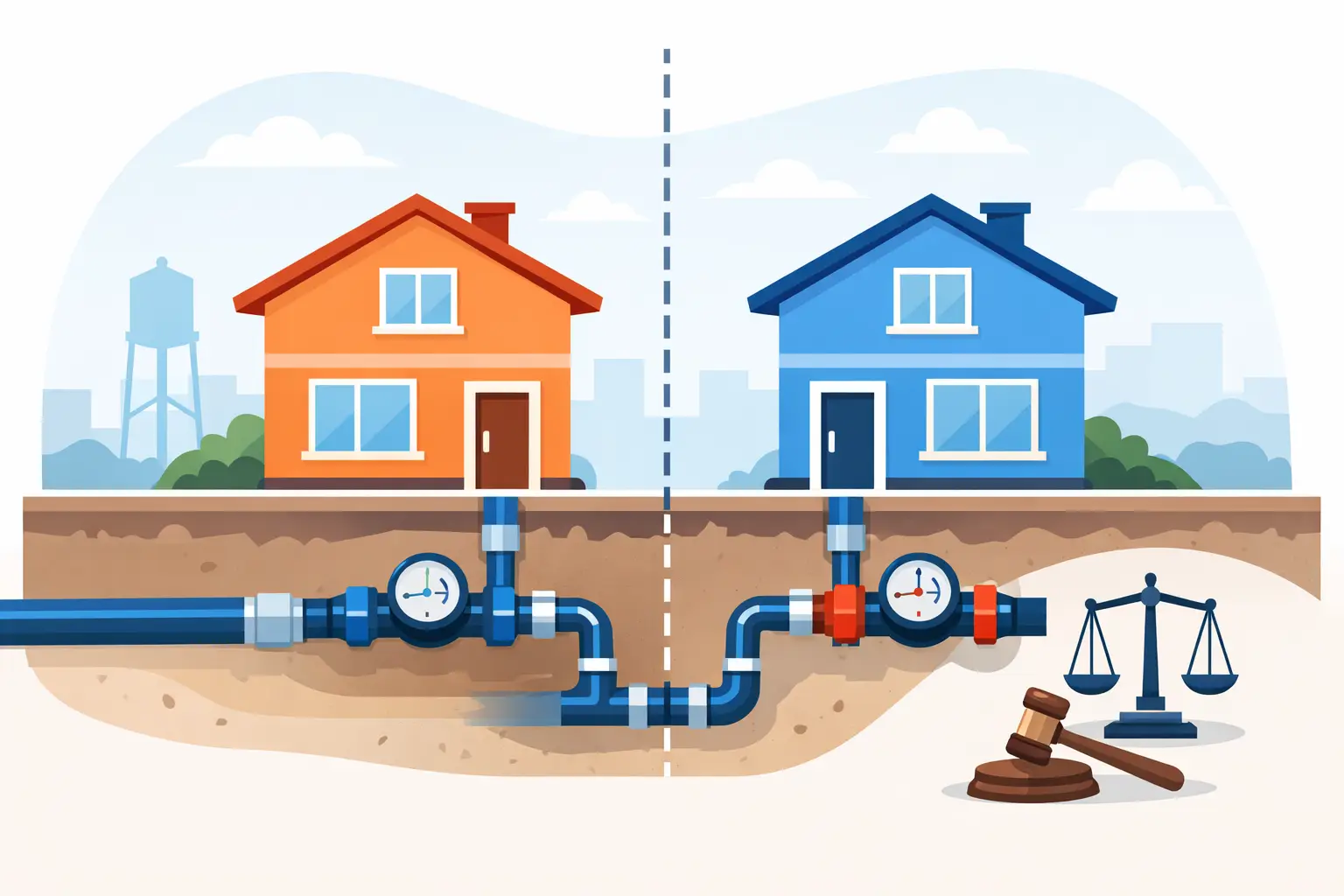
How to Separate Shared Water Connection Legally
A shared water pipe often works fine until it does not. One leak, one disputed bill, or one renovation can quickly expose how awkward a shared supply really is. If you need to separate shared water connection legally, the right route is not just digging a new pipe – it is making sure ownership, approvals, design and installation all line up with water regulations.
For homeowners, landlords and property managers, the legal side matters because an informal fix can cause bigger problems later. You may struggle when selling, face delays with your water company, or end up paying twice for work that should have been designed properly first time. The good news is that in many cases, separating a shared supply is straightforward when handled by the right specialist.
When a shared water connection becomes a problem
Shared supplies are common in older terraces, converted properties and some commercial premises. In many cases, one communication pipe feeds more than one building, or a single supply arrangement has been altered over time without a full upgrade.
That setup can lead to practical issues. If there is a leak on the shared section, it is not always clear who is responsible. If one property needs a new stop tap, internal alterations or a meter, the shared arrangement can complicate matters. Landlords may also want separate supplies so each tenancy is clearly billed and responsibility is easier to manage.
There is also the question of water quality and pipe condition. Older shared arrangements sometimes involve ageing pipework, including lead supply pipes. Where that is the case, separation is often a good point to upgrade the incoming supply completely rather than patching an outdated system.
What it means to separate shared water connection legally
In simple terms, legal separation means each property has its own compliant water supply arrangement, installed and approved in line with the water company’s requirements and the relevant regulations. It is not just a private agreement between neighbours.
Usually, this involves creating an independent supply pipe from the property to a new or approved point of connection. Depending on the site, that could mean a new connection to the water main, a revised metering arrangement, or changes to the boundary box and internal pipe layout.
The exact process depends on where responsibility starts and ends. In broad terms, the water company is responsible for the public main and certain external assets, while the property owner is responsible for the private supply pipe serving their building. On shared systems, that line can become less obvious, which is why a proper site assessment matters.
Who approves the work?
This is where many property owners get caught out. You cannot usually decide to alter the supply arrangement without involving the local water undertaker. If a new connection is needed, an application will normally be required. If existing pipework is being altered, the work must still comply with the Water Supply (Water Fittings) Regulations and the water company’s standards.
That is why accredited contractors matter. Using a contractor familiar with WIAPS and Watersafe requirements helps avoid common delays such as incorrect pipe sizing, poor routing, non-compliant fittings or failed inspections. For commercial sites and managed properties, this is even more important because there may be method statements, access controls and reinstatement standards to satisfy as well.
If the supply serves more than one legal title, or there are disputes over access and ownership, you may also need legal advice alongside the physical works. A contractor can install the pipe correctly, but neighbour consent, boundary rights and title issues may need a solicitor if they are not already clear.
Before any work starts
The first step is to confirm how the existing supply is arranged. That sounds obvious, but many owners do not know where the shared section runs, whether there is more than one feed, or whether past alterations have created a confusing layout.
A proper survey should establish where the current incoming main enters, where the external stop tap and meter sit, the pipe material, the likely route for a replacement supply and any obstacles such as driveways, trees, extensions or other buried services. If there are signs of leakage or poor pressure, those issues should be factored into the design as well.
It is also worth checking whether the water company offers any support where lead pipe replacement is involved. In some areas, there may be schemes or conditions that affect the project scope. That will not apply in every case, but it is worth exploring before final costs are agreed.
The usual process for legal separation
The process is rarely identical from one property to the next, but the broad sequence is usually similar. First, the site is assessed and the existing supply arrangement is identified. Then the proposed route and connection method are designed around the property layout, the water company’s requirements and the least disruptive installation method.
If a new connection application is needed, that is submitted before works are programmed. Once approved, the private supply pipe can be installed to specification. In many cases, trenchless moling is the cleanest option because it allows a new pipe to be installed beneath gardens, paths and driveways with much less excavation.
After installation, the water company may inspect or make the final connection depending on the type of application and local process. Once completed, each property should have a clear, independent supply arrangement.
Costs and what affects them
There is no single fixed price because the cost depends on the connection type, the distance to the main, ground conditions and surface reinstatement. A straightforward domestic separation with a suitable route can be far more cost effective than owners expect. A more complex site with long pipe runs, difficult access or heavy reinstatement requirements will naturally cost more.
The biggest cost variables are usually excavation or reinstatement, application fees, and whether the work can be completed with no-dig methods rather than open trenching. This is one reason specialist contractors are often the better option. The cheapest quote on paper is not always the cheapest once disruption, delays and remedial work are taken into account.
For landlords and commercial clients, there is also the cost of delay to consider. If tenants are affected, or if business operations depend on the water supply remaining live, planning the work properly is often more valuable than chasing the lowest headline figure.
Can you separate a shared water connection without major digging?
Often, yes. That depends on the route, the depth required and what sits between the property and the connection point. Where conditions allow, trenchless moling can install a new supply pipe with minimal disturbance to paving, lawns and driveways.
That does not remove the need for approvals, but it can make the project much cleaner and faster. For occupied homes, that usually means less mess and less time with access areas blocked off. For commercial and managed sites, it can reduce disruption to car parks, footpaths and day-to-day operations.
Open excavation is still necessary in some cases, particularly where service congestion is high or access is restricted. A good contractor will advise on the most practical method rather than forcing one approach onto every site.
Common issues that delay separation
The most common delay is uncertainty over who owns what. If neighbours share part of the supply and no one can confirm the route or responsibility, the project can stall before any physical work begins. Old plans are not always accurate, and previous repairs may not have been recorded properly.
Another issue is assuming the job only involves private pipework when the water company actually requires a new connection application. That can add time if it is discovered late. Properties with lead pipes, poor pressure, boundary complications or limited access also need more careful planning.
In practice, the smoothest jobs are the ones where the technical survey, paperwork and installation are treated as one coordinated process.
Why specialist installation matters
Water supply separation is not a general groundworks job. It needs the right materials, the correct depth and routing, compliant fittings, pressure awareness and proper liaison with the water authority. It also needs clean reinstatement, because most owners care just as much about the finished surface as the pipe beneath it.
That is why many customers choose a specialist contractor rather than piecing the job together between different trades. A contractor experienced in new water supply pipes, lead replacements and trenchless installation can usually identify the simplest legal route from the start. That reduces risk, shortens timescales and makes quoting clearer.
For homeowners and landlords across the North West, Watermains & Drains UK is typically called in when the issue needs sorting properly rather than patched again. That usually means clear advice, compliant installation and the least disruptive method the site allows.
If you are looking to separate shared water connection legally, the best first step is not to guess – it is to get the supply layout checked properly, confirm what the water company requires, and build the job around a solution that will still make sense years from now.





