

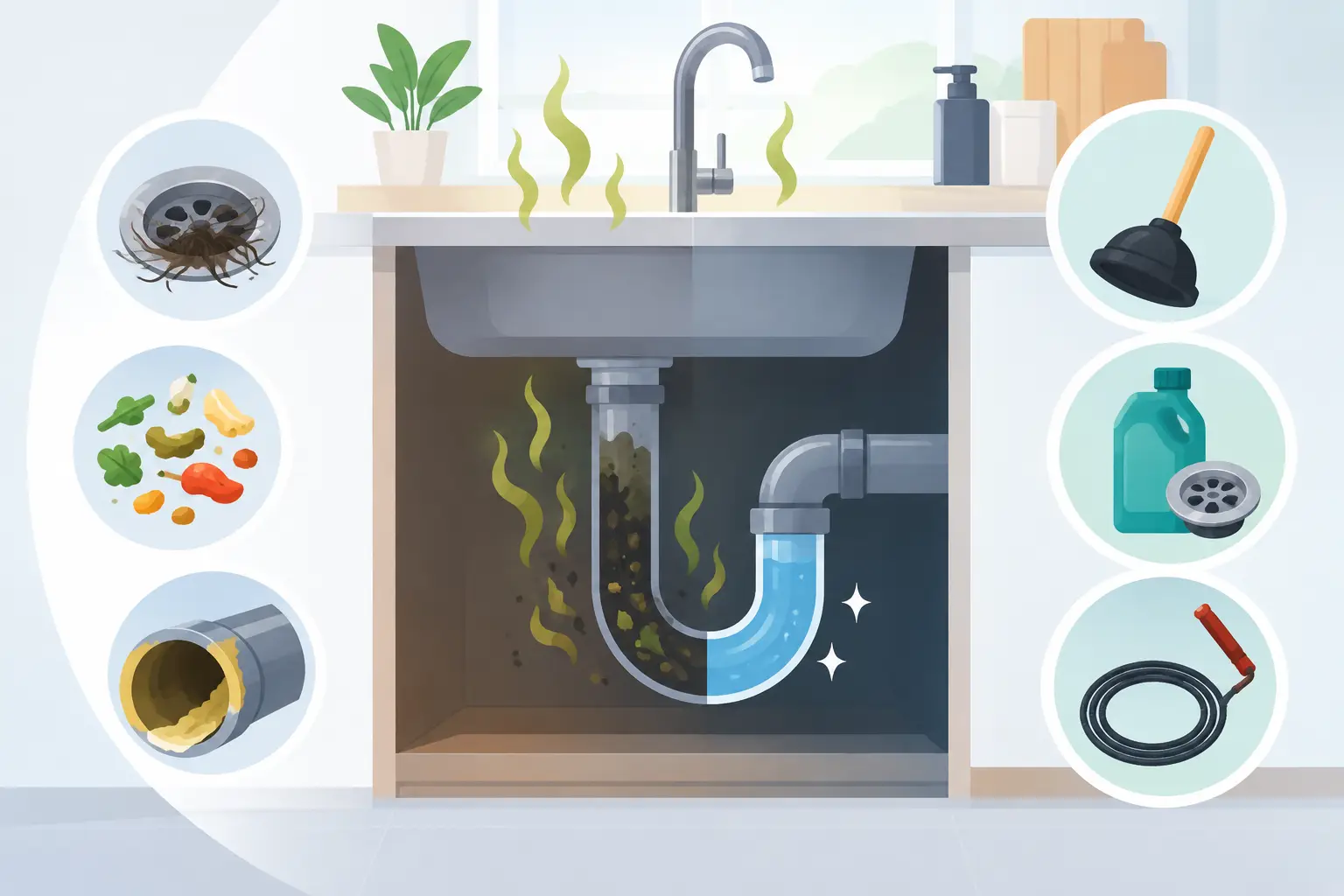
Top Causes of Drain Odours and How to Fix Them
A drain smell is rarely just an unpleasant nuisance. That sulphur-like, musty or sewage odour can be a warning that waste gases are entering the property, water is not flowing away correctly, or part of the drainage system needs attention. Understanding the top causes of drain odours helps homeowners, landlords and facilities managers act early, before a minor issue turns into a blocked drain, leak or tenant complaint.
The source is not always the drain closest to the smell. Odours can travel through pipework and emerge in a bathroom, kitchen, utility room or outside gully some distance from the fault. A practical check can often identify simple causes, but recurring smells, slow drainage or signs of leakage need a professional drainage inspection.
Top causes of drain odours in UK properties
A dry trap allowing sewer gases indoors
Every sink, bath, shower, basin and floor drain should have a water trap, usually a curved section of pipe called a U-bend. The water sitting inside it forms a seal that stops gases from the drainage system coming back into the room.
If a bathroom, en-suite, utility sink or unused floor drain has not been used for a while, the water can evaporate. This is particularly common in vacant properties, holiday lets, unused guest bathrooms and commercial premises with rarely used facilities. The result can be a sudden sewage smell despite no visible blockage.
Run water into the affected fitting for a minute or two and see whether the odour clears. For a floor drain, carefully pour in a jug of water. If the smell returns quickly, there may be a damaged trap, poor pipe connection or ventilation issue rather than simple evaporation.
Build-up of food, grease and soap residue
Kitchen drains are regularly affected by fats, oils, food particles and detergent residue. As these materials settle inside the pipe, bacteria break them down and produce unpleasant smells. Bathroom waste pipes can develop a similar coating from soap, shampoo, hair and toothpaste.
A slow-draining plughole, gurgling sounds or a smell that becomes stronger after running water are typical signs. Cleaning the plughole and removable waste trap may help where the build-up is close to the fitting. Avoid repeatedly using aggressive chemical drain cleaners, particularly in older pipework. They may offer a short-term improvement but can damage seals and do not resolve a deeper blockage.
If multiple fixtures are slow or smelling, the restriction may be further along the internal or external drain. This is where professional drain unblocking equipment can remove the cause without guesswork.
Blocked or poorly ventilated soil pipes
Your drainage system needs ventilation to keep pressure balanced as wastewater flows through the pipes. Most properties use a soil vent pipe, usually rising above roof level. If that vent becomes blocked by leaves, debris, a bird’s nest or frost, pressure can force air through the nearest available route – often a toilet, basin or shower trap.
The signs may include gurgling when a toilet is flushed, traps losing their water seal, intermittent odours and slow drainage. Some systems use air admittance valves instead of a full vent connection in certain areas. A faulty valve can also allow smells into the building.
Ventilation faults should be inspected safely and correctly. Working at roof level or altering soil pipe ventilation without understanding the system can create further drainage problems. For landlords and commercial property managers, it is also sensible to keep a record of the investigation and repair for maintenance and compliance purposes.
A partial blockage in the drain
Not every blocked drain causes wastewater to back up immediately. A partial obstruction can leave enough room for water to pass while trapping debris that begins to smell. Outside drains are especially vulnerable to leaves, silt, wipes, sanitary products, grease and unsuitable materials flushed down toilets.
The odour may be strongest around an external gully or manhole cover, but it can travel indoors through connected pipework. During warmer weather, smells from standing waste are often more noticeable. Rain can temporarily mask the issue, then the odour returns when the drain dries out.
A drainage contractor can clear the line and, where needed, carry out a CCTV drain survey. This shows whether the blockage was a one-off build-up or a symptom of a structural problem such as a crack, displaced joint or root ingress.
Damaged, cracked or displaced drain pipes
Drainage pipes do not last forever. Ground movement, age, vehicle loading, poor historic installation and tree roots can all damage underground drainage. Even a small crack or open joint can allow waste material to collect around the defect, while also letting foul odours escape into the ground or property.
You may notice persistent smells outside, damp or soft ground, repeated blockages in the same area, subsidence around paving, or a drain that clears but blocks again soon afterwards. In some cases, the first sign is an unpleasant smell near a patio, driveway or external wall.
A CCTV survey is the most reliable way to assess the condition of concealed drainage. It avoids unnecessary excavation and allows the repair to be planned around the actual fault. Depending on access and pipe condition, patch lining can often repair a localised defect from within the pipe. This no-dig approach can reduce disruption to gardens, paths and paved areas compared with opening up the full drain run.
Faulty toilet seals or loose waste connections
A smell around the base of a toilet, behind a washing machine or below a kitchen sink may point to a failed seal or loose connection. These faults can be subtle. There may be no obvious leak, but a small gap can let foul air escape every time the pipe is used.
Toilet pan connectors are a common point of failure, particularly after a bathroom refit, floor movement or a replacement toilet installation. Under-sink pipework can also become loose after cupboards are moved or cleaning products are stored around the fittings.
Do not simply cover the smell with air freshener. Check for staining, moisture, movement around the toilet pan and drips beneath visible waste pipes. If a seal is suspected, the connection should be inspected and renewed properly to prevent both odours and water damage.
Problems with external gullies and interceptors
Older UK properties may have external gullies, trapped drains or interceptors that need routine attention. Gullies collect surface water and wastewater before it enters the underground drain. When they fill with leaves, silt, moss or decomposing debris, they can produce a strong earthy or sewage smell.
A gully should retain some water in its trap, but the pot must not be full of waste. Carefully remove loose visible debris where it is safe to do so and flush through with water. If the gully repeatedly fills, drains slowly or smells after cleaning, the outlet pipe may be restricted.
Properties with old interceptor traps can be more difficult to maintain. These fittings were designed to stop sewer gases travelling towards the property, but they can obstruct modern drain-cleaning equipment and catch debris if neglected. A drainage survey will establish whether the interceptor is contributing to recurring problems and what repair or alteration is appropriate.
When a drain smell needs urgent attention
A brief smell from an unused shower drain is usually straightforward. However, do not delay if the odour is persistent, accompanied by sewage backing up, affects several rooms, or comes with damp patches and signs of a leak. Commercial premises should also act quickly where odours affect staff areas, customer spaces or food-preparation environments.
Do not enter a manhole or enclosed drain chamber. Drain gases can be hazardous, and underground drainage requires the right equipment and safe working procedures. If you can identify a simple dry trap, refill it. Beyond that, repeated DIY treatments can hide the real problem while allowing the drain condition to worsen.
A clear route to a lasting repair
The right solution depends on what is causing the odour. A dry trap may only need regular use; a grease blockage may need professional clearing; a damaged pipe may require CCTV investigation and targeted lining or repair. The key is to diagnose the fault rather than treating the smell alone.
Watermains & Drains UK provides drain unblocking, CCTV drain surveys and repair options for homeowners, landlords and commercial properties across the North West. A properly investigated drainage fault can usually be resolved with far less disruption than people expect, especially where no-dig repair methods are suitable.
If the smell keeps returning after cleaning visible fittings, arrange an inspection before it becomes a blockage, leak or more disruptive drainage repair.





