Commercial Drain Maintenance Checklist for UK Sites
A blocked drain can close a staff toilet, flood a customer entrance or stop a commercial kitchen from trading within hours. The best response is not simply having an emergency contractor’s number to hand. A planned commercial drain maintenance checklist gives facilities teams, landlords and site managers a clear routine for spotting problems before wastewater backs up onto the premises.
The right schedule depends on the building and how it is used. A busy restaurant, school, care setting or industrial unit will need closer attention than a lightly occupied office. The practical aim is the same: keep waste moving freely, prevent contamination, protect the building fabric and avoid disruption for tenants, staff and customers.
Commercial drain maintenance checklist: daily and weekly checks
Daily checks are most valuable where food, large numbers of people or public-facing washrooms create a higher volume of waste. Give a nominated member of staff responsibility for reporting issues, rather than assuming somebody else will notice them.
Start with toilets, sinks, floor drains and external access points that staff can safely inspect. Look for slow drainage, water sitting around gullies, unpleasant odours, gurgling sounds and signs of leakage below sinks or behind sanitaryware. A single slow basin may be a local blockage. Several fixtures draining slowly at once can point to a restriction further along the drainage run.
For kitchens and food preparation areas, remove food debris from sink strainers at the end of each day. Wipe grease from cookware into a suitable container before washing it. Fat, oil and grease should never be poured down a sink, even when mixed with hot water or detergent. It cools further down the pipework, where it sticks to the drain and collects food waste.
Each week, inspect floor gullies, external channel drains and bin-store drainage for litter, leaves, silt and packaging. Clear surface debris by hand where it is safe to do so, but do not force rods into a drain or remove covers that may be unstable. Check that drain covers are seated correctly and have not cracked, shifted or become a trip hazard.
Keep a simple log of findings, cleaning activity and reported faults. This is especially useful in multi-let buildings, managed sites and premises with shift teams. Patterns such as repeat blockages in the same toilet stack, or odours following heavy rain, help a drainage contractor diagnose the cause quickly.
Monthly checks that prevent expensive call-outs
A monthly inspection is a sensible minimum for most commercial premises. It gives you the chance to deal with early warning signs before they become an out-of-hours emergency.
Walk the outside of the property and inspect gullies, manhole covers and drainage channels. Standing water after normal weather, stained paving, soft ground or unusually lush patches of grass can indicate a damaged or leaking underground pipe. Rodent activity around drainage points should also be reported. Defective drains can provide an access route into the building.
Inside, check accessible waste pipes, traps and connection points for drips, corrosion and movement. Odours are not always caused by a blockage. An infrequently used toilet, cleaner’s sink or floor drain may have a dry trap, allowing smells from the drainage system into the room. Replenishing the water seal may resolve it, but recurring smells need investigating rather than masking with air freshener.
Review what is being put into the drainage system. In offices and retail units, wipes, sanitary products, paper towels and excessive toilet tissue remain common causes of blockages. In workshops, gyms and salons, the risks may include hair, cleaning chemicals, sediment or inappropriate disposal of liquids. Clear signage and suitable waste bins often prevent a costly problem.
Planned servicing for kitchens, car parks and high-use sites
Some drainage assets need specialist planned maintenance. This is where a generic cleaning rota is not enough.
Commercial kitchens may have grease management equipment, including grease traps or separators. The required cleaning frequency depends on its size, menu, trading volume and local requirements, but it must be emptied and maintained before accumulated fat can pass into the downstream pipework. Keep service records and waste transfer documentation where applicable. A trap that is neglected can create odours, blockages and hygiene issues despite staff doing the right thing at the sink.
Car parks, yards and delivery areas collect silt, litter, leaves and oils. Gullies and catchpits should be cleared on a planned basis, particularly before autumn leaf fall and after nearby building work. If the site has an interceptor or separator, maintenance should be arranged by a competent specialist in accordance with the equipment and environmental requirements. Do not treat it as an ordinary drain chamber.
Schools, hotels, leisure centres and large offices often benefit from scheduled cleaning of high-use toilet stacks and communal drainage. The frequency may be quarterly, six-monthly or based on previous site history. There is a cost to planned work, but it is usually far lower than closing facilities, arranging an urgent clean-up and dealing with damage after a sewage backup.
When a CCTV drain survey should be part of the plan
Drain cleaning removes a blockage. It does not always explain why it formed. If a commercial property suffers repeat blockages, persistent odours, slow-running facilities or damp areas outside, a CCTV drain survey is the sensible next step.
A drainage camera can identify displaced joints, cracks, root ingress, scale build-up, collapsed sections and incorrect pipe falls without unnecessary excavation. This is particularly useful before taking on a new lease, purchasing a commercial unit or carrying out a refurbishment that will increase drainage demand.
Ask for clear survey findings, footage where provided, and a practical recommendation. Not every defect needs immediate replacement. Minor root ingress may be manageable with periodic cutting and monitoring, while a fractured pipe under a busy entrance may need prompt repair. The decision should reflect the defect, the risk of failure, access constraints and the cost of disruption.
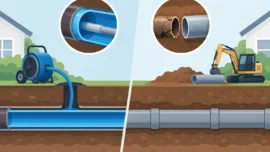
Where a repair is required, patch lining or other no-dig methods can often seal a localised defect from within the pipe. This can avoid digging through paving, landscaped areas or internal floors. Full excavation remains necessary in some cases, particularly where a pipe has collapsed or its route needs altering, but it should be based on evidence rather than guesswork.
Preparing for heavy rain and seasonal pressure
Drainage problems are often exposed by weather rather than caused by it. Heavy rain can overwhelm gullies already restricted by leaves and silt, while winter conditions can reveal defects around covers, channels and external pipework.
Before autumn and periods of forecast heavy rainfall, clear accessible surface debris and check that rainwater can reach gullies freely. Do not sweep leaves into channels. Make sure staff know where water is most likely to pond and who to contact if it approaches doorways, plant rooms or electrical areas.
If a site has experienced flooding, record the date, weather conditions, affected locations and whether foul water or surface water was involved. This information matters when identifying whether the issue is a private drain defect, insufficient surface-water drainage or a wider network problem.
Signs you need a drainage contractor now
Planned checks should never delay action where there is a hygiene, safety or business-continuity risk. Arrange professional help promptly if sewage is backing up, multiple fixtures are blocked, water is escaping from an inspection chamber, or there is a strong drain smell that cannot be traced to a dry trap.
A contractor should also be called where covers are damaged, a drain repeatedly blocks after clearing, tree roots are suspected, or water is appearing through floors and walls. Avoid chemical drain cleaners in commercial systems. They can damage pipework, create hazards for staff and complicate safe investigation.
For property managers, keep the drainage plan alongside emergency contacts, site drawings and records of previous surveys or repairs. That preparation allows the attending engineer to work faster and helps reduce disruption to occupiers. Watermains & Drains UK provides planned and reactive drainage support, including CCTV surveys, drain repairs and no-dig lining where appropriate.
A well-kept drainage log may feel like a small administrative task, but it turns recurring drain trouble into evidence-led maintenance. That means fewer unpleasant surprises, cleaner premises and a clearer basis for deciding when a simple clean is enough and when the drainage system needs repair.