HDD Drilling Versus Open Cutting Compared
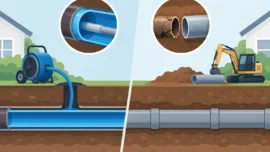
A new water supply pipe should not automatically mean a trench across the front garden, driveway or commercial forecourt. When considering HDD drilling versus open cutting, the right method depends on the route, ground conditions, existing services and the level of disruption a property can reasonably accommodate. Both methods have a place. The practical difference is how much surface needs to be opened up to install, replace or divert the pipework below.
For homeowners, the decision often comes down to protecting a finished driveway, garden or path while replacing an ageing lead supply pipe. For landlords and facilities teams, it may be about keeping tenants, customers and vehicle access moving. A proper site assessment should decide the method, rather than assuming that either trenchless work or excavation is always the better option.
What is HDD drilling?
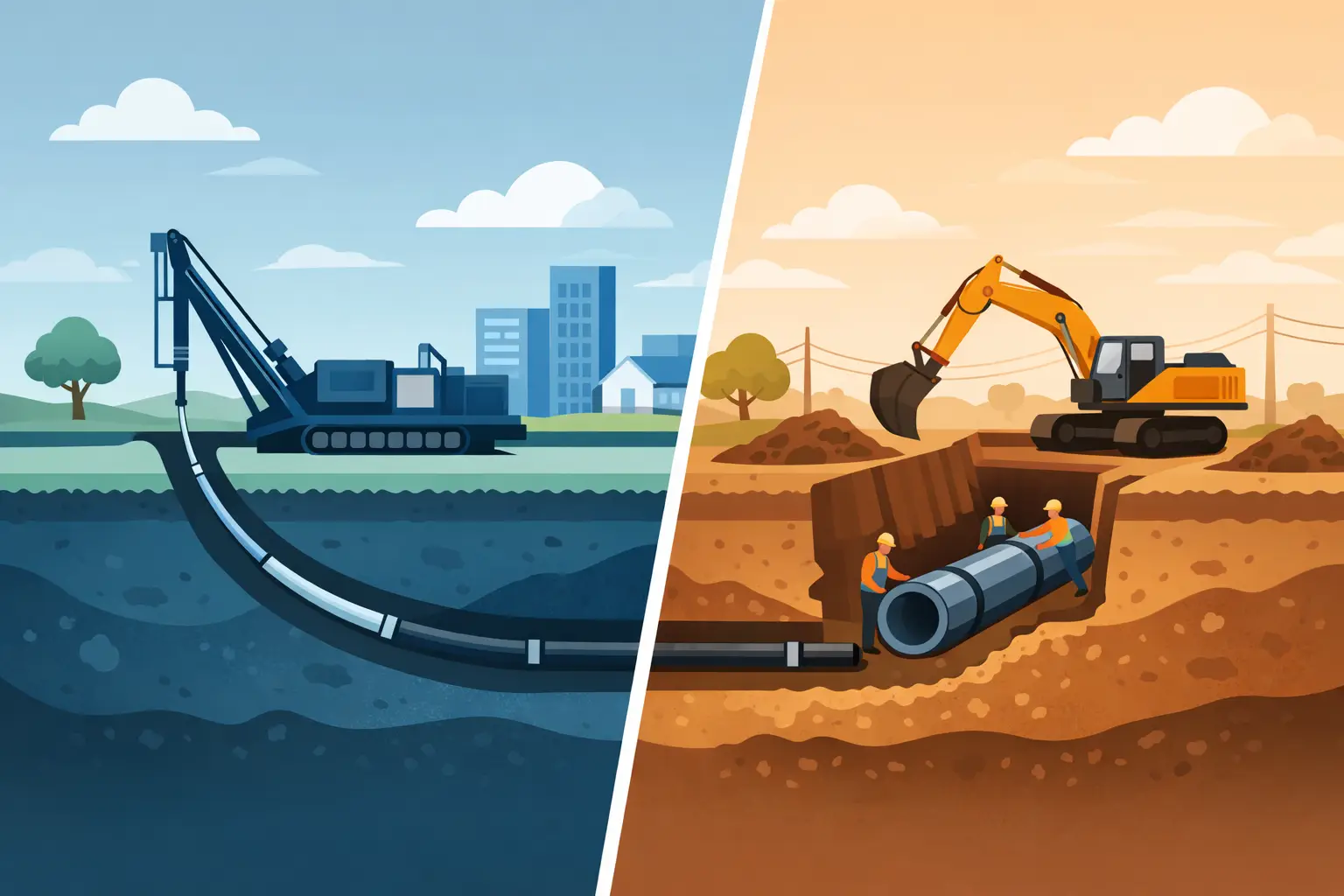
Horizontal directional drilling, usually shortened to HDD, is a trenchless installation method. A specialist drilling rig creates a controlled bore underground from an entry pit to an exit pit. The pipe is then pulled through the completed bore, avoiding the need to excavate the full length of the route.
The route can be guided beneath driveways, lawns, paved areas and some roads, subject to survey findings and permissions. For new water mains, supply pipe replacements and certain pipe diversions, HDD can provide a fast, clean solution where surface reinstatement would otherwise form a significant part of the project.
HDD is not simply a matter of drilling in a straight line. The contractor needs to establish the proposed depth, entry and exit positions, route length, ground type and the location of existing utilities. Water, gas, electric, telecoms and drainage apparatus must be considered before drilling begins. This planning is central to safe, reliable trenchless installation.
What does open cutting involve?
Open cutting is the conventional excavation method. A trench is dug along the planned pipe route, allowing the contractor to expose the ground, install the pipework, make connections and inspect the work before backfilling and reinstatement.
It is often the most direct approach where pipes need to be installed at shallow depth, where access is unrestricted, or where several services need repair or replacement at the same time. It is also useful when the precise ground conditions or existing pipe arrangements need to be seen and managed as the work progresses.
The drawback is clear: the route above the pipe has to be disturbed. That can mean lifting block paving, cutting tarmac, removing sections of lawn or restricting access while works are underway. Good reinstatement matters, but it still takes time and may add cost, particularly where premium paving, landscaped gardens or busy commercial surfaces are involved.
HDD drilling versus open cutting: the key differences
The biggest distinction is surface disruption. HDD normally requires two small excavations rather than a continuous trench. Where the ground and route are suitable, most of the driveway, garden or hardstanding can remain intact. Open cutting provides full access to the pipe route, but that access comes at the cost of excavation and reinstatement.
Programme length can also differ. Trenchless drilling may reduce the time spent breaking out and reinstating surfaces, especially on a straightforward water pipe installation. However, HDD is not always quicker in difficult ground or on a site with complicated utility congestion. Investigation, safe working controls and accurate set-up cannot be rushed.
Cost should be viewed as the whole project cost, not simply the installation price per metre. Open cutting can be cost effective where the route crosses soft ground and reinstatement is simple. Once a trench needs to cross a resin-bound driveway, decorative paving, a landscaped frontage or an operational yard, the cost of making good may alter the calculation. HDD can reduce reinstatement requirements, although specialist plant, survey work and ground risks must be allowed for.
There is also a difference in visibility. With an open trench, the team can see the ground and any exposed services along the route. With HDD, the installation is underground for most of its length, so accurate records, utility checks and experienced operatives are essential. Neither method removes risk entirely. The aim is to select the method that controls the relevant risks on that particular site.
When HDD is often the better option
HDD is particularly well suited to properties where maintaining the finished surface is a priority. A homeowner replacing a lead pipe beneath a block-paved driveway may reasonably prefer entry and exit pits to lifting and relaying the whole route. The same applies to a water main passing under a patio, established garden, car park or access road.
It can also be valuable on commercial sites where disruption has a direct operational cost. Avoiding a long trench across a vehicle route, loading area or customer entrance can make scheduling much easier. The work area is generally smaller, which can support safer segregation and a tidier site, although every project still needs suitable space for plant, materials and spoil management.
Long, relatively clear runs are often favourable for directional drilling. The pipe needs a viable route with enough room to enter, steer and pull back the product pipe at the correct depth. A site survey will confirm whether this is possible.
Situations where HDD may not be suitable
Trenchless methods have limits. Very hard ground, substantial rock, unstable ground, dense buried services or restricted access can make HDD difficult or unsuitable. So can a route with tight changes of direction, shallow existing infrastructure or an unknown obstruction that cannot be safely avoided.
Some installations also need open excavation at connection points. A new supply pipe may be drilled beneath the property frontage, but pits are still needed to connect to the internal supply arrangement and the external main connection area. This is still far less disruptive than opening the entire route, but it is important to set realistic expectations.
When open cutting is the sensible choice
Open cutting is often the right answer when the ground needs to be inspected, repaired or regraded directly. For example, a collapsed drain, damaged underground chamber or multiple failing pipe connections may require excavation so the problem can be properly exposed and rebuilt.
It can also be more practical when a route is short and crosses a lawn or another surface that is straightforward to reinstate. In that situation, introducing specialist drilling equipment may add cost without delivering a meaningful benefit. The same principle can apply where a planned landscaping project already involves lifting the surface along the proposed route.
For drainage work, excavation remains necessary more often than it does for clean water supply installations. Drain pipes need precise falls and sometimes require replacement of damaged sections, fittings or chambers. CCTV drain surveys can help identify whether patch lining, excavation or another repair method is the most appropriate response.
The questions a site survey should answer
Before recommending HDD or open cutting, a specialist contractor should establish the pipe route and purpose, the required depth and diameter, ground conditions, access arrangements, nearby utilities and the surfaces that would need reinstatement. For commercial work, the survey should also consider pedestrian routes, vehicle movements, working hours and any permit or traffic-management requirements.
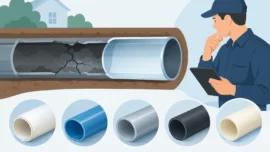
The condition and material of the existing pipework matters too. A lead supply pipe replacement is a different job from a water main diversion or a drainage repair. The correct approach should be based on the complete connection, not just the most visible section of pipe.
Clear communication at this stage prevents surprise costs later. Customers should know where pits or trenches are expected, what surfaces may be affected, how spoil will be handled, what reinstatement is included and whether there are risks that could change the scope once work starts.
Choosing a contractor for either method
The method is only as reliable as the planning and workmanship behind it. Ask whether the contractor carries out utility checks and site surveys, has relevant water-industry approvals, provides a written scope and can explain the proposed reinstatement. For water supply work, using a properly accredited contractor is particularly important where work interfaces with the public water network.
Watermains & Drains UK uses modern trenchless methods alongside conventional excavation, allowing the installation approach to be matched to the site rather than forcing every project into one solution. Customers should also look for appropriate insurance cover, clear quotation terms and a workmanship guarantee that provides confidence after the surface has been reinstated.
A tidy, low-disruption installation is often possible, but the best result starts with an honest assessment of the ground. If a proposed route crosses a valuable driveway or a busy access point, arrange a survey before committing to an excavation plan. The right method can protect the surface, control costs and get the water or drainage system back to dependable service with the least practical disruption.