Your Water Main, Drainage & Trenchless Solution Specialists

News

HDD Drilling Versus Open Cutting Compared
Blog

HDD Drilling Versus Open Cutting Compared

A new water supply pipe should not automatically mean a trench across the front garden, driveway or commercial forecourt. When considering HDD drilling versus open cutting, the right method depends on the route, ground conditions, existing services and the level of disruption a property can reasonably accommodate. Both methods have a place. The practical difference is how much surface needs to be opened up to install, replace or divert the pipework below.

For homeowners, the decision often comes down to protecting a finished driveway, garden or path while replacing an ageing lead supply pipe. For landlords and facilities teams, it may be about keeping tenants, customers and vehicle access moving. A proper site assessment should decide the method, rather than assuming that either trenchless work or excavation is always the better option.

What is HDD drilling?

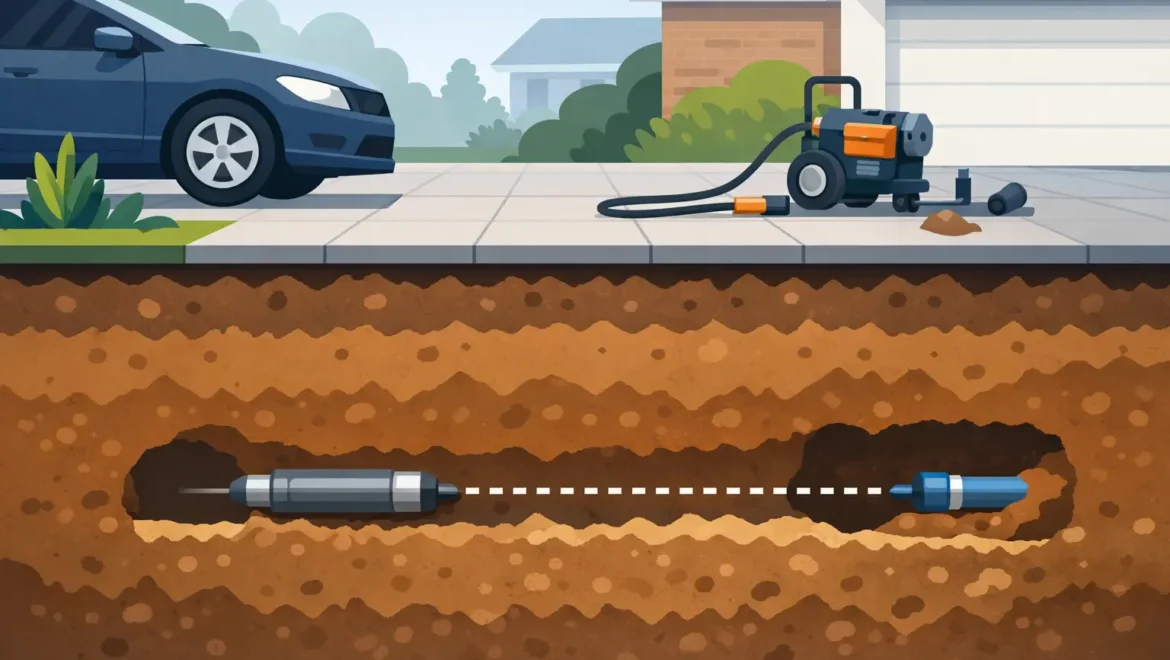
Horizontal directional drilling, usually shortened to HDD, is a trenchless installation method. A specialist drilling rig creates a controlled bore underground from an entry pit to an exit pit. The pipe is then pulled through the completed bore, avoiding the need to excavate the full length of the route.

The route can be guided beneath driveways, lawns, paved areas and some roads, subject to survey findings and permissions. For new water mains, supply pipe replacements and certain pipe diversions, HDD can provide a fast, clean solution where surface reinstatement would otherwise form a significant part of the project.

HDD is not simply a matter of drilling in a straight line. The contractor needs to establish the proposed depth, entry and exit positions, route length, ground type and the location of existing utilities. Water, gas, electric, telecoms and drainage apparatus must be considered before drilling begins. This planning is central to safe, reliable trenchless installation.

What does open cutting involve?

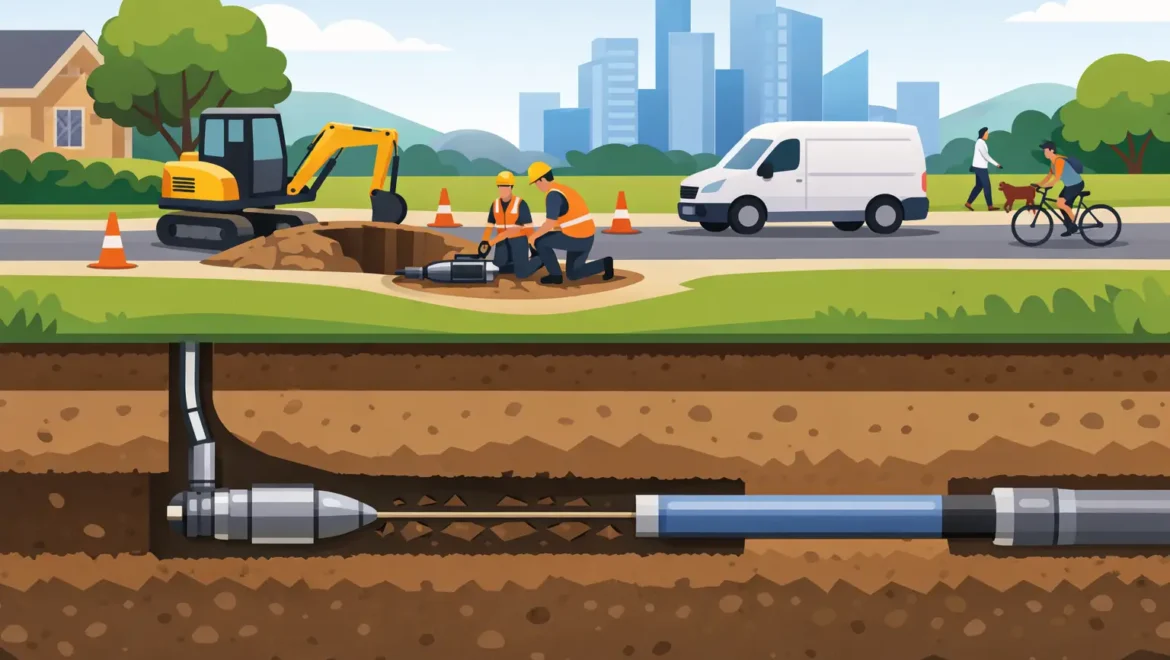
Open cutting is the conventional excavation method. A trench is dug along the planned pipe route, allowing the contractor to expose the ground, install the pipework, make connections and inspect the work before backfilling and reinstatement.

It is often the most direct approach where pipes need to be installed at shallow depth, where access is unrestricted, or where several services need repair or replacement at the same time. It is also useful when the precise ground conditions or existing pipe arrangements need to be seen and managed as the work progresses.

The drawback is clear: the route above the pipe has to be disturbed. That can mean lifting block paving, cutting tarmac, removing sections of lawn or restricting access while works are underway. Good reinstatement matters, but it still takes time and may add cost, particularly where premium paving, landscaped gardens or busy commercial surfaces are involved.

HDD drilling versus open cutting: the key differences

The biggest distinction is surface disruption. HDD normally requires two small excavations rather than a continuous trench. Where the ground and route are suitable, most of the driveway, garden or hardstanding can remain intact. Open cutting provides full access to the pipe route, but that access comes at the cost of excavation and reinstatement.

Programme length can also differ. Trenchless drilling may reduce the time spent breaking out and reinstating surfaces, especially on a straightforward water pipe installation. However, HDD is not always quicker in difficult ground or on a site with complicated utility congestion. Investigation, safe working controls and accurate set-up cannot be rushed.

Cost should be viewed as the whole project cost, not simply the installation price per metre. Open cutting can be cost effective where the route crosses soft ground and reinstatement is simple. Once a trench needs to cross a resin-bound driveway, decorative paving, a landscaped frontage or an operational yard, the cost of making good may alter the calculation. HDD can reduce reinstatement requirements, although specialist plant, survey work and ground risks must be allowed for.

There is also a difference in visibility. With an open trench, the team can see the ground and any exposed services along the route. With HDD, the installation is underground for most of its length, so accurate records, utility checks and experienced operatives are essential. Neither method removes risk entirely. The aim is to select the method that controls the relevant risks on that particular site.

When HDD is often the better option

HDD is particularly well suited to properties where maintaining the finished surface is a priority. A homeowner replacing a lead pipe beneath a block-paved driveway may reasonably prefer entry and exit pits to lifting and relaying the whole route. The same applies to a water main passing under a patio, established garden, car park or access road.

It can also be valuable on commercial sites where disruption has a direct operational cost. Avoiding a long trench across a vehicle route, loading area or customer entrance can make scheduling much easier. The work area is generally smaller, which can support safer segregation and a tidier site, although every project still needs suitable space for plant, materials and spoil management.

Long, relatively clear runs are often favourable for directional drilling. The pipe needs a viable route with enough room to enter, steer and pull back the product pipe at the correct depth. A site survey will confirm whether this is possible.

Situations where HDD may not be suitable

Trenchless methods have limits. Very hard ground, substantial rock, unstable ground, dense buried services or restricted access can make HDD difficult or unsuitable. So can a route with tight changes of direction, shallow existing infrastructure or an unknown obstruction that cannot be safely avoided.

Some installations also need open excavation at connection points. A new supply pipe may be drilled beneath the property frontage, but pits are still needed to connect to the internal supply arrangement and the external main connection area. This is still far less disruptive than opening the entire route, but it is important to set realistic expectations.

When open cutting is the sensible choice

Open cutting is often the right answer when the ground needs to be inspected, repaired or regraded directly. For example, a collapsed drain, damaged underground chamber or multiple failing pipe connections may require excavation so the problem can be properly exposed and rebuilt.

It can also be more practical when a route is short and crosses a lawn or another surface that is straightforward to reinstate. In that situation, introducing specialist drilling equipment may add cost without delivering a meaningful benefit. The same principle can apply where a planned landscaping project already involves lifting the surface along the proposed route.

For drainage work, excavation remains necessary more often than it does for clean water supply installations. Drain pipes need precise falls and sometimes require replacement of damaged sections, fittings or chambers. CCTV drain surveys can help identify whether patch lining, excavation or another repair method is the most appropriate response.

The questions a site survey should answer

Before recommending HDD or open cutting, a specialist contractor should establish the pipe route and purpose, the required depth and diameter, ground conditions, access arrangements, nearby utilities and the surfaces that would need reinstatement. For commercial work, the survey should also consider pedestrian routes, vehicle movements, working hours and any permit or traffic-management requirements.

The condition and material of the existing pipework matters too. A lead supply pipe replacement is a different job from a water main diversion or a drainage repair. The correct approach should be based on the complete connection, not just the most visible section of pipe.

Clear communication at this stage prevents surprise costs later. Customers should know where pits or trenches are expected, what surfaces may be affected, how spoil will be handled, what reinstatement is included and whether there are risks that could change the scope once work starts.

Choosing a contractor for either method

The method is only as reliable as the planning and workmanship behind it. Ask whether the contractor carries out utility checks and site surveys, has relevant water-industry approvals, provides a written scope and can explain the proposed reinstatement. For water supply work, using a properly accredited contractor is particularly important where work interfaces with the public water network.

Watermains & Drains UK uses modern trenchless methods alongside conventional excavation, allowing the installation approach to be matched to the site rather than forcing every project into one solution. Customers should also look for appropriate insurance cover, clear quotation terms and a workmanship guarantee that provides confidence after the surface has been reinstated.

A tidy, low-disruption installation is often possible, but the best result starts with an honest assessment of the ground. If a proposed route crosses a valuable driveway or a busy access point, arrange a survey before committing to an excavation plan. The right method can protect the surface, control costs and get the water or drainage system back to dependable service with the least practical disruption.

Open Cut Trenching Works: When Excavation Is Right
Blog

Open Cut Trenching Works: When Excavation Is Right

A new water supply does not always have a clear path from the boundary to the property. Tree roots, failed drainage runs, deep pipework and inaccessible ground can all make the job more involved. Open cut trenching works provide a direct, proven way to expose, install or repair underground services where a no-dig method is not suitable.

For homeowners, landlords and property managers, the concern is usually not the trench itself. It is what happens to the driveway, garden, business access or finished surface afterwards. A properly planned excavation should solve the underlying problem, protect existing services and leave the site safe, tidy and correctly reinstated.

What are open cut trenching works?

Open cut trenching is the traditional process of excavating a narrow trench from ground level to reach underground pipes, cables or drainage. Once the required service is exposed, contractors can install a new pipe, replace a damaged section, alter its route or connect it to an existing supply. The trench is then backfilled in layers and the affected surface is reinstated.

It is commonly used for new water mains, replacement supply pipes, drainage installations, repairs to collapsed drains and pipe diversions. Depending on access, excavation may be completed by hand, with a compact excavator or using larger plant on commercial sites.

The method is not automatically more disruptive than trenchless installation. On an open lawn or an unfinished development plot, excavation may be the quickest and most cost-effective option. On the other hand, digging through block paving, a newly laid tarmac drive or a landscaped garden can add reinstatement work that makes moling or horizontal directional drilling the better choice.

When excavation is the right solution

The best installation method depends on the route, depth, ground conditions and the type of work required. Open excavation is often the sensible choice when the pipe needs to be visible throughout the work, such as when a drain has collapsed, an existing connection must be altered, or several services occupy the same area.

It is also useful where a new drainage run needs precise falls. Unlike a pressurised water supply pipe, drainage relies on gravity, so its level and gradient must be controlled carefully. Excavating the route allows the contractor to form the trench, lay bedding, install the pipe at the correct fall and inspect each joint before backfilling.

There are occasions when trenchless work is not practical. Very shallow services, unknown obstructions, unstable ground, restricted launch-pit space or a route that needs multiple connections can rule it out. A specialist contractor should explain this clearly rather than recommending a single method for every property.

Water supply pipe replacement

Many older UK properties still have lead supply pipes running between the external stop tap and the house. Replacing these pipes can improve water quality and reliability, but the route may cross paths, drives or gardens. Open cut trenching can be used to install a new approved pipe where access is straightforward or where the existing pipe route needs investigation.

The trench also provides access to make secure connections and to identify complications such as old repairs, shared supplies or unrecorded pipework. Where appropriate, the route may be divided between excavation and no-dig installation to reduce the amount of ground disturbed.

Drainage repairs and new installations

A CCTV drain survey can identify a crack, displaced joint, root ingress or collapse, but some faults need excavation to be fully repaired. Patch lining is effective for certain localised defects, yet it cannot correct every problem. If the pipe has lost its shape, has severe movement or needs a new branch connection, opening the ground may be the durable repair.

For new drainage, open trenches allow the correct pipe size, bedding and fall to be achieved. This matters for homes as much as commercial premises. Poorly installed drainage can cause repeat blockages, standing water and damage to surrounding ground, creating a larger bill later.

How a professional trenching project should be planned

Good results start before any ground is broken. The contractor should establish the proposed pipe route, confirm the connection points and assess access for people, vehicles and machinery. On a domestic property, this may involve checking the external stop tap, internal entry point, existing drains and boundary position. On a commercial site, it may also require traffic management, permits, site rules and agreed working hours.

Underground services must be considered before excavation. Water, gas, electric, telecoms and drainage routes are not always where historic drawings suggest. Service searches, visual checks and careful trial holes help reduce the risk of damage. Excavation close to known services is normally carried out cautiously, often by hand.

The trench itself must be suitable for the ground and depth involved. Deeper excavations may need battering back, shoring or trench support to prevent collapse. This is a safety requirement, not an optional extra. The work area should be controlled with suitable barriers and signage, particularly where residents, tenants, customers or the public could be nearby.

The practical stages of open cut trenching works

Although every site differs, the process normally follows a clear sequence. First, the route is marked out and the working area is protected. Surface materials such as paving, turf or tarmac are removed as carefully as possible where they are to be reused.

The trench is then excavated to the required depth and width. Any exposed existing services are protected, while unsuitable material is removed or managed separately. For water pipes and drains, a prepared bedding layer supports the new installation and prevents point loading from stones or rough ground.

Once the pipe has been laid, connections are completed and checked. A new water supply may be pressure tested and flushed before being brought into use. Drainage installations may be tested for leaks and flow, with levels checked to confirm that wastewater will travel correctly.

Backfilling should be completed in suitable layers, compacted as required to reduce future settlement. The final stage is reinstatement. This may include relaying paving, repairing tarmac, replacing concrete, reinstating topsoil or re-turfing a garden. The finish should be discussed at quotation stage, because reinstatement standards and material matching affect both cost and appearance.

Managing disruption at homes and occupied premises

Excavation will always create some short-term disruption, but it should be planned around the people using the property. A clear programme helps homeowners know when access may be restricted, whether water will need to be isolated and when the surface will be made good.

For landlords and facilities teams, communication is equally important. Tenants may need notice of works, and businesses may require safe pedestrian routes or work scheduled outside peak hours. Where a water supply needs to be disconnected, the contractor should keep the interruption as short as the work safely allows.

The least disruptive route is not always the shortest route. For example, a slightly longer trench across a lawn could avoid lifting an expensive driveway. Equally, a direct route across an unmade side passage may reduce labour and reinstatement costs. A site survey is the point at which those choices should be set out honestly.

What affects the cost of trenching?

A quotation for open cut work should account for more than the metres of pipe required. Depth, ground type, access, number of connections and disposal of excavated material all influence the price. Reinstatement can be a significant part of the work, especially where surfaces are decorative, specialist or difficult to match.

Other factors include the need for permits, traffic management, service protection, dewatering and the urgency of the repair. A collapsed drain under a busy entrance, for example, is a different project from a planned supply-pipe replacement across a rear garden.

Be cautious of a figure that simply states an excavation length without explaining testing, bedding, backfill and reinstatement. A clear written scope reduces surprises and makes it easier to compare like for like. For regulated water-supply work, customers should also look for appropriate approvals, insurance and workmanship guarantees.

Choosing between open cut and no-dig methods

Open cut trenching and trenchless installation are not competing services. They are different tools for different conditions. Moling is often ideal for replacing a water pipe beneath gardens, paths and driveways with only small access pits. Horizontal directional drilling can be particularly useful for longer or more complex routes. Excavation remains the better option where drainage levels must be formed precisely or the defective pipe needs to be physically exposed.

At Watermains & Drains UK, the practical approach is to assess the property, explain the available methods and recommend the solution that delivers reliable pipework with the least reasonable disruption. The right answer should be based on the site, not on a one-size-fits-all method.

If excavation is needed, it should leave you with more than a covered trench. You should have a properly installed, tested service, a safe reinstated surface and a clear understanding of the work completed – so the problem does not return beneath your feet.

How to Identify Lead Water Pipes at Home
Blog

How to Identify Lead Water Pipes at Home

A lead service pipe can be out of sight beneath your front garden or driveway, but it may still be supplying every tap in the property. Knowing how to identify lead water pipes gives homeowners and landlords a clear starting point for protecting drinking water quality and planning replacement work before a leak or renovation forces the issue.

Why lead pipes are still found in UK properties

Lead was widely used for underground water supply pipes in the UK until the 1970s. It was popular because it was flexible, long-lasting and easy to shape around obstacles. As standards changed and the health effects of lead became better understood, plastic and copper became the preferred materials for water supply installations.

Properties built before 1970 are therefore more likely to have a lead communication pipe, supply pipe or both. This is particularly common in older streets across Manchester, Stockport, Warrington, Cheshire and the wider North West, where original pipework may have remained in service for decades.

Age alone is not proof. A Victorian house may have had its supply upgraded, while a 1960s property could still retain an original lead section underground. The practical answer comes from checking the visible pipework, reviewing any previous replacement records and arranging a professional inspection where the route is unclear.

Where to check for a lead water supply pipe

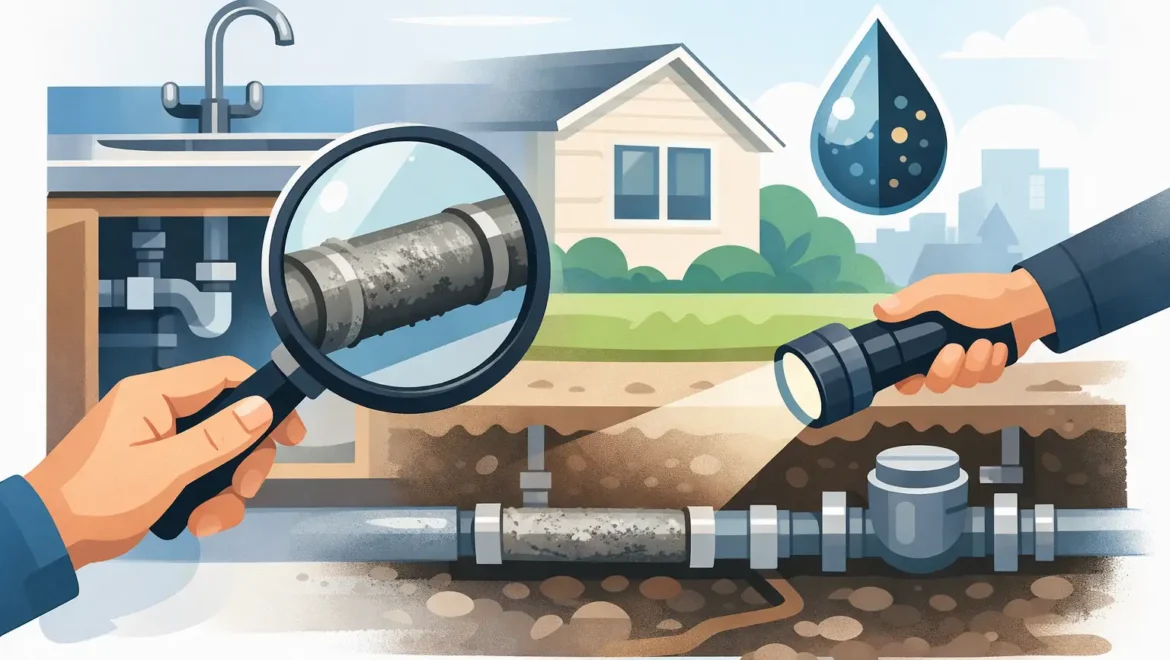
The most useful place to look is where the incoming water supply enters the building. In many houses, this is close to the internal stop tap, often under the kitchen sink, in a utility room, beneath a staircase or in an external meter box. The stop tap is the valve used to turn off the water supply to the property.

Look at the pipe on the street side of that stop tap. If it is an older property, this may be the only visible section of the pipe that runs between the water main and the house. A water meter chamber near the boundary can also provide useful evidence, although access and ownership arrangements vary.

Take care not to confuse the incoming supply with later plumbing. Copper pipes inside the property may simply mean the internal plumbing was updated. The buried pipe feeding the stop tap could still be lead.

What lead pipe usually looks and feels like

Lead has a dull, dark grey appearance. Older pipe can look almost black from age and oxidation, but a very small, light scratch on an accessible, non-painted section will reveal a brighter silver-grey metal beneath. It is softer than copper and does not have copper’s familiar reddish-brown colour.

Lead pipe is often slightly uneven or misshapen rather than perfectly straight. Because it is soft, it may have gentle bends or a flattened appearance where it has been worked in the past. Joints are commonly bulb-shaped or swollen, rather than neat threaded fittings.

A simple magnet test can help rule out steel or iron, as lead is not magnetic. However, a non-magnetic result does not prove that a pipe is lead, because copper is not magnetic either. Treat these checks as indicators, not a final diagnosis.

The following signs together make lead more likely:

  • A dull grey or dark-grey pipe that becomes bright silver-grey when lightly scratched.
  • Soft metal that appears slightly misshapen or has broad, swollen joints.
  • A pipe of around 25mm diameter entering an older property near the internal stop tap.
  • No evidence of a previous water supply replacement, especially in a home built before 1970.

Do not cut, drill or try to bend a suspected lead pipe. It is unnecessary and can cause a leak, particularly where old pipework is already thin or has been disturbed by previous repairs.

Identify lead water pipes without relying on guesswork

Visible checks are useful, but they cannot confirm the material of the full pipe run. A pipe may change from lead to copper or plastic at any point, especially where previous owners carried out partial work. There may also be a lead section buried beneath a driveway, lawn, extension or paved entrance that cannot be seen from inside.

A specialist survey is the dependable way to identify lead water pipes and establish the best replacement route. An experienced contractor can inspect accessible pipework, trace the incoming supply, assess the condition of the stop tap and look for signs of previous alterations. Where a replacement is needed, they can explain which section is private and which is the responsibility of the water company.

In general terms, the water company is responsible for the public water main and usually the communication pipe up to the boundary of the property. The homeowner is normally responsible for the private supply pipe from the boundary into the building. The exact arrangement can differ, so it is sensible to confirm the position before arranging work.

If you are concerned about water quality, your local water company may be able to advise on testing and its policy for lead pipe replacement. A water sample can be useful, but it does not show precisely where lead is present. Results can also vary depending on how long water has been standing in the pipe, so a pipe survey and water test often answer different questions.

When should you replace a lead supply pipe?

Replacement is usually the sensible long-term option where a lead pipe is confirmed. Lead can enter drinking water as it passes through the pipe, and the amount can vary with water chemistry, pipe condition and how long water remains stationary. Young children, babies and pregnant women are generally considered more vulnerable to lead exposure, which is one reason many owners choose not to delay an upgrade.

There are practical reasons to replace it too. Older lead pipes may be narrow, corroded internally or vulnerable to damage. Replacing them with a modern polyethylene supply can improve reliability and may improve flow where an old, restricted pipe has been limiting pressure at busy times.

Timing depends on the property. If you are already planning a new kitchen, extension, driveway or landscaping project, it can be cost effective to upgrade the supply before those works begin. If there is a recurring leak, discoloured water, low flow or uncertainty around the pipe material, a survey should be arranged sooner.

Landlords and commercial property managers should also consider their responsibilities to occupants. A planned replacement is generally easier to manage than an emergency excavation after a supply failure, particularly where access, tenant communication and reinstatement need careful coordination.

Replacing lead pipes with minimal disruption

Many people picture a full trench being dug from the pavement to the kitchen. Conventional excavation is sometimes necessary, particularly where ground conditions, pipe routes or access restrictions demand it. But it is not the only option.

Trenchless moling can install a new water supply beneath gardens, paths and driveways with only small launch and reception pits. A pneumatic mole creates a route underground, allowing the new pipe to be pulled through while leaving much of the surface undisturbed. For longer or more complex routes, horizontal directional drilling may be a better fit.

The right method depends on the length and depth of the run, soil type, access, nearby utilities and where the pipe needs to enter the property. A professional site survey should identify these factors before a quotation is issued. The aim is straightforward: install a compliant new supply, make the connection correctly and keep disruption to paving, planting and day-to-day life as low as reasonably possible.

Watermains & Drains UK uses trenchless methods where suitable, alongside conventional excavation when it is the safest and most practical route. As WIAPS and Watersafe approved specialists, the team can assess the existing supply, provide clear recommendations and carry out the work with reinstatement in mind. A 25-year workmanship guarantee and £10m public liability insurance provide added reassurance for homeowners, landlords and property managers.

What to do while you arrange an inspection

If you suspect a lead supply, there is no need to panic or stop using your water. Until you have clear advice, avoid drinking water that has been left standing in pipes for several hours. Running the cold tap briefly first thing in the morning or after returning from holiday can help bring through fresh water. Use only cold water for drinking, cooking and preparing baby feeds, then heat it if required, as hot water can dissolve lead more readily.

Filters should not be treated as a permanent substitute for pipe replacement unless they are specifically certified for lead reduction and maintained exactly as instructed. Boiling water does not remove lead.

The most useful next step is to have the incoming supply checked by a qualified specialist. Once you know what material is present and where it runs, you can make a practical decision on replacement timing, budget and the least disruptive installation method for your property.

Water Pressure Fluctuating? Find the Cause
Blog

Water Pressure Fluctuating? Find the Cause

A shower that fades to a trickle, a tap that suddenly surges, or a toilet that takes far too long to refill are more than everyday annoyances. Water pressure fluctuating can point to anything from a simple partially closed stopcock to a hidden leak on the supply pipe. The right response depends on where the problem occurs, how long it has been happening, and whether it affects cold water, hot water, or the whole property.

For homeowners, landlords and facilities teams, early investigation can prevent a minor supply issue becoming water damage, tenant disruption or an avoidable excavation. Start by identifying the pattern, then arrange a professional inspection where the signs suggest a leak, failing pipework or an external supply problem.

First, separate pressure from flow

People often describe any weak tap as low pressure, but pressure and flow are not quite the same. Pressure is the force pushing water through the pipework. Flow is the volume that reaches the outlet. A restriction in a tap, shower head or filter can reduce flow at one fitting even when the incoming pressure is perfectly satisfactory.

If one tap is affected, the cause is often local to that fitting. If every cold tap changes from strong to weak throughout the day, the issue is more likely to involve the incoming supply, the internal stopcock, a pressure reducing valve or the service pipe between the water main and the property.

This distinction matters because replacing a shower head will not solve a leaking underground supply pipe, and digging up a driveway is unnecessary if the fault is limited to a blocked tap aerator.

Common reasons water pressure is fluctuating

Demand elsewhere in the property

Pressure can dip briefly when several outlets run at once. A shower may weaken when someone opens a kitchen tap, starts a washing machine or flushes a toilet. This is especially noticeable in older homes with smaller supply pipes, in larger households, and in properties with high-demand fittings.

A short, predictable drop during heavy use does not always mean there is a fault. However, a severe change in pressure, or a problem that has become noticeably worse, deserves further checks. Modern appliances and new bathrooms can expose limitations in an older incoming supply that previously seemed adequate.

A partially closed stopcock or faulty valve

The internal stopcock is usually located under the kitchen sink, in a utility room or close to where the water supply enters the building. If it has been knocked, turned during previous work, or has started to fail internally, it may restrict water flow. An external stop tap at the property boundary can cause the same issue.

Do not force a stiff or seized stopcock. Older valves can leak when operated, and it is sensible to know where the stopcock is before an emergency occurs. A contractor can assess whether the valve needs repair or replacement as part of a wider supply inspection.

A leak on the water supply pipe

A leak does not always create a visible puddle. Water can escape beneath floors, through a front garden, below paving or into the ground around the service pipe. As demand changes, the leak may affect the pressure reaching taps and appliances. You may also notice a water meter continuing to move when all taps and appliances are turned off, damp patches, unexplained increases in water use, or a hissing sound near internal pipework.

Leaks on private supply pipes are common in ageing installations, particularly where pipework has suffered movement, corrosion, poor historic joints or frost damage. Lead supply pipes can also be due for replacement because of health considerations and their age, even where a leak has not yet developed.

A professional leak detection survey helps locate the issue before repairs are planned. That can avoid unnecessary excavation and provide a clearer scope of work for homeowners, landlords and insurers.

Problems with the hot water system

When cold taps remain steady but hot water pressure varies, the fault may sit with the boiler, unvented cylinder, pump, mixer shower or associated valves. Scale, blocked filters and malfunctioning thermostatic shower cartridges are frequent causes.

A combi boiler may also struggle to maintain a consistent flow if more than one hot outlet is used at once. This is not necessarily a mains supply fault. A qualified heating engineer should investigate appliances and hot-water controls, while a water supply specialist can assess the incoming main if both hot and cold services are affected.

Pressure reducing valves and filters

Some properties have a pressure reducing valve, often fitted to protect appliances and internal pipework where mains pressure is high. If the valve fails or becomes obstructed, it can cause pressure to rise and fall or drop across the property. Sediment filters and water softeners can have a similar effect when they are blocked or overdue for maintenance.

These components should be checked methodically rather than bypassed without advice. Removing a pressure control device may create new problems, including noisy pipework, leaks at weak joints and excessive strain on fittings.

An issue on the public water network

If neighbours are experiencing the same problem, the cause may be outside your boundary. Planned works, a burst main, changes in local demand or a fault on the water company network can all affect supply. Check whether nearby properties have the same symptoms and contact the relevant water company to report a wider issue.

Where the problem is isolated to your property, responsibility is more likely to sit with private pipework, although the exact boundary can vary. A specialist contractor can help establish whether the fault is on the customer-owned supply pipe or requires the water company’s involvement.

Checks you can make before arranging a visit

A few simple observations make diagnosis faster and help avoid disruption. Test several cold taps at different points in the property, then compare them with hot taps. Note whether the pressure changes at certain times, such as morning or evening, and whether it worsens when toilets refill or appliances are running.

If you have a water meter, turn off all water use inside and outside the property. Do not use washing machines, dishwashers, taps, showers or toilets during the check. If the meter’s leak indicator continues moving, or the reading rises over a reasonable period, there may be a leak. Record the result and arrange professional advice.

You can also inspect visible pipework for drips and check whether tap aerators or shower heads are clogged with debris. Avoid dismantling unfamiliar valves or adjusting boiler settings in an attempt to restore pressure. A temporary improvement can hide the real cause, while a damaged valve can create an urgent leak.

When fluctuating pressure needs urgent attention

Arrange prompt help if the change is sudden and affects the whole building, particularly if you can see damp ground, water pooling, discoloured walls, mould, or a rapidly rising meter reading. A burst or significant leak can damage floors, foundations, driveways and neighbouring property if left unchecked.

Commercial premises and rental properties should act quickly where poor supply affects hygiene facilities, kitchens, heating equipment or fire-related systems. Clear records of symptoms, meter readings and any visible damage can also assist with maintenance decisions and insurance discussions.

No water at all, a suspected burst supply pipe, or water entering the property requires immediate action. Turn off the internal stopcock if it is safe to do so, avoid electrical hazards, and contact an appropriate emergency contractor or the water company where the issue appears to be on its network.

A practical repair route with minimal disruption

The best repair is based on evidence, not guesswork. A contractor should assess the supply route, check pressure and flow, review meter behaviour, and use suitable leak detection methods before recommending work. For a failed or ageing service pipe, replacement can often be more cost-effective over time than repeated repairs.

Where access is limited by driveways, lawns, paths or finished landscaping, trenchless moling can install a new water supply pipe with far less excavation than a full open trench. It is not suitable for every ground condition or route, but it is often a practical option for domestic properties where tidy reinstatement matters.

For larger commercial sites, directional drilling and planned installation methods can reduce downtime and keep access routes open where possible. The method should always be matched to the site, existing utilities, ground conditions and permissions rather than treated as a one-size-fits-all solution.

Watermains & Drains UK investigates and replaces private water supply pipes using accredited, low-disruption methods, with clear quotations and reinstatement planned around the property.

Do not let an intermittent problem become a hidden leak

Intermittent pressure changes are easy to put off because the water usually returns. But a repeating pattern is useful evidence, and acting while the symptoms are still manageable gives you more repair options. Keep a note of when the issue occurs, check the meter where available, and arrange a professional assessment if the problem affects multiple outlets, appears suddenly or comes with signs of water loss. A clear diagnosis is the simplest route to a dependable supply and a property left clean and functioning properly.

Supply Pipe Versus Water Main Explained
Blog

Supply Pipe Versus Water Main Explained

A leak in the front garden, low pressure at the kitchen tap or an old lead pipe can quickly raise the same question: supply pipe versus water main – which one is causing the problem, and who is responsible for putting it right? The answer matters because the pipework is owned, maintained and repaired differently depending on where the fault sits.

For most homes and commercial properties, the water main belongs to the regional water company. The supply pipe is normally the property owner’s responsibility. Between them is another section, often called the communication pipe, which is usually the water company’s responsibility. Knowing the difference helps you report the right problem and avoid unnecessary delays when a repair or replacement is needed.

Supply Pipe Versus Water Main: The Basic Difference

A water main is the larger public pipe that carries treated water around the local network. It normally runs beneath roads, pavements and verges, supplying many properties in a street or wider area. Water companies install and maintain these mains, as well as the valves and associated network equipment connected to them.

A supply pipe is the smaller private pipe carrying water from the boundary of a property into the building. It feeds the internal stop tap and, from there, the plumbing serving taps, toilets, boilers and appliances. It may run below a driveway, garden, path, communal land or the floor of an older property.

There is usually a communication pipe between the water main and the supply pipe. This section often includes the external stop tap and is generally maintained by the water company. However, the precise point where responsibility changes is not always obvious from ground level. It may be at a boundary, but it can also be affected by the location of the external stop tap, the age of the connection and local water company arrangements.

That is why a leak near the pavement is not automatically a water company repair, and a leak on private land is not always a straightforward diagnosis. A professional investigation can locate the fault before any excavation begins.

Where Does Your Responsibility Start?

For a typical detached or semi-detached house, the owner is normally responsible for the supply pipe from the property boundary to the point where it enters the building. This includes pipework beneath private gardens, driveways and paved areas.

The water company is normally responsible for the public main in the street and the communication pipe between the main and the boundary. If there is a burst in the carriageway, water coming through a pavement, or a wider loss of pressure affecting neighbouring homes, the main may be at fault and should be reported to the water company promptly.

There are exceptions. Shared supply pipes are common in older terraces, converted buildings and some blocks of flats. A single pipe may serve two or more properties before dividing into individual branches. Responsibility can be shared between owners, and access may be needed across neighbouring land to complete the work properly.

Landlords and managing agents should also consider who is responsible under the lease or tenancy arrangement. Even where a freeholder owns the external pipe, a fast response is still essential where a leak is affecting tenants, access routes or business operations.

The external stop tap is a useful clue, not a final answer

The external stop tap is often found in a small chamber near the boundary, pavement or footpath. It can help identify the route of the incoming supply, but it does not by itself prove where ownership changes. Chambers can be moved, buried, damaged or absent altogether, particularly on older properties.

A contractor experienced in water supply pipework can trace the line, assess the connection and advise whether the fault is likely to sit on the private supply or the water company network. This avoids digging in the wrong place and gives you clearer information when speaking to the water provider.

Why Supply Pipes Often Need Attention

Many supply pipe problems develop slowly. A small underground leak may not create an obvious puddle, especially in soil or beneath a driveway. Instead, homeowners may notice a higher water bill, a meter that continues moving when all taps are off, damp patches outside or a gradual drop in pressure.

Older properties may still have lead supply pipes. These are particularly common where the incoming pipe was installed decades ago and has never been upgraded. Lead can affect water quality, and older pipework may also be more prone to restrictions, corrosion and leaks at joints.

Replacing an ageing supply pipe with a modern plastic pipe can improve flow and provide a long-term solution. It is often more cost effective to replace a failing or lead pipe than carry out repeated local repairs, particularly where the route is difficult to access.

A new supply may also be needed for an extension, a new-build connection, a separate annexe or commercial premises with higher demand. The pipe size, route and connection requirements should be designed for the property rather than treated as a one-size-fits-all installation.

How Water Main Problems Tend to Present

A fault on a public water main can affect more than one property. Signs may include discoloured water, sudden widespread low pressure, water surfacing in the road, noise from underground pipework or a noticeable change in supply across a street.

Public main repairs are normally handled by the regional water company, which may need to isolate sections of the network and carry out highway excavation. If there is a suspected main burst, reporting it promptly helps reduce water loss and potential damage to roads or nearby property.

Not every pressure problem is a main fault. A blocked filter, faulty internal stop tap, undersized private supply or leak on the supply pipe can all restrict water reaching the property. A proper assessment separates a network issue from a private pipe issue before work is planned.

Finding a Leak Without Unnecessary Excavation

The right repair starts with knowing where the water is escaping. Guesswork can mean lifting paving, disturbing landscaping or opening up a driveway unnecessarily.

Specialist leak detection can use a combination of acoustic testing, pressure testing, tracer gas and pipe location equipment to narrow down the fault. The most suitable method depends on the pipe material, depth, ground conditions and whether the supply is accessible from both ends.

Once the route and fault have been identified, the repair approach can be chosen around the property. A small excavation may be the best option for an accessible joint or localised damage. Where a full replacement is required, trenchless moling can often install a new pipe beneath gardens, driveways and paths with only small entry and exit holes.

This no-dig approach is particularly useful where reinstatement is a concern. It can reduce disruption to block paving, lawns and landscaped areas, while avoiding the cost and mess of opening a long trench. It is not suitable for every site – ground conditions, existing services and the required route all need to be assessed first – but it is often the least disruptive solution.

Choosing the Right Contractor for Private Supply Work

Private supply pipe installation and lead pipe replacement should be completed by a contractor who understands both the practical work and the relevant water regulations. The connection to the water company network, pipe materials, depth, protection and testing all need to meet the required standard.

Look for clear responsibility advice, a site survey where needed and a written quotation explaining the proposed route, installation method and reinstatement. For work involving drinking water supplies, recognised approvals such as WIAPS or Watersafe provide useful reassurance that the contractor is qualified to carry out the work correctly.

For homeowners, a good contractor should explain the options in plain language. For facilities teams and property managers, they should also be able to provide suitable documentation, scheduling and a method that keeps disruption to residents, customers or operations to a minimum.

Watermains & Drains UK carries out lead pipe replacement, new supply pipe installation, leak investigation and trenchless installations across the North West, with a focus on tidy completion and long-term reliability.

What to Do If You Suspect an Underground Leak

First, turn off all water-using appliances and taps, then check the water meter if it is accessible. If the meter continues to move, there may be a leak somewhere on the private supply or internal plumbing. Checking whether neighbours are experiencing the same issue can also help indicate whether the fault could be on the wider network.

If water is surfacing on the road or pavement, or several properties have suddenly lost pressure, contact the water company. If the signs point to your own incoming pipe – such as a moving meter, damp ground in your garden or a leak beneath a driveway – arrange a specialist assessment as soon as possible.

The quickest route to a lasting repair is not to assume where the fault lies. Establish whether it is the supply pipe, communication pipe or water main first, then choose a repair method that protects both your water supply and your property.

Are Lead Pipe Regulations Changing in the UK?
Blog

Are Lead Pipe Regulations Changing in the UK?

A lead service pipe can sit unnoticed beneath a front garden or driveway for decades. Questions about lead pipe regulations changing UK are therefore understandable, especially for homeowners buying an older property, landlords managing pre-war homes, and facilities teams responsible for ageing sites. The short answer is that there is no single UK-wide deadline requiring every property owner to remove lead pipes immediately. However, drinking-water standards, water company policies and the health case for replacement mean that lead pipes remain a serious issue worth addressing before a leak, low pressure or renovation forces the decision.

Are lead pipe regulations changing in the UK?

The rules are not the same as a blanket ban with a fixed replacement date. In England and Wales, the Water Supply (Water Fittings) Regulations set requirements intended to prevent contamination and protect the public supply. Scotland and Northern Ireland operate under their own, broadly similar, water fittings rules.

The key point for property owners is the legal drinking-water standard for lead. Water supplied at the tap must meet a lead limit of 10 micrograms per litre. Water companies monitor compliance and take action where risks are identified. That may include sampling, treatment to reduce lead dissolving into water, advice to customers, or targeted replacement programmes.

What has not generally happened is a national rule compelling all homeowners to replace their private lead supply pipe by a particular year. That said, policy and public-health attention continue to move towards reducing lead exposure at source. Water companies also review local networks, and some offer support or coordinated replacement where a customer upgrades their side of the pipe. The detail, eligibility and contribution available vary by water company and area.

For a homeowner, waiting for a future rule is rarely the best plan. A lead pipe will not improve with age. If it is already causing discoloured water, low flow, repeat leaks or concerns over water quality, replacement is a practical long-term solution.

Who is responsible for a lead supply pipe?

Responsibility normally depends on where the pipe sits. The public water main in the road belongs to the water company. The section that runs from the main towards the property is often called the communication pipe, while the pipe from the boundary to the internal stop tap is generally the property owner’s supply pipe.

Exact ownership boundaries can differ, particularly on shared supplies, older terraces, converted buildings and commercial premises. It is sensible to confirm the arrangement with the local water company before work starts. This is particularly relevant if several properties are supplied through one old lead pipe, as replacing only one section may not remove the whole issue.

Landlords should take a careful view of lead supplies. There is not an automatic requirement for every rented property to have a new plastic service pipe solely because it is lead, but landlords must provide homes that are safe and fit for occupation. If testing, a complaint, a known vulnerability or poor pipe condition points to a water-quality risk, doing nothing is difficult to justify. Clear records of investigation and remedial work are valuable for both tenants and property managers.

Why partial replacement is not always enough

Replacing the visible internal pipework but leaving the lead pipe under the garden can leave the main source of exposure in place. Equally, a water company replacing its section may not fully solve the problem if the private section remains lead.

Lead can enter drinking water when it passes through lead pipework, although the amount can vary with water chemistry, how long water has sat in the pipe and the condition of the supply. First-draw water, such as the first water used in the morning, may have a higher concentration after standing in the pipe overnight.

Using a tap-running routine can reduce exposure in the short term, but it is not a permanent infrastructure solution. A full replacement of the private lead supply pipe with a modern, approved pipe removes that section of lead from the system and usually brings other benefits: more reliable pressure, fewer leak risks and a properly sized supply for modern household demand.

When should you arrange a lead pipe survey?

A straightforward inspection often gives an initial answer. Lead pipes are usually dull grey, can be gently scratched to reveal a shiny silver surface, and are softer than copper or steel. They are common in properties built before the 1970s, though age alone is not proof because pipes may have been upgraded in stages.

A survey is particularly worthwhile when you are planning a kitchen extension, driveway works, bathroom refurbishment or a new boiler installation. It makes little sense to complete expensive surface works and then excavate them later for an ageing water pipe.

You should also investigate promptly if you notice:

  • recurring leaks or unexplained damp ground around the incoming water pipe;
  • poor flow at taps, particularly when more than one outlet is in use;
  • a shared or unusually routed supply serving neighbouring properties;
  • a grey pipe visible near the external stop tap, internal stop tap or water meter;
  • concerns about drinking-water quality, especially where babies, young children or pregnant people live in the property.

A competent contractor can trace the route, assess whether the pipe is lead, identify any practical access issues and explain whether a trenchless installation is suitable. For commercial properties, that assessment can also consider isolation requirements, working hours, reinstatement standards and the need to keep tenants or customers supplied.

The practical route to replacing a lead pipe

Most replacement projects begin with a site survey and a clear plan for the new route. The pipe size must suit the property and expected demand, while the installation needs to comply with water regulations and local water company requirements. Depending on the work, notification or approval may be needed before connection.

Traditional excavation remains appropriate in some circumstances, such as complex ground conditions, very shallow services or locations where a precise open trench is needed. It is not, however, the only method.

Trenchless moling can reduce disruption

For many homes, pneumatic moling provides a fast, cost-effective way to install a new water supply beneath gardens, paths and driveways. Small launch and reception pits are used rather than opening the full length of the route. A new pipe is then drawn through the bore, with limited surface reinstatement required.

This method is particularly useful where paving, landscaping or access is a concern. It can significantly reduce mess and time on site, but suitability depends on the ground, the route, buried services and access for equipment. A proper survey matters more than a promise that every job can be done no-dig.

Horizontal directional drilling may be the better option for longer routes, deeper installations or more demanding commercial and civil projects. Both methods need experienced operatives, service checks and careful planning. Speed should never come at the expense of protecting other underground utilities.

Choose an approved contractor, not just the lowest quote

A new water pipe is hidden once the work is complete, so the quality of planning and installation matters as much as the appearance of the final reinstatement. Ask how the route will be checked for existing services, how the connection process will be managed, what pipe material will be used and what is included in the quote.

For household work, WaterSafe and WIAPS approvals provide useful reassurance that the contractor understands water regulations and can carry out compliant work. Adequate public liability insurance, a written scope and a meaningful workmanship guarantee also matter. If the quote is substantially cheaper than others, establish whether it includes excavation pits, connection arrangements, testing, reinstatement and any water company charges.

For landlords and facilities managers, request method statements where appropriate and agree access, tenant communication, isolation periods and making-good standards before mobilisation. A well-managed replacement should leave the site safe, tidy and fully reinstated, rather than passing avoidable work back to the owner.

A sensible next step for older properties

If your property still has a lead pipe, there is no benefit in treating the issue as purely regulatory paperwork. The most useful question is whether the pipe is still the right asset for the property you own or manage. A professional survey gives you a clear answer on material, route, ownership boundaries and the least disruptive replacement method.

Watermains & Drains UK can assess lead supply pipes and plan a compliant replacement using trenchless methods where suitable, helping to protect driveways, gardens and day-to-day access. Acting before a leak or major refurbishment gives you more choice, better control of cost and a cleaner outcome.

Pre-Planned Drainage Maintenance for Schools
Blog

Pre-Planned Drainage Maintenance for Schools

A blocked toilet block at 8am, a foul odour near the dining hall or surface water pooling across a playground can quickly become a safeguarding, hygiene and operational problem. Pre-planned drainage maintenance for schools gives site teams control over those risks, replacing disruptive emergency call-outs with scheduled inspection, cleaning and repair work that fits around the school calendar.

For estates managers, business managers and academy trust facilities teams, the objective is straightforward: keep toilets, kitchens, rainwater systems and external drainage working properly without interrupting teaching or creating unnecessary disruption on site. The right maintenance plan identifies developing faults early, records what has been found and sets out practical next steps before a minor defect becomes a closure.

Why school drainage needs a planned approach

School drainage works harder than many commercial systems. Toilets and washrooms experience concentrated use at break times; kitchens produce fats, oils and food debris; and external gullies must cope with leaves, litter and heavy rainfall. Older school buildings may also have drainage runs that have been altered over decades, with incomplete records, damaged pipework or connections that are no longer suitable for current use.

Reactive work still has its place. A blocked drain, overflowing manhole or backed-up toilet needs immediate attention. However, relying solely on emergency visits usually means work is carried out at the least convenient moment, often with pupils and staff on site. Access is harder, disruption is greater and the facilities budget can be put under pressure by urgent repairs that could have been anticipated.

Planned maintenance creates a clearer picture of the network. It allows a contractor to inspect known problem areas, remove debris before it causes a blockage and use CCTV drainage surveys to investigate sections that cannot be assessed from ground level. It also gives decision-makers evidence for budgeting, asset planning and approval of repair work.

What a pre-planned drainage maintenance programme should cover

There is no single schedule that suits every school. A small primary school with modern drainage will not have the same requirements as a large secondary school, historic campus or site with a commercial kitchen and extensive hard landscaping. Frequency should reflect the building layout, the age and condition of the drainage, previous incidents, pupil numbers and how exposed the site is to leaves and surface-water runoff.

A practical programme normally starts with a site review and a record of existing issues. This may include drainage drawings where available, reports from prior call-outs, known slow-draining fixtures and areas that flood after rain. From there, the maintenance schedule can be targeted rather than treating every drain as if it carries the same risk.

Internal drainage and washroom systems

Toilets, urinals, sinks and associated pipework should be checked where there is a history of slow drainage, recurring blockages or unpleasant smells. Regular cleaning and jetting can remove build-up before it restricts flow. If blockages repeatedly return in the same area, simply clearing them is not enough. A CCTV survey may show displaced joints, root ingress, scale, a damaged section or an item lodged further down the line.

Schools should also consider how access will be managed. Work in toilet blocks and changing areas is best arranged outside teaching hours, during inset days or in holiday periods wherever possible. A professional contractor should agree access arrangements in advance, work safely around a live school environment and leave the area clean and usable.

Kitchens, canteens and food preparation areas

Catering drainage needs particular attention. Food waste, grease and detergents can create deposits in pipework that gradually narrow the bore. The result may be a slow drain at first, then a blockage at the point when the kitchen is busiest.

Grease management is not only about avoiding an inconvenient blockage. It helps protect the wider drainage system and supports good hygiene standards in a space where food is prepared. The required service interval depends on usage, the type of catering operation and whether the site has grease traps or interceptors. These assets should be included explicitly in the maintenance plan, not left until a problem is reported.

External gullies, channels and surface-water drainage

External drainage is often overlooked until heavy rain exposes a problem. Gullies outside entrances, playground drainage channels, downpipes and manholes collect leaves, soil, litter and loose material from surrounding grounds. When they block, water can pool near doors, create slip risks and, in severe cases, enter the building.

Autumn inspections are particularly useful on tree-lined sites, but they are not the only time to act. A good schedule considers seasonal conditions and checks known low points before periods of expected heavy rainfall. Clearing debris is relatively straightforward; dealing with water damage to classrooms, corridors or electrical areas is not.

Drainage surveys and targeted repairs

CCTV surveying is one of the most useful tools in pre-planned drainage maintenance for schools. A camera survey provides a visual condition report from inside the pipe, helping to distinguish between a simple obstruction and a structural fault. It can identify cracks, open joints, root ingress, deformities and collapsed sections without unnecessary excavation.

Where a repair is required, the least disruptive method should be considered first. Localised patch lining can repair suitable defects internally, reducing the need to dig through paths, playgrounds or landscaped areas. This is not appropriate for every problem – severely collapsed pipework, incorrect gradients or extensive deterioration may need excavation and replacement – but it can be a fast, cost-effective option where conditions allow.

Building a schedule around the school year

The best time for intrusive drainage work is often during school holidays, when access is simpler and there is more scope to isolate facilities. Yet a maintenance programme should not consist only of annual holiday work. Smaller inspections and preventative cleans during term time can stop faults developing between major visits.

A sensible plan might combine a detailed annual review with seasonal gully clearance, scheduled kitchen-drain servicing and additional inspections at known risk points. Schools with a record of flooding, repeated toilet blockages or mature trees close to drainage routes may need more frequent attention. Conversely, a newer site with good drainage records may require a lighter programme, supported by clear monitoring and rapid response arrangements.

The contractor should provide agreed visit dates, a clear scope of work and reports that are useful to the person responsible for the estate. Photographs, CCTV footage where relevant, findings, recommendations and prioritised repair costs make it easier to explain decisions to governors, trustees or central facilities teams.

Choosing a contractor for school drainage maintenance

Schools need more than a company that can clear a blockage. They need contractors who understand controlled access, safeguarding expectations, safe working procedures and the need to protect busy sites. Before appointing a provider, check that they can supply appropriate insurance documentation, method statements and risk assessments where required, and that their operatives communicate clearly with site staff.

It is equally important to ask how repairs will be carried out. A contractor with CCTV diagnosis, drain jetting and trenchless repair capability can often investigate and resolve issues with less excavation, less noise and less reinstatement work. Where digging is necessary, the scope should include a clear plan for making good surfaces and securing the work area.

Watermains & Drains UK supports planned and reactive drainage work with CCTV surveys, drain repairs, patch lining and full drainage installations. For schools, the practical value is a single specialist contractor able to investigate the cause, recommend proportionate work and minimise disruption to paths, grounds and day-to-day operations.

When to bring a survey forward

A scheduled plan should remain flexible. Do not wait for the next planned visit if staff report persistent odours, recurring blockages, gurgling fixtures, unexplained damp patches or surface water that does not clear after rain. These signs do not always mean a major failure, but they warrant investigation before a small drainage issue affects a classroom, kitchen or access route.

The most effective maintenance programme is one that gives the school a record of its drainage, a realistic repair budget and a trusted route to rapid help when conditions change. Put the plan in place before the next busy term, and drainage maintenance becomes another managed part of running a safe, clean school site rather than an urgent problem at the gates.

Does Moling Work Under Driveways? What to Know
Blog

Does Moling Work Under Driveways? What to Know

A driveway is often the reason property owners put off replacing an old water supply pipe. Nobody wants paving lifted, concrete broken out or a newly laid surface turned into a building site. So, does moling work under driveways? In many cases, yes. It is one of the most effective ways to install a new water pipe beneath a driveway without excavating a full trench across it.

Moling is not suitable for every property, however. The ground conditions, route, depth, existing services and type of driveway all need checking before a contractor can recommend it. A proper site survey turns a promising no-dig option into a safe, planned installation.

How moling works beneath a driveway

Moling is a trenchless technique used mainly for installing or replacing small-diameter water supply pipes. Rather than digging a continuous trench, contractors excavate a small launch pit at one end of the route and a receiving pit at the other. A pneumatic mole is then driven through the ground beneath the driveway, creating a bore for the new pipe.

The new pipe, usually a modern blue polyethylene water service pipe, is pulled through the bore and connected at each end. The pits are backfilled and reinstated once testing is complete. Instead of disturbing the full width of the drive, work is generally limited to two localised areas.

For a homeowner replacing a lead supply pipe, this can mean avoiding the cost, mess and visual impact of lifting block paving, tarmac or concrete. It can also reduce the time spent with access restricted to the property.

When does moling work under driveways?

Moling works best where there is a reasonably direct route through suitable soil and enough space for safe launch and receiving pits. It is particularly effective for many domestic water supply upgrades, including lead pipe replacement from the external stop tap or boundary to the property.

A driveway made from block paving, resin-bound surfacing, tarmac or concrete can often be crossed without opening it up. This is especially valuable where the surface is expensive to reinstate, carefully matched to the rest of the property or has only recently been installed.

The technique is also useful where the pipe route passes beneath a front garden and driveway before reaching the house. A contractor may be able to mole beneath the hardstanding while using a small excavation in a planting bed, verge or less visible edge of the driveway. The aim is always the least disruption possible, not simply avoiding digging at all costs.

Ground conditions make the difference

Firm, cohesive ground is generally favourable for moling. Clay and many compacted soils can be suitable, provided the route has been assessed properly. Loose ground, heavily made-up land, large stones, rubble, deep tree roots or very wet ground can make the work more difficult and less predictable.

Rocky ground can prevent a mole from maintaining its intended route, while voids or unstable material can increase the risk of movement beneath the surface. In these circumstances, a short section of careful excavation or an alternative trenchless method may provide the safer result.

The question is not simply whether a mole can physically travel under a driveway. It is whether it can do so at the correct depth and on a controlled route, without putting the driveway, existing services or new pipe at risk.

Existing services must be located first

The area beneath a driveway may contain more than a water pipe. Gas, electric, telecoms, drainage, private cables and older redundant services are all common. Their location is not always obvious, particularly on older properties where previous works may be poorly recorded.

A competent contractor will assess the proposed route, review available service information and use locating equipment where appropriate. Trial holes may be needed near known services. This is a critical part of the job: moling should never be treated as a blind operation beneath a driveway.

The benefits of moling for water pipe replacement

The main benefit is reduced excavation. Traditional trenching across a driveway can involve lifting the surface, removing sub-base material, digging the trench, installing the pipe, compacting the ground and rebuilding each layer. Even with good reinstatement, matching the original finish can be difficult.

Moling avoids most of that process. The driveway remains largely intact, which usually means less spoil, less noise, fewer vehicle movements and a tidier site. It can also be faster than full excavation, particularly where the distance across the driveway is short and the access points are straightforward.

For landlords and commercial property managers, less disruption can be just as valuable as the reduced reinstatement work. Keeping a tenant entrance, parking area or customer access route in better condition helps limit avoidable inconvenience.

There can be a cost benefit too, but it is not automatic. A straightforward moling job may be more cost effective than breaking out and rebuilding a driveway. Complex ground, difficult access, deep services or several changes in direction may remove that advantage. Clear quoting should explain the proposed method and any factors that could affect the price.

When excavation may be the better option

No-dig methods are not a cure-all. If the new pipe needs to follow a tight route, cross several known services, avoid a large tree or pass through unsuitable ground, excavation may be the more controlled choice. It may also be necessary if the existing pipe has failed beneath a building, if connections need major alteration or if there is no safe space for a launch pit.

Drainage work is different again. Moling is commonly associated with water supply pipe installation, not repairing every type of drain. Damaged drains may need CCTV investigation first, followed by patch lining, excavation or a replacement section depending on the defect, pipe material and fall.

For longer or more technically demanding routes, horizontal directional drilling, often called HDD, may be considered. HDD offers greater steering control than a pneumatic mole and can be appropriate for larger-diameter pipes, more complex crossings or commercial installations. The right method depends on the site, not on which technique sounds least disruptive.

What to expect from a professional moling survey

A survey should begin with the practical questions: where does the new supply start, where does it need to finish, and what lies between those points? The contractor should inspect access, identify likely launch and receiving pit locations and consider the condition of the driveway and surrounding ground.

They should also establish whether the work is on your private supply pipe or involves the water company side of the connection. In most cases, a homeowner is responsible for the private supply pipe running from the property to the boundary or external stop tap, but responsibilities can vary. Clarifying this before work begins prevents delays and unexpected scope changes.

Ask how the route will be checked for services, what depth the pipe will be installed at, how the pits will be reinstated and whether pressure testing is included. If the job involves lead pipe replacement, ask whether the installer holds relevant water industry approvals. WIAPS and Watersafe recognition provide useful reassurance that the work is being completed by an approved specialist.

A good contractor will not promise moling before understanding the site. They will explain where it is suitable, where there are risks and what the fallback plan is if an obstruction is found.

Protecting the driveway during the work

Although moling avoids a full trench, the driveway still needs protecting. Plant and equipment should be positioned carefully, and the launch and receiving pits should be located to minimise visible disruption where possible. If a pit must be formed in the driveway itself, a clean, durable reinstatement plan matters.

The depth of the bore is also important. A pipe installed too shallowly can be vulnerable to future landscaping, fence posts or vehicle loading. The contractor should use an appropriate route and depth for the installation, rather than taking the shortest possible line.

After installation, the new supply should be pressure tested and the site left clean and safe. For works affecting a driveway entrance, access arrangements should be discussed in advance so households, tenants or business users know when vehicles may need to be moved.

If your water supply pipe runs beneath a driveway, do not assume the surface has to be broken up. A site survey can establish whether moling offers the simple, low-disruption solution – and whether a specialist alternative would give you a better long-term result.

Pipe Moling Installation With Less Disruption
Blog

Pipe Moling Installation With Less Disruption

A new water supply does not have to mean digging a trench through your driveway, lawn or paving. Pipe moling installation is a trenchless method that creates a narrow underground route for a new pipe, allowing homeowners, landlords and property managers to upgrade water supplies with far less disturbance to the surface.

For properties with ageing lead pipes, recurring leaks or poor water pressure, this can be a straightforward answer to a disruptive problem. Instead of lifting large areas of block paving or cutting a channel through a landscaped garden, a specialist team works from small entry and exit pits. The result is usually a faster installation, cleaner site and much less reinstatement work.

What is pipe moling installation?

Pipe moling uses a pneumatic underground tool, often called a mole, to bore through suitable ground. The tool is launched from a small pit and travels beneath the surface towards a receiving pit, creating a bore for the new water pipe.

Once the route has been formed, an approved replacement pipe can be pulled through and connected to the property supply. The pits are then backfilled and the small affected areas reinstated. For a typical domestic water supply replacement, the process avoids the long open trench associated with conventional excavation.

This method is particularly useful where the pipe route passes beneath a front garden, tarmac drive, patio, pathway or other finished surface that would be costly and inconvenient to remove. It is commonly used for lead pipe replacement, new water supply pipes to extensions and replacement services where a leaking pipe is buried beneath private land.

Moling is not simply a case of sending a tool underground and hoping for the best. A successful installation depends on a planned route, checks for buried services, suitable ground conditions and experienced operatives who understand water supply regulations.

When is pipe moling the right option?

Pipe moling installation is often the preferred method when there is a relatively direct route between the boundary connection and the property. It works well on many domestic properties where access is limited and keeping the driveway or garden intact matters as much as replacing the pipe itself.

It can be a sensible choice if your existing supply is lead, galvanised steel or old plastic pipe. Lead supply pipes remain a concern because lead can enter drinking water, particularly where water stands in the pipe for long periods. Replacing the private section with a modern supply pipe is a practical long-term improvement and may also support better flow into the property.

A moling route can also help when a property has suffered an underground leak. Signs may include an unexplained increase in water bills, a constantly moving water meter, damp patches outside, reduced pressure or water pooling near the supply route. If the pipe needs replacing rather than repairing, trenchless installation can avoid reopening large sections of ground.

For landlords and commercial property managers, the benefit is often operational. Less excavation means fewer trip hazards, shorter disruption for residents or staff, and reduced reinstatement across car parks, access routes and maintained grounds. The exact approach still depends on the building layout, the location of existing services and whether the water company connection needs work.

How a pipe moling installation is planned

The quality of the planning has a direct effect on the quality of the finished job. Before work begins, a specialist contractor should assess the proposed route, access requirements and connection points. This starts with a site survey rather than an assumption that moling will suit every property.

Checking the existing supply route

The team will identify where the existing pipe enters the building and where it connects at the boundary. On older homes, the supply route is not always obvious. It may run under a path, cross a neighbour’s land or have been altered during previous building work.

The route for the new pipe should be as direct as practical while allowing for safe connection and future access. It must also comply with the requirements that apply to private water supply pipework, including appropriate pipe depth and protection.

Locating buried services

Before boring begins, buried utility services must be considered. Gas, electricity, telecoms, drainage and existing water pipes may all be present beneath a front garden or drive. Service drawings, detection equipment and carefully dug trial holes can be used to reduce the risk of striking an unknown service.

This is one reason why pipe moling should be completed by a competent specialist contractor, not treated as a general excavation job. The aim is not only to avoid surface damage but also to manage what cannot be seen below ground.

Creating the launch and receiving pits

Small pits are excavated at each end of the planned bore. Their size varies with the pipe route and connection arrangements, but they are substantially smaller than a full trench. The mole is positioned in the launch pit and driven towards the receiving pit at the planned depth.

After the bore is complete, the new pipe is installed, connected and tested. Any old redundant pipe can often be left safely in place where removal would cause unnecessary disturbance. The new supply is then flushed as required, with connections made carefully to protect water quality.

What affects the cost and timescale?

Every site is different, so a proper quotation should reflect the route rather than offer a one-size-fits-all price. The length of the new supply, ground type, access, number of connections, internal pipework requirements and reinstatement needs all affect the cost.

A short, clear run beneath soft ground is usually more straightforward than a route beneath deep concrete, extensive paving or ground containing obstructions. Difficult access can also affect the programme, particularly where equipment must be moved through a property or where work needs to be coordinated around tenants, vehicles or business operations.

In many domestic cases, moling is completed more quickly than traditional trenching because there is less excavation and less surface to rebuild. That does not mean it is always the cheapest option on paper. Where ground is unsuitable or the route is heavily congested with services, conventional excavation may be the safer and more cost-effective choice. A reputable contractor will explain that trade-off clearly.

Situations where moling may not be suitable

Pipe moling is highly effective, but it is not appropriate for every route. Very rocky ground, unstable made ground, heavily reinforced areas or routes packed with known buried services may make the method unsuitable. Long or complicated runs may require other trenchless techniques, such as horizontal directional drilling, or a combination of excavation and trenchless work.

The method also needs sensible clearance from existing utilities. If service locations cannot be verified with enough confidence, a contractor may recommend trial holes or a different route. This can feel like an extra step, but it is preferable to damaging a gas pipe, electrical cable or drainage run.

At some properties, the supply pipe enters through an awkward location beneath a floor or behind fitted units. The external moling work may be low-disruption, while the final internal connection still needs careful planning. Discussing these details at survey stage prevents surprises on installation day.

Choosing a specialist water supply contractor

Look for a contractor with specific experience in water supply pipe installation and trenchless methods, rather than choosing solely on the lowest quote. They should be able to explain the proposed route, how buried services will be checked, what is included in reinstatement and whether work on the water supply will meet the relevant standards.

Accreditations such as WIAPS and Watersafe provide useful reassurance for property owners, landlords and facilities teams. Adequate public liability insurance, written workmanship guarantees and clear paperwork are equally valuable where the work affects a shared accessway, tenanted property or commercial site.

Watermains & Drains UK uses trenchless moling for suitable lead pipe replacements and new water supply installations, combining site assessment, approved installation practices and tidy reinstatement. The priority is to provide a dependable new supply without turning a manageable job into weeks of unnecessary disruption.

Looking after the finished installation

Once the new pipe is connected, test the water supply at taps around the property and check that flow and pressure are as expected. If excavated areas have been reinstated with topsoil or turf, allow time for the ground to settle and follow any practical aftercare advice provided.

Keep the installation records, route information and guarantee documents with the property paperwork. They can be useful for future maintenance, insurance queries, renovation work or a later sale. A well-planned pipe moling installation should leave you with the part that matters most: a safe, reliable water supply and a property that still looks like your own.

How to Spot Drain Collapse Before It Worsens
Blog

How to Spot Drain Collapse Before It Worsens

A drain rarely collapses without leaving clues first. Slow drainage, recurring blockages and unexplained wet ground can all point to damage below ground. Knowing how to spot drain collapse early gives homeowners, landlords and property managers the best chance of arranging a targeted repair before wastewater backs up, ground movement worsens or a driveway has to be opened up.

A collapsed drain means part of the pipe has cracked, fractured, disjointed or caved in enough to restrict the flow of waste. It is different from a straightforward blockage, although the two can feel very similar from inside the property. The key is to look for repeat problems and obtain a clear view of the pipework rather than repeatedly treating the symptom.

The main signs of a collapsed drain

The most common warning sign is a blockage that keeps returning. If a drain has been cleared but toilets, sinks, baths or gullies begin draining slowly again within days or weeks, there may be a structural fault catching waste and debris. Tree roots, displaced joints and fractured pipe sections can all create a point where material repeatedly builds up.

Foul smells are another reason to investigate. A persistent sewage odour around an outside drain, inspection chamber, patio or garden may mean wastewater is not travelling through the pipe as it should. Do not assume this is simply a temporary build-up of debris, particularly if the smell returns after the drain has been cleaned.

Pay attention to changes outside too. A soft patch in a lawn, unusually lush grass in one small area, damp ground in dry weather or standing water near a drain run can indicate that water is escaping underground. On hardstanding, you may notice a sunken section of driveway, loose paving or new cracks. These signs do not prove a collapse on their own, but they justify professional investigation.

Inside the building, gurgling sounds from plugholes or toilets can indicate restricted flow and trapped air in the drainage system. If more than one fitting is affected at the same time, such as a kitchen sink draining slowly while a downstairs toilet bubbles, the issue is more likely to be in a shared pipe run rather than at a single appliance.

How to spot drain collapse rather than a simple blockage

A one-off blockage is often caused by inappropriate material entering the system: wipes, fats, food waste, sanitary products or excessive paper. Once professionally cleared and used correctly, that drain may continue working normally.

A collapse or damaged pipe behaves differently. The problem tends to recur in the same area, sometimes after heavy rain or periods of high use. Drainage may improve briefly after jetting, then slow again as debris catches on a crack, offset joint or root intrusion. In severe cases, water may not pass the damaged section at all.

Age and pipe material matter. Older clay drains can be durable, but joints may shift over time and individual sections can crack under ground movement. Pitch fibre pipes, found at some properties built between the 1950s and 1970s, can deform or blister as they age. Modern plastic drainage is less prone to some of these issues, though poor installation, heavy loading or nearby excavation can still cause damage.

Location also changes the likelihood. Drains beneath mature trees are more vulnerable to root ingress. Pipes running under a driveway can be affected by vehicle loads, especially if the ground beneath has settled. Extensions, boundary walls and landscaping works can create issues where drains have been disturbed, bridged or inadequately protected.

It depends on the symptoms, the age of the property and the position of the pipework. That is why guesswork is rarely cost effective. A reliable diagnosis should distinguish between removable debris and a defect that needs repair.

What a CCTV drain survey can show

A CCTV drain survey is the most direct way to confirm whether a drain has collapsed. A specialist camera is fed through the pipework, providing recorded footage of the internal condition and the location of any defect. This avoids excavating an area simply to find out what is wrong.

The survey can identify cracks, open joints, displaced sections, root ingress, scale build-up, deformed pipework and complete collapses. It can also establish the depth and route of the drain, which is useful when planning repairs beneath gardens, paths, driveways or commercial hardstanding.

For a landlord or managing agent, a written survey report provides useful evidence when planning maintenance, discussing responsibility or supporting an insurance claim. For a homeowner, it replaces uncertainty with a clear explanation of what needs doing and why.

Not every fault requires a full excavation. If the pipe is broadly sound but has a localised crack or defective joint, patch lining may provide a fast, cost-effective repair from within the drain. A resin liner is installed over the affected section to create a new sealed pipe wall. This can be particularly useful where access is limited or where digging would damage quality paving, landscaping or a finished driveway.

Where the pipe has fully collapsed, is badly deformed or has several defects, excavation and replacement may be the better long-term solution. The right option depends on the survey findings, access, pipe depth and the condition of the surrounding run. A professional contractor should explain the practical choices before work begins, including how the surface will be reinstated.

When to act urgently

Some warning signs need prompt attention. Wastewater backing up into a property, sewage coming out of an external gully, or a drain that has stopped flowing completely should be treated as urgent. Keep children and pets away from affected areas, avoid using toilets, showers, washing machines and dishwashers where possible, and arrange professional help.

A newly formed dip or hole near a drain line also needs quick assessment. Ground can settle where leaking water has washed away supporting soil, and the surface may become unsafe. Avoid driving or parking over the area until the cause has been checked.

For commercial premises, the priority is often to protect staff, customers and operations. A recurring drainage failure can affect hygiene standards, tenant comfort and trading hours. Early CCTV investigation makes it easier to plan work at a suitable time, rather than dealing with an unplanned closure after a complete blockage.

Avoid making the damage worse

Chemical drain cleaners are not a solution for a collapsed drain. They may do little to shift the obstruction and can create hazards for anyone working on the system afterwards. Repeatedly forcing rods through a badly damaged pipe can also worsen a fracture or push debris further into the line.

It is sensible to make a note of when the problem occurs, which fittings are affected and whether rain makes it worse. If safe to do so, check visible inspection chambers for a high water level or obvious debris, but do not enter a chamber or attempt to remove heavy covers without the right equipment.

Do not delay because the drain appears to be working again. Partial collapses can allow a small amount of flow through, giving a false sense that the issue has resolved. Meanwhile, leakage and soil movement may continue beneath the surface.

A clear repair plan means less disruption

The best drainage repairs start with evidence, not assumptions. Once the defect has been located, the repair can be designed around the property, whether that means internal patch lining, a short excavation or replacement of a failed run. Careful planning is especially valuable where pipework sits beneath landscaped gardens, block paving, tarmac or busy access routes.

Watermains & Drains UK provides CCTV drain surveys, drain repairs and no-dig lining options for properties across the North West, with a focus on clear findings and tidy reinstatement. For urgent or recurring drainage problems, arranging an assessment early is usually the simplest way to protect the property and avoid a more disruptive repair later.