Your Water Main, Drainage & Trenchless Solution Specialists

Blog

7 Common Causes of Repeat Drain Backups at Home
Blog

7 Common Causes of Repeat Drain Backups at Home

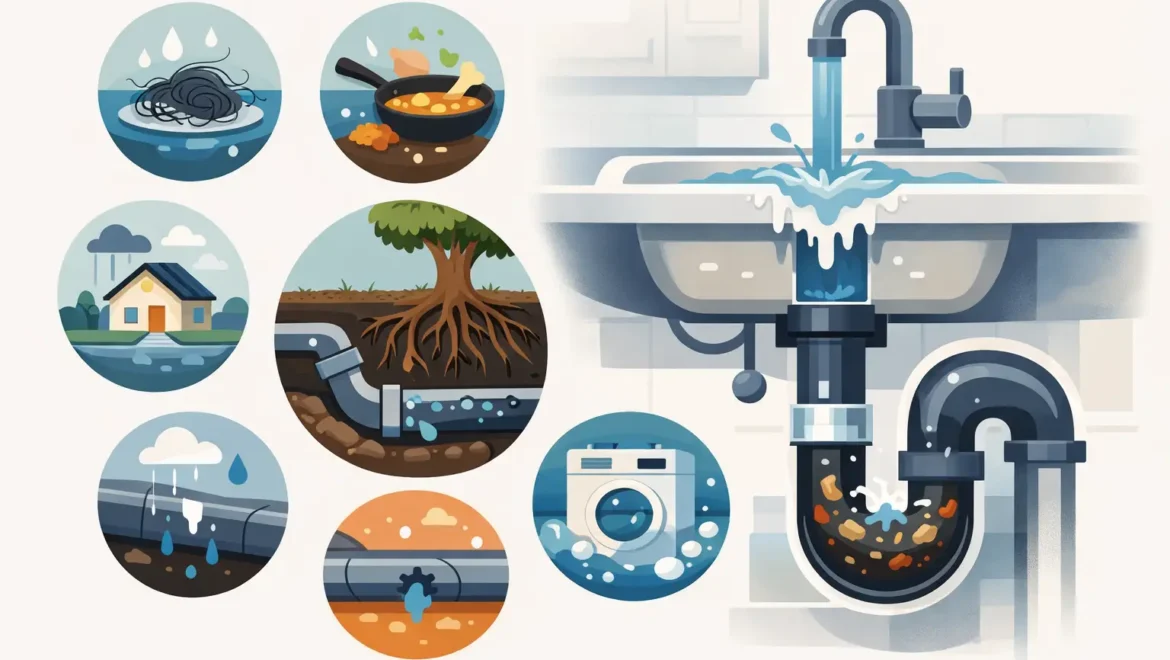
A drain that backs up once may be an isolated blockage. A drain that backs up every few weeks, or whenever the washing machine empties, rain falls heavily or several taps are running, is telling you there is a fault further down the system. The common causes of repeat drain backups are rarely solved for long by simply clearing the nearest gully or pouring chemicals down a plughole. Finding the underlying reason is what protects your property from repeated disruption, unpleasant smells and wastewater damage.

For homeowners, landlords and facilities teams, the priority is usually to get the water moving again. That matters, particularly where a toilet is overflowing or a commercial kitchen cannot operate. But once the immediate blockage has been cleared, a proper investigation can prevent the same call-out becoming a regular expense.

Why a drain keeps backing up

A drainage system relies on clear pipework, the correct fall and a free route to the public sewer or private treatment system. If any part of that route is restricted, damaged or overwhelmed, wastewater looks for the lowest available exit point. That can be a shower tray, ground-floor toilet, external gully or inspection chamber.

The location and timing of the backup provide useful clues. If only one basin is affected, the issue may be within that appliance waste pipe. If several fixtures block together, or sewage rises in an outside chamber, the problem is more likely to be in the main private drain. A professional drainage contractor will use these signs alongside cleaning equipment and a CCTV drain survey to establish what is actually happening underground.

1. A blockage that was only partly cleared

High-pressure jetting and mechanical rodding can restore flow quickly, but a blockage can return if material remains attached to the pipe wall or lodged at a joint. Fat, wipes, sanitary products, food waste and silt can all create a stubborn restriction. A small opening through the debris may be enough for normal use, yet it closes again when a larger volume of water enters the pipe.

This is particularly common in properties where the drain has been cleared from one access point without inspecting the full affected run. Clearing the visible chamber is not necessarily the same as clearing the cause. The right approach depends on the pipe condition and the material involved, but thorough jetting followed by a camera inspection is often the sensible next step when the fault returns.

2. Roots growing into pipe joints

Tree and shrub roots are drawn to moisture. Older clay drainage pipes often have joints that can open slightly over time, allowing fine roots to enter. Once inside, they expand into a dense mass that catches paper, wipes and other debris.

Root cutting can reopen the pipe and provide immediate relief. However, it is not always a permanent repair. If the joint remains open, roots can grow back. Depending on the survey findings, localised patch lining may seal the entry point with far less disruption than excavation. Where the pipe has collapsed or multiple joints have failed, a more extensive repair may be required.

3. Cracked, displaced or collapsed drains

Ground movement, age, heavy loading and previous building work can damage underground pipework. A cracked pipe may allow soil to enter, while a displaced joint creates a lip that collects debris. In more serious cases, a section can deform or collapse, narrowing the route until it blocks repeatedly.

The trade-off is clear: continued clearing may seem cheaper in the short term, but it does not correct a structural defect. CCTV footage allows the contractor to identify the depth, location and severity of the damage before recommending repair. Many isolated defects can be addressed with no-dig patch lining, avoiding unnecessary excavation of patios, driveways or landscaped areas. A collapsed or badly misaligned pipe may still need excavation, but the work should be targeted rather than based on guesswork.

Common causes of repeat drain backups outside the property

Not every recurring backup starts in the pipe beneath the kitchen or bathroom. External drainage, gullies and boundary connections are frequent sources of trouble, especially in older homes and converted properties.

4. Silt, leaves and debris in gullies or surface-water drains

External gullies are designed to collect water from yards, driveways and downpipes. Over time, leaves, moss, gravel and silt settle at the base. During a heavy downpour, the gully cannot drain fast enough and water may pool against the building or back up through a low-level outlet.

This type of problem is often seasonal. Regular clearing helps, but it is worth checking whether the gully is connected to the correct drainage system and whether there is a damaged or poorly graded pipe beyond it. If standing water appears in the same area after routine maintenance, a survey can establish whether there is a deeper restriction.

5. Incorrect pipe fall or poor previous installation

Drainage pipes need sufficient fall to carry solids away. If a section is too flat, wastewater slows down and deposits build up. If it falls too sharply, liquid can run ahead of solids, leaving material behind. Poorly supported pipework can also sag over time, creating a low point known as a belly where waste settles.

These faults are more likely after extensions, alterations or previous repair work, although they can occur in older systems as the ground shifts. Repeated jetting may keep the line usable, but it will not change the pipe gradient. Survey evidence is vital here because a repair recommendation should be based on measured condition, not assumption. In some cases, a short section can be replaced or re-laid with minimal excavation; in others, trenchless methods can reduce the amount of surface reinstatement needed.

6. Shared drains and downstream restrictions

Many homes, terraces, flats and commercial units share sections of drainage before they connect to the public sewer. Your own pipework may be clear, yet a blockage further downstream can force wastewater back towards the property. This is why a neighbour reporting similar issues is useful information, not just an inconvenience.

Responsibility can depend on where the fault sits and how the drainage is configured. A CCTV survey and inspection chamber checks can help identify whether the issue is within a private drain, a shared lateral or a public sewer. For landlords and property managers, clear evidence is especially useful when coordinating occupiers, insurers or the relevant sewerage authority.

7. Rainwater entering the foul drainage system

Heavy rain can expose problems that stay hidden in dry weather. If downpipes, yard drains or surface water have been incorrectly connected into foul drainage, the system can become overloaded during storms. Defective manhole covers, cracked pipes and cross-connections can have a similar effect.

A backup that happens only during or immediately after rainfall should not be dismissed as unavoidable. Some public sewers can surcharge in exceptional weather, but a property-specific pattern may indicate a private defect or incorrect connection. A drainage survey can trace the route and help distinguish between an internal drainage fault and a wider network issue.

Warning signs that should not be ignored

Slow drainage is often the first sign, but it is not the only one. Repeated gurgling from toilets or sinks, foul odours outside, water around inspection chambers, damp patches near a drain run and waste appearing in a lower-level fixture all justify further investigation. A toilet that bubbles when the bath empties is another indication that air and water cannot move freely through the pipework.

Do not keep using appliances that are causing wastewater to rise, particularly if sewage is entering the property. Avoid adding chemical drain cleaners to a serious or recurring blockage. They rarely resolve structural faults, can be hazardous to handle and may complicate later work for the drainage team.

How a CCTV drain survey provides a lasting answer

A CCTV drain survey places a specialist camera inside the pipe to record blockages, root ingress, fractures, displaced joints and poor falls. It moves the diagnosis beyond a best guess. The footage can show whether cleaning is enough, whether a local repair is appropriate, or whether a damaged section needs replacement.

For a homeowner, this means a clearer quote and less risk of paying repeatedly for temporary relief. For landlords, facilities managers and insurance-related cases, a written report and recorded findings provide useful evidence for maintenance planning and responsibility discussions. The best solution is not always the largest repair. If one small defect is causing the backup, a targeted no-dig repair can be faster, cost-effective and far less disruptive than lifting large areas of paving.

When a drain keeps backing up, treat the first clearance as the immediate response and the investigation as the protection against it happening again. Watermains & Drains UK can assess recurring drainage faults with professional cleaning, CCTV surveys and repair options designed to keep disruption to a minimum. Acting before the next overflow gives you more choice, a cleaner site and a better chance of a lasting repair.

HDD Versus Moling Installation: Which Fits?
Blog

HDD Versus Moling Installation: Which Fits?

A new water supply does not have to mean a trench cut through the front garden, driveway or paving. When comparing HDD versus moling installation, the right choice comes down to the route, ground conditions, pipework required and how much control the job needs. Both are trenchless methods designed to keep disruption to a minimum, but they solve different site problems.

For homeowners replacing a lead service pipe, moling is often the fast, cost-effective option. For longer, more complex or tightly controlled routes, horizontal directional drilling (HDD) can provide greater accuracy. A proper site survey is the best way to decide, rather than choosing a method on price alone.

HDD versus moling installation: the key difference

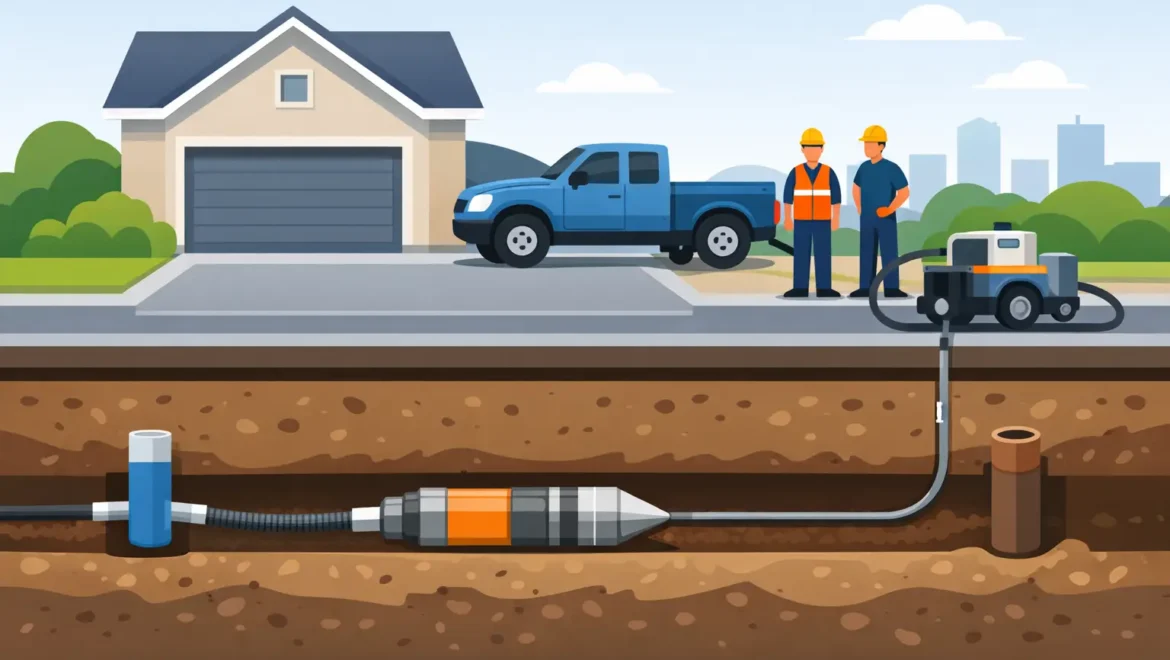
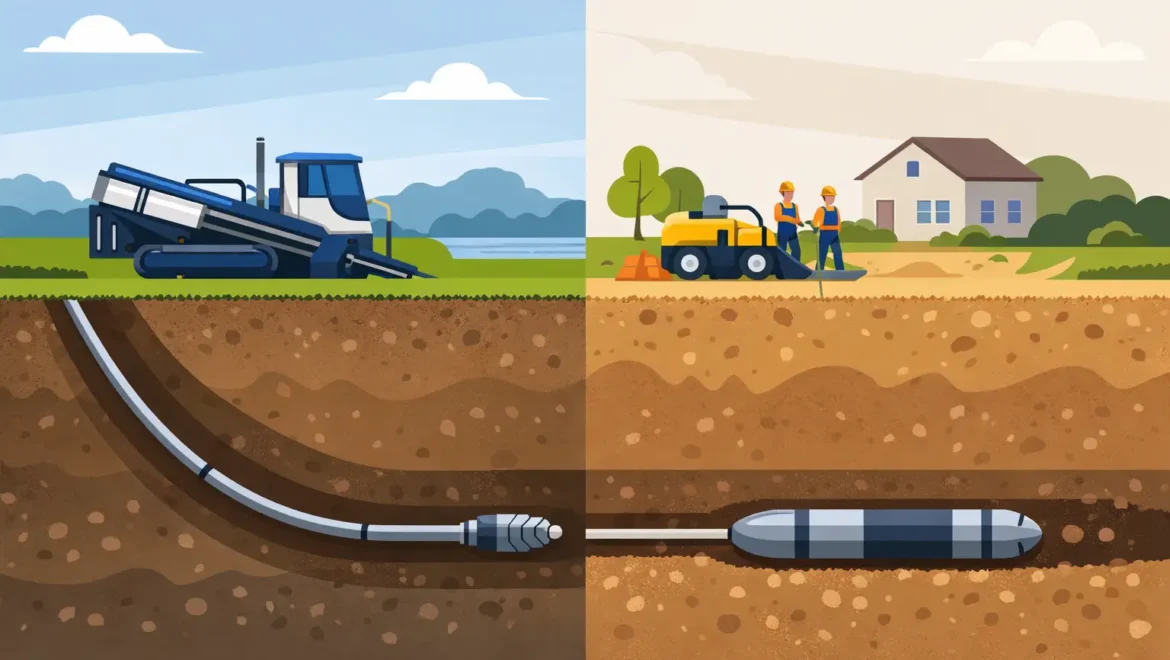
Moling uses a pneumatically powered, torpedo-shaped tool that creates a narrow bore through suitable soil. Small access pits are dug at the start and finish points, then the mole is driven underground between them. Once the bore is complete, the new water pipe can be pulled through.

HDD is a guided drilling process. A drill head follows a planned route underground, with its position monitored throughout the pilot bore. The bore is then enlarged where required before the new pipe is installed. This makes HDD particularly useful where the route needs to avoid known obstacles, maintain a specific depth or travel a longer distance.

Neither method is simply a better version of the other. Moling is efficient where conditions are straightforward. HDD brings a higher level of control where the site demands it.

When moling is the sensible choice

For many domestic lead pipe replacements, moling provides the simplest solution. A typical property may need only a small launch pit near the boundary and a receiving pit close to the house. The team can install a new polyethylene water supply pipe without lifting large sections of block paving, tarmac or lawn.

Moling is normally well suited to relatively short, direct runs through cohesive ground, such as firm clay. It can be an excellent option where access is limited but there is a clear route between the water company connection point and the property.

The practical benefits are easy to see: less excavation, less spoil to remove, quicker completion and reduced reinstatement work. For an occupied home or a rental property, that usually means less inconvenience for residents and a tidier site at the end of the day.

However, moling is not a blind process that should be used without investigation. It is less suitable where there is a high risk of striking unknown services, where the ground contains large stones, rubble or very hard material, or where the route has sharp changes in direction. It also requires enough room to safely create the launch and reception pits.

What moling can and cannot avoid

A mole can travel beneath many surfaces, including gardens, paths and driveways, but small excavations are still needed. Customers should be cautious of any contractor suggesting there will be no digging at all. The aim is least disruption, not an unrealistic promise of zero disturbance.

Before work starts, the route should be assessed for gas, electric, telecoms and drainage services. Trial holes may be needed to confirm depths and positions. This preparation protects the property, the workforce and existing utility infrastructure.

When HDD is the better installation method

HDD is generally chosen when the route is more demanding. Because the drill head is guided, it gives the installer more control over line and depth than a pneumatic mole. That matters when installing a new supply beneath a wider driveway, crossing beneath a road subject to permissions, working around established services or connecting larger-diameter pipework.

It is also useful on commercial sites, developments and properties with long service runs. Facilities managers may need a documented route, carefully controlled depths and a method that supports planned works with less impact on access, customers or tenants. HDD can meet those requirements where open-cut excavation would cause significant disruption.

The process takes more planning and specialist equipment, so it may cost more than moling on a simple domestic job. That does not make it poor value. Where accuracy reduces the risk of damage, avoids extensive reinstatement or allows a route that moling cannot achieve, HDD can be the more economical decision over the whole project.

Ground conditions still matter

Guidance does not remove the need to understand the ground. Difficult geology, buried obstructions, made ground and waterlogged conditions can affect both the drilling approach and programme. HDD may be capable of dealing with more challenging routes, but every installation must be designed around actual site information.

On some sites, a combination of methods is appropriate. For example, HDD may be used for a controlled crossing while a shorter, clear section is moled. The best solution is the one that installs the pipe safely and compliantly with the least practical disruption.

Comparing cost, speed and disruption

The lowest quotation is not always the lowest final cost. The main cost difference in HDD versus moling installation is usually the level of planning, equipment, guidance and technical control involved. Moling can be quicker and less expensive for a clear, short domestic route. HDD can be better value where its precision avoids a failed bore, unnecessary excavation or costly repair to surfaces and services.

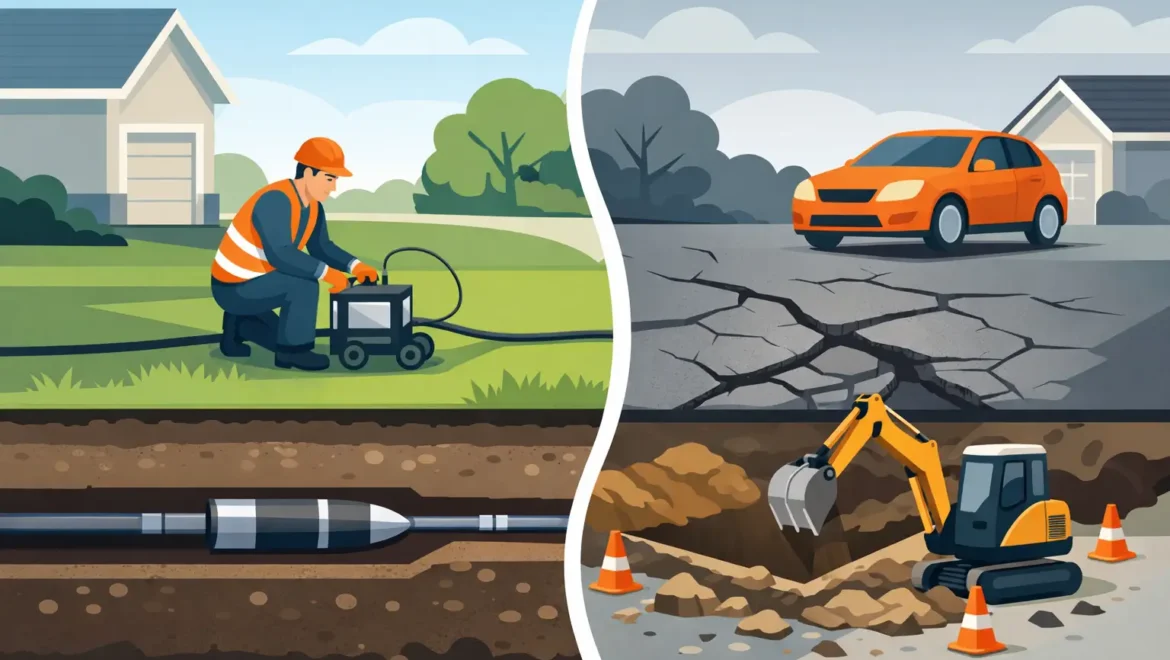
Both methods are normally far less disruptive than traditional trenching. Instead of opening the full length of a route, the work is concentrated at access points. That reduces spoil, limits damage to landscaping and cuts down the amount of reinstatement needed.

Timescales depend on the length of the supply, permissions, utility records, ground conditions and whether the existing service can remain live during the work. A straightforward lead pipe replacement may be completed quickly, while a complex commercial installation needs more detailed planning. Clear surveys and a written scope help prevent surprises once work is under way.

Choosing a contractor for trenchless water pipe work

Trenchless work is specialist work. The installation method matters, but so do the people planning and carrying it out. For a new water supply or lead pipe replacement, look for a contractor that understands water regulations, can identify the correct connection arrangements and has experience with both moling and HDD.

Ask how the route will be checked for existing services, what excavations are expected, how surfaces will be protected and what reinstatement is included. For commercial sites, it is reasonable to ask for risk assessments, method statements, programme details and evidence of suitable insurance.

Watermains & Drains UK uses modern no-dig methods alongside practical site surveying to recommend the most appropriate route for the property. WIAPS and Watersafe approvals, £10m public liability insurance and a 25-year workmanship guarantee provide added reassurance when work affects a property’s water supply.

The decision should start with the route

If the run is short, direct and in suitable ground, moling is often the efficient answer. If the route is longer, more constrained or needs closely controlled depth and direction, HDD may be the safer choice. The surface above the pipe matters too: protecting a recently laid driveway or established garden can make trenchless installation particularly worthwhile.

A site survey turns that broad comparison into a practical recommendation. It establishes where the pipe needs to run, what is already underground and which method can deliver a dependable new supply with the least disruption to your home, tenants or business.

Water Mains Diversion for Homes and Businesses
Blog

Water Mains Diversion for Homes and Businesses

A planned extension, new driveway or commercial redevelopment can become far more complicated when a live water pipe runs through the proposed work area. A water mains diversion moves that pipe to a safer, compliant route, protecting both the supply and the building work around it. Done properly, it avoids future access problems, reduces the risk of damage and keeps the project moving without unnecessary excavation.

The right solution depends on whether the pipe is a water company main or a private supply pipe serving one property. That distinction affects who can approve and carry out the work, the likely programme and the costs involved. Early investigation is the simplest way to avoid designing a build around a pipe that cannot remain where it is.

When is a water mains diversion required?

A diversion is commonly needed where an existing pipe crosses the footprint of a proposed extension, garage, outbuilding or commercial development. Water pipes should not be left beneath permanent structures where future repairs would require disruptive excavation through a floor slab or foundation.

It may also be required when a driveway is being widened, a garden is being regraded, new retaining walls are planned, or a site is being redeveloped for parking, access roads or new units. Even if the pipe is not directly beneath the new structure, the proposed work may restrict safe access to it.

For homeowners, a common example is a private supply pipe running from the boundary stop tap across the front garden and directly beneath an extension. For a facilities manager, the issue may be an older service route crossing a loading area or an area being excavated for drainage, utilities or foundations. In both cases, leaving the pipe in place can create a long-term liability.

A diversion can also be the sensible option where a pipe is old, shallow, poorly routed or repeatedly damaged. Rather than carrying out reactive repairs in an unsuitable location, installing a new supply route can provide a more dependable and accessible solution.

Water company mains and private supply pipes

The phrase water main is often used for any underground water pipe, but the ownership position matters. A public main is usually owned and controlled by the local water company. If it is affected by development, the water company will normally set the diversion requirements, approve the design and arrange or authorise the work.

A private supply pipe is different. This is the pipe that carries water from the boundary connection into a home, flat, shop, office or other premises. The property owner is typically responsible for it, including leaks, upgrades and moving it away from a proposed building footprint.

A site survey and service records help establish what is present, but records are not always complete, particularly on older properties. Trial holes, careful detection and visual checks may be needed before a route is confirmed. This is why it is risky to assume that a line shown on a plan is exact, or that every pipe belongs to the water company.

Where a public asset is involved, allow more time. Formal approvals, designs, notices and water company programming can affect the overall build schedule. Where the pipe is private, the process can often be more straightforward, but the installation must still meet the required standards and be coordinated with the rest of the works.

Planning a water mains diversion before work starts

The best time to address a diversion is before foundations are marked out and before hard landscaping is installed. Once concrete, block paving, planting or internal finishes are in place, a straightforward pipe move becomes more expensive and disruptive.

A practical assessment starts with the existing supply route, the position of stop taps and meters, the proposed building lines, ground levels and other underground services. Gas, electricity, telecoms and drainage all need consideration. A new water pipe route must be safe, protected and accessible without creating conflicts with those services.

The proposed route should also account for future maintenance. Taking the shortest line is not always the best answer if it places the pipe beneath a new driveway, through a planted area that will be difficult to excavate, or close to a drainage run. A slightly longer route around the edge of the property can be a better long-term choice.

For commercial sites, diversion planning may also involve traffic management, permits, phased shut-downs and keeping tenants or customers supplied. The work needs to fit around trading hours, deliveries and site safety requirements. It depends on the premises, but a well-planned temporary supply can sometimes reduce downtime while the permanent pipework is installed.

Supply interruptions and changeovers

Most diversions require a controlled interruption while the new pipe is connected and the old section is isolated. The aim is to keep this as short as possible, with clear notice given before work begins.

Before the final connection, the new pipe should be installed, tested and prepared so that the changeover is efficient. Once the supply is restored, pressure and flow should be checked at the property. If the project involves an older lead pipe, the diversion can be an ideal opportunity to replace it with a modern approved supply pipe rather than retaining a weaker section of the system.

Choosing excavation, moling or directional drilling

Traditional excavation remains appropriate in some situations. Open trenches provide direct access where pipework is shallow, multiple services need alteration, or ground conditions make trenchless installation unsuitable. They can also be necessary when a new connection point or valve needs to be exposed.

However, excavation is not the only option. Trenchless moling can install a new water supply beneath lawns, paths and smaller driveways with only small entry and exit excavations. This is often a fast, cost-effective option for residential properties where the aim is to avoid lifting large areas of paving or landscaping.

Horizontal directional drilling, often called HDD, is suited to longer or more complex routes, including commercial sites and routes beneath roads, car parks or hard surfaces. It gives greater control over the bore path and can be useful where depth, obstructions or ground conditions need careful management.

Neither method is automatically right for every job. A route may be unsuitable for moling if there are known obstructions, fragile surfaces, limited access or a high density of underground services. HDD may offer better control but can be more involved than a short open-trench installation. A competent contractor will recommend the method that gives the safest installation and least disruption, rather than treating no-dig work as a one-size-fits-all answer.

What good diversion work looks like

A successful diversion is not simply a new pipe in the ground. It is a properly planned installation with safe service avoidance, suitable materials, correct depth and protection, a controlled connection and tidy reinstatement. The old redundant section should be isolated where appropriate, so it cannot cause confusion during future repairs or surveys.

For homeowners, clear communication matters just as much as the technical work. You should know where the team needs access, whether water will be off, what areas may be disturbed and how surfaces will be reinstated. For property managers, the same principle extends to RAMS, scheduling, tenant communication and a clear handover record.

Using a specialist contractor also provides reassurance where a new supply connection or pipework needs to meet water-industry requirements. Watermains & Drains UK works with approved methods and modern trenchless equipment, with WIAPS and Watersafe credentials, £10m public liability cover and a 25-year workmanship guarantee on qualifying work. That combination helps protect the property owner from the cost and disruption of having to revisit the same route later.

Costs and timescales: what changes the price?

There is no meaningful fixed price for a water mains diversion because the detail of the route drives the work. A short private pipe move across a front garden is very different from diverting a pipe around an extension, beneath a driveway or across an operating commercial site.

The main factors are the length and diameter of pipe, ownership of the existing asset, access, ground conditions, the number of crossings or obstructions, the connection arrangement and the level of reinstatement required. Approval fees and water company charges may also apply where a public main is affected.

The cheapest quote is not always the lowest-cost outcome. A route that ignores future access, relies on poor reinstatement or does not properly identify existing services can create expensive problems later. A detailed survey and clear quotation give you a far stronger basis for comparing options.

If building work is approaching an existing water pipe, do not wait until the foundations are ready to find out whether it needs moving. Confirm the route early, agree the right diversion method and programme it alongside the wider project. That small piece of planning can keep a new extension, driveway or commercial site usable, supplied and far easier to maintain for years to come.

Moling Under Driveway Project Example: What to Expect
Blog

Moling Under Driveway Project Example: What to Expect

A moling under driveway project example is often the easiest way to understand why homeowners choose trenchless installation. Rather than lifting a wide strip of block paving, tarmac or concrete to replace a water pipe, a specialist contractor can create a controlled underground route from small access pits. The result is usually a faster, cleaner installation with far less reinstatement to manage.

This is particularly useful where an old lead supply pipe runs beneath a driveway, front path or landscaped entrance. It can also suit properties that need a new water supply pipe installed between the external stop tap and the water meter or connection point.

The typical driveway moling project

Consider a semi-detached home with a block-paved driveway in Greater Manchester. The homeowner has low water pressure and has been advised that the original lead communication pipe should be replaced. The existing pipe travels from the boundary stop tap, beneath approximately eight metres of driveway, and into the house near the front elevation.

Traditional excavation would mean lifting a channel through the driveway, storing blocks on site, digging around existing services, installing the new pipe, backfilling, and carefully relaying the paving. That approach can be appropriate where ground conditions or pipe routes demand it, but it brings more disruption and a higher reinstatement requirement.

In this example, the route is suitable for pneumatic moling. The work starts with a site survey to confirm the proposed line, identify visible services, assess access and establish whether the driveway construction is likely to allow a safe trenchless crossing. The contractor also confirms the required pipe size, connection points and any water-company requirements before work is booked in.

Small pits, not a driveway trench

On the day, the team exposes a small launch pit near the boundary stop tap and a receiving pit close to where the new supply will enter the property. These pits provide working space for the mole and allow the pipe to be drawn through once the underground bore has been made.

A pneumatic mole is then driven through the soil on the planned route beneath the driveway. It creates a narrow bore rather than an open trench. The new polyethylene water pipe is installed through this route, protecting the driveway surface above and avoiding the need to disturb most of the blocks.

Once the pipe is in place, the team makes the required connections, pressure tests the installation and flushes the new supply. The small access areas are backfilled and reinstated. Depending on the location of the stop tap and the internal entry point, there may still be minor excavation or a small core-drilled entry through an external wall. The difference is that the driveway itself remains largely intact.

Why moling under a driveway can be the simple solution

The main benefit is reduced disruption. A driveway is often the only parking area at a property, and it may include expensive paving, resin-bound surfacing, decorative edging or drainage channels. Avoiding a full excavation can protect both the appearance of the property and the time needed to return it to normal use.

For landlords, this can mean less inconvenience for tenants. For commercial premises, it can help keep entrances, visitor parking and pedestrian routes operational. It is also a practical option where a homeowner has recently paid for a new driveway and does not want a long reinstated strip across it.

Moling can also shorten the physical works. There is less spoil to remove, fewer materials to relay and a smaller work area to manage. This does not mean every project can be completed in a single visit, as connection arrangements, ground conditions and water-company approvals can affect the programme. However, the on-site impact is usually much lower than a conventional dig.

What determines whether driveway moling is suitable?

A trenchless method is not selected simply because there is a driveway. The route has to be safe and technically appropriate. Experienced contractors assess this before giving a fixed recommendation.

Ground conditions matter. Moling works best in suitable soil where a controlled bore can be formed. Very stony ground, heavy obstructions, old foundations, shallow bedrock or unstable made ground may make traditional excavation or another trenchless technique more suitable.

The route matters too. The proposed bore must avoid known gas, electricity, telecoms and drainage services. Utility drawings, site observations and careful planning all play a part. A drainage survey may be sensible where the route is close to drains, particularly at older properties with undocumented alterations.

Driveway construction is another consideration. A block-paved surface may tolerate small, carefully positioned pits very well. Concrete may need a localised saw cut, while resin and patterned surfaces need particular care to avoid visible damage. The goal is always the least disruption, but a professional contractor will be clear where limited opening-up work is necessary.

The water pipe is only part of the job

A good installation is more than getting pipe underground. The pipe must be correctly sized for the property, installed at an appropriate depth, protected where it enters the building and connected in line with relevant requirements. It should also be tested before the work is signed off.

For a lead pipe replacement, the homeowner may be responsible for the private supply pipe within their boundary, while the water company is responsible for its section of network. The exact ownership point varies, so it is worth confirming this early. In some areas, the water company may have requirements for the pipe material, connection process or inspection.

Watermains & Drains UK uses modern trenchless methods alongside water-industry approved installation practices, helping homeowners replace ageing supplies without turning a driveway project into a major excavation. WIAPS and Watersafe credentials provide added assurance that the work is being carried out by appropriately qualified specialists.

Reinstatement should be agreed before work starts

Even the best no-dig project normally involves two small excavations. Ask where these will be positioned and how they will be reinstated. If the driveway has matching blocks, spare materials can be useful. Where access pits sit in turf or a border, the contractor should explain what finish is achievable and whether seasonal ground conditions may affect the final appearance.

Clear communication at this stage prevents surprises. It also helps the team protect parking arrangements, gates, planted areas and any cables or pipes that may cross the front garden.

Questions to ask before approving the work

Before booking a moling project beneath a driveway, ask the contractor whether they have surveyed the route and how they will check for buried services. Confirm exactly where the launch and receiving pits will be located, what pipe material and diameter will be used, and whether pressure testing is included.

You should also ask who is arranging any water-company connection, whether the quote includes reinstatement, and what guarantee applies to the workmanship. For commercial sites, request a method statement, proof of insurance and a plan for maintaining safe access during the works.

The cheapest quote is not always the most cost-effective one if it excludes connections, testing, spoil removal or proper reinstatement. A detailed quote gives you a clearer comparison and makes it easier to plan around the work.

When an open trench may still be better

Moling is highly effective, but it is not the answer to every underground pipe problem. If a route contains multiple unknown services, needs extensive repair over a short distance, or crosses ground that will not support a reliable bore, excavation may be the safer option.

An open trench can also make sense if a driveway is already due to be replaced, or if other works such as drainage repairs and duct installation need to happen along the same route. In that situation, coordinated excavation can be more economical than separate projects.

The right method follows the survey, not a sales preference. A specialist should explain the options in plain terms, including the likely disruption, cost implications and any risks that need to be managed.

If your supply pipe runs below a driveway, do not assume the surface must be dug up from end to end. A proper site survey can establish whether moling offers the clean, practical route to a renewed water supply while keeping your property usable and tidy.

How to Fix Low Water Pressure in Your House
Blog

How to Fix Low Water Pressure in Your House

A weak shower, slow-filling bath and kitchen tap that barely rinses a plate are more than minor annoyances. If you need to fix low water pressure in a house, the first job is identifying whether the restriction is inside the property, in the incoming supply pipe, or affecting the wider area. The right repair can make a noticeable difference. The wrong one can mean spending money on a new pump when the real problem is an ageing or leaking supply pipe.

Start by working out where the problem occurs

Low pressure is not always the same as low flow. Pressure is the force pushing water through the pipework. Flow is the volume that reaches the tap. A blocked tap aerator can reduce flow at one outlet even when the property has good incoming pressure. A restricted service pipe, however, can leave several taps weak at the same time.

Begin with a few straightforward checks. Try the cold taps downstairs and upstairs, then compare them with the hot taps. See whether the pressure drops only when another appliance is running, such as a washing machine, dishwasher or shower. It is also useful to ask a neighbour whether they have noticed a recent change.

If just one tap is affected, the cause is usually local. If every cold tap is poor, particularly at busy times, the issue may lie with the stop tap, meter, external supply pipe or water network. If hot water alone is weak, your boiler, cylinder, valves or internal hot-water pipework may need attention instead.

Check for a local supply problem

Before arranging work at your property, check whether your water company has reported a burst, planned maintenance or temporary pressure reduction in your area. These issues can affect whole streets and are normally resolved by the water supplier.

A sudden loss of pressure, muddy water, unusual noise from the pipework or wet ground near the boundary should not be ignored. These can point to a leak or damaged pipe. Turn off the internal stop tap if water is entering the property, then arrange professional help promptly.

Simple checks that can fix low water pressure house issues

Some causes are minor and can be resolved without excavation. The internal stop tap, usually found under the kitchen sink, in a utility room, or near where the water pipe enters the building, should be fully open. Older valves can seize or fail internally, so do not force one that has not been moved for years. A damaged stop tap may need replacing by a qualified contractor or plumber.

Check the external stop valve too, where accessible. This is often close to the property boundary or water meter. Again, it should be fully open. Only adjust equipment serving your own property, and take care around meter chambers and covers.

Limescale and debris can also restrict flow at individual outlets. Unscrew and clean a tap aerator or shower head where appropriate, then retest. If a filter or pressure-reducing valve has been fitted, it may require inspection. These checks are worthwhile, but they will not solve a poor incoming supply caused by an undersized or deteriorated pipe.

Avoid turning up boiler settings or fitting a pump as a first response to weak water across the whole house. Pumps can help in certain plumbing arrangements, but they do not repair a restricted mains supply. In some cases, they are unsuitable or require careful design to avoid affecting the incoming main.

When the incoming water supply pipe is the cause

Many older UK properties are still connected by lead supply pipes, particularly homes built before the 1970s. Lead pipes can be narrow, distorted or heavily restricted over time. Older galvanised iron pipework can corrode internally, reducing the usable diameter until water flow becomes poor.

The supply pipe is the private pipe running from the boundary point or water company connection to your internal stop tap. Responsibility can vary around the property boundary, so a survey is the sensible way to establish what is in place and where the issue lies.

A leaking supply pipe can also cause low pressure. Not every leak produces a visible puddle. Water may disappear into soil beneath a driveway, lawn or paved area, while the house experiences reduced flow, rising bills or a constantly moving water meter when all taps are off.

Professional leak detection can help locate the problem before unnecessary excavation begins. Depending on the site, this may involve pressure testing, acoustic methods and tracing equipment. The aim is to repair or replace only what is needed, with a clear understanding of the route and condition of the existing pipe.

Lead pipe replacement and larger new supplies

Replacing an old lead or restrictive supply pipe is often the most reliable long-term solution where poor pressure affects the whole property. A new polyethylene water pipe provides a clean, durable route from the connection point to the internal stop tap. It can also be sized appropriately for the property’s expected demand.

Pipe size matters. A small household with one bathroom has different requirements from a large family home with multiple bathrooms, a loft conversion, garden taps and appliances running at the same time. Commercial premises, flats and rental properties may have additional demands and compliance considerations. A contractor should assess the route, available connection arrangements and likely water use before recommending a pipe diameter.

Replacing the private supply pipe does not guarantee a specific pressure if the wider water network is limited. However, it removes a common restriction within the homeowner’s control and is frequently the decisive improvement in properties with old pipework.

Choose the least disruptive installation method

Traditional trenching involves excavating a continuous channel across the garden, driveway or paths. It can be the right method where ground conditions demand it, but it is not the only option.

Trenchless moling creates a narrow underground bore so a new water pipe can be installed with far less excavation. Small entry and exit holes are used rather than opening the full route. This can be particularly effective beneath lawns, block paving, patios and driveways, reducing reinstatement work and the time your property is disrupted.

Horizontal directional drilling, often called HDD, may be suitable for more complex or longer routes. It gives greater control over the bore path and can help avoid obstacles where site conditions allow. The best method depends on access, depth, ground type, existing services and the pipe route. A proper site survey is more valuable than a one-size-fits-all promise.

Watermains & Drains UK carries out new water supply installations and lead pipe replacement using trenchless methods where suitable, helping homeowners and property managers protect finished surfaces while getting a dependable new connection in place.

Do not overlook internal plumbing and hot water faults

If cold water pressure is good but hot taps are poor, the incoming mains is unlikely to be the main issue. Common causes include scaled pipework, a partially closed valve, a blocked filter, a faulty mixer tap, problems with an unvented cylinder or an issue within the boiler system.

This is where the diagnosis matters. A supply-pipe specialist can investigate poor incoming mains flow, while a Gas Safe engineer or suitably qualified plumber should assess boilers and hot-water systems. For landlords and facilities teams, recording the symptoms, affected outlets and timing of the fault will help the right contractor attend prepared.

When to arrange a professional survey

Arrange an inspection when weak water affects multiple taps, pressure has deteriorated gradually, a property has known lead pipework, or there are signs of leakage around the supply route. It is also sensible before renovating a kitchen, adding a bathroom or installing higher-demand appliances. Upgrading the supply pipe before new paving or landscaping can avoid lifting completed work later.

Ask for a clear explanation of the likely fault, the proposed pipe route, whether trenchless installation is suitable and what reinstatement is included. For larger works, homeowners and property managers should look for contractors with relevant water-industry approvals, appropriate insurance and a written workmanship guarantee. These details matter when work involves a potable water supply, buried services and finished external areas.

A good repair should leave you with more than a stronger shower. It should give you a supply pipe that is fit for the property, a tidy site and confidence that the underlying cause has been dealt with rather than masked.

How to Prepare a Driveway for Moling Works
Blog

How to Prepare a Driveway for Moling Works

A new water supply does not always mean a long trench across your frontage. To prepare a driveway for moling works properly, the priority is giving the installation team safe access, clear information about buried services and suitable points for the small launch and reception excavations. A little preparation helps protect the surface you have paid for and keeps the work moving without avoidable delays.

Moling is a trenchless method used to install or replace pipes beneath driveways, paths and gardens. A pneumatic soil displacement mole creates a bore underground, allowing a new water pipe to be drawn through with far less excavation than traditional digging. It is often the practical choice for lead pipe replacement and new water supply installations, but every driveway and ground condition needs assessing on its own merits.

What moling work involves beneath a driveway

A moling installation is not completely excavation-free. Small pits are normally needed at each end of the planned route: one to launch the mole and another to receive it, connect the new pipe or make the final connection. These are usually positioned where they cause the least disruption, such as near the property boundary, by an external stop tap, or at the point where the supply enters the building.

The contractor will plan the route around known obstacles and existing services. The aim is to retain as much of the driveway as possible, rather than lifting blocks, breaking concrete or cutting a wide channel through tarmac. Once the pipe is installed and tested, the working areas are reinstated to an agreed standard.

This approach can be fast and cost effective, especially where a driveway is sound, recently laid or difficult to match after excavation. However, moling may not be suitable in every location. Very shallow services, dense obstructions, unstable ground, substantial tree roots or an unknown underground layout can change the recommended method. A professional site survey is the right place to establish this.

Prepare your driveway for moling works before the survey

The first useful step is to make the driveway accessible. Move cars, vans, bins, trailers, planters and any loose furniture away from the proposed work area before the team arrives. Contractors need room for equipment, spoil handling and safe movement between the property boundary and the house.

If you have a gate, narrow access or a shared entrance, mention it when arranging the survey. Access restrictions do not necessarily prevent trenchless installation, but they can affect plant choice, scheduling and the location of the launch pits. For landlords and commercial property managers, it is also sensible to notify tenants, caretakers or site staff so that vehicles are not parked over the planned route on the day.

Take note of features fixed into or close to the driveway. This includes drainage channels, inspection chambers, boundary posts, lighting cables, EV charger supplies, irrigation lines, security gates and decorative edging. Do not assume a cable or pipe follows a straight line simply because its surface fitting is visible. Tell the surveyor about anything you know, even if you are unsure whether it remains in use.

Find out where existing services run

The main risk around any underground work is an unrecorded or poorly located service. Water, gas, electricity, telecommunications, drainage and private lighting supplies may cross the driveway at different depths. Older properties can be particularly unpredictable, especially where extensions, previous repairs or driveway resurfacing have taken place over several decades.

Provide any plans, photographs from earlier building work, invoices or utility correspondence you have available. These documents are not a substitute for site checks, but they can help form a clearer picture. A competent contractor will use appropriate service detection and safe working procedures before deciding on the route and depth of the mole.

Be particularly clear about private services. For example, a supply feeding a garage, garden office, outbuilding or electric gate may not appear on standard utility records. If there is a septic tank, private drainage run, soakaway or oil line nearby, this should be identified during the survey as well.

Check the condition and construction of the surface

Driveways are built in different ways, and the finish affects how work should be planned and reinstated. Block paving can often be carefully lifted and relaid around a small excavation, provided matching blocks and a stable sub-base are available. Tarmac usually requires a tidy cut and repair, while concrete may need a more visible local reinstatement depending on its thickness, reinforcement and condition.

Resin-bound surfaces, printed concrete and older decorative paving deserve extra discussion. A small repair may be technically sound but still show because weathering and colour variation make an exact match difficult. If appearance is a major concern, raise this before work starts so the contractor can explain the likely finish and agree the most discreet pit locations.

Existing cracks, loose blocks, sinking areas and poor drainage should also be recorded before installation. Photographs taken before work begins are useful for everyone. They create a clear baseline and prevent pre-existing defects being confused with later issues.

Make practical arrangements for installation day

Moling teams need a clear route from their vehicle to the working area. Keep the driveway and nearby pavement free of obstructions where possible, and ensure any required access to the property, external stop tap or meter position has been arranged. If you will not be present, provide a named contact who can answer questions promptly.

For a new water supply or lead pipe replacement, there may be a planned interruption to your water supply while connections are completed. The exact timing depends on the work scope and the requirements of the local water company. Fill a few containers for drinking water and postpone activities that rely heavily on water, such as running a washing machine or hosting trades who need a supply.

Pets should be kept safely away from the work area, and children should not be allowed near excavations, equipment or pipe materials. The team will establish a safe work zone, but clear household arrangements make the day easier and safer.

If parking on the street is limited, reserve alternative space for your vehicles in advance. For properties with shared driveways, speak with neighbours early. Their cooperation may be needed for access, temporary parking or permission to work close to a boundary. Where a communal or managed area is involved, obtain approval from the freeholder, managing agent or relevant facilities contact before dates are fixed.

Questions worth asking before work starts

A clear scope prevents surprises. Ask where the launch and reception pits are expected to be, how deep the new pipe will run and what type of pipe will be installed. You should also understand which part of the supply is private and which part is the water company’s responsibility, particularly if the work involves a connection at the boundary.

Confirm how the driveway will be protected during the job and how reinstatement will be handled. The answer should be specific to your surface, not a vague assurance that it will be put back later. It is reasonable to ask whether matching materials are needed, whether any settlement period is expected and who will deal with any required final surface repair.

For landlords, managing agents and commercial sites, request the documentation appropriate to the work: insurance details, risk assessments, method statements and evidence of relevant approvals. Watermains & Drains UK is WIAPS and Watersafe approved, carries £10 million public liability insurance and provides long-term workmanship assurance, giving property owners a clear route to a compliant, accountable installation.

When moling may need a different plan

The least disruptive method is not always the right method. A survey may reveal that there is insufficient room to launch the mole, that buried services make the route unsuitable or that the pipe needs to pass through ground that cannot be displaced safely. In those circumstances, a short section of conventional excavation, an alternative route, or horizontal directional drilling may be recommended.

That is not a failure of the process. It is the contractor making a decision based on the actual site rather than forcing a preferred method. The best outcome is a reliable, correctly installed supply pipe with sensible reinstatement, not simply the smallest possible hole in the ground.

Good preparation gives your contractor the information and access needed to make that decision early. Clear the space, share what you know about the property and ask for the route and reinstatement plan to be explained before work begins. That is the simplest way to protect your driveway while getting a new water supply installed with the least disruption possible.

Can Moling Avoid Driveway Damage? What to Expect
Blog

Can Moling Avoid Driveway Damage? What to Expect

A leaking or ageing water supply pipe should not automatically mean digging a trench through your block paving, tarmac or concrete. So, can moling avoid driveway damage? In many cases, yes. Trenchless moling lets a specialist install a new underground water pipe beneath the surface, usually with only small entry and exit excavations. It is often the cleanest, fastest option for homeowners who want to replace a lead pipe or repair a failing supply with the least disruption possible.

That said, moling is not a promise that no part of the driveway will be touched. Ground conditions, the route of existing services and the position of the internal stop tap all affect the method. A proper survey and a clear plan are what protect the driveway, rather than the equipment alone.

How moling protects a driveway

Moling is a trenchless installation technique. A pneumatic mole is launched from a small excavation, commonly near the property boundary, and travels underground towards a second excavation closer to the building. It creates a narrow bore through the soil. The new water supply pipe can then be pulled through that bore without opening the full route from pavement to house.

With conventional excavation, contractors may need to remove and reinstate a long strip of driveway. Even good reinstatement can leave a visible line, disturbed joints in block paving, or a section of tarmac that ages differently from the original surface. Moling avoids that long open trench, preserving far more of the finished surface.

For a typical domestic lead pipe replacement, the excavation points are often modest and can be positioned carefully. One may be in a border, grassed area or a discreet location beside the drive where access allows. The aim is simple: carry out the required work underground while retaining as much of the existing driveway as possible.

Can moling avoid driveway damage in every case?

No. Moling is highly effective, but it is not suitable for every property or every route. A reputable specialist will explain this before work starts rather than forcing a trenchless method where it is not appropriate.

The ground needs to be suitable for a mole to travel predictably. Firm, relatively consistent soil is often ideal. Very stony ground, made-up ground containing rubble, dense clay, rock, or ground with unknown obstructions can make the route more difficult. In these conditions, the mole may deflect, progress slowly or risk disturbing the surface above.

Underground services are equally important. Electric cables, gas pipes, telecoms ducts, drains and older pipework can all be present beneath a driveway. Service records, visual checks and careful locating work help identify likely routes, but older properties can contain unrecorded alterations. If there is insufficient clearance, a targeted excavation or an alternative route may be safer.

The depth and direction of the proposed pipe also matter. A new supply needs to meet the relevant water regulations and be installed at an appropriate depth, with protection where necessary. If the existing pipe enters the property in an awkward location, a short internal connection or a small external excavation may still be needed.

In short, moling can dramatically reduce the risk of driveway damage, but the best result comes from selecting the right installation method for the site.

What damage can still occur?

“Minimal disruption” should not be confused with “zero risk”. Any work near a driveway has practical considerations, particularly where the surface is old, already cracked or built on weak sub-base material.

Small access pits will need reinstatement if they sit within the driveway area. Where block paving is lifted, it should be carefully removed, stored and relaid on a properly prepared base. Tarmac and concrete require a tidy, sound repair, although a repaired section may remain slightly visible due to weathering and colour variation. This is still considerably less intrusive than reinstating an entire trench across the drive.

There is also a small risk of localised ground movement above the bore, especially in poor or variable ground. Experienced operatives manage this through route planning, suitable bore depth and controlled use of the mole. If conditions on site do not match the original assessment, stopping and revising the method is the professional decision.

The survey is where driveway protection starts

Before approving any lead pipe replacement or new water supply installation, ask how the contractor will assess the route. A site survey should consider the driveway construction, access points, pipe route, likely buried services and where the new pipe will connect to the existing internal plumbing.

It is also sensible to discuss the finish you expect. If your driveway has decorative paving, resin-bound surfacing, patterned concrete or recently laid tarmac, point this out at survey stage. Photographs taken before work begins provide a clear record of the condition of the surface. For landlords and commercial property managers, this is particularly useful when coordinating tenants, insurers or facilities records.

A clear quotation should identify the proposed method, likely excavation locations and whether reinstatement is included. It should also explain what may change if concealed services, unexpected ground conditions or defective existing pipework are found. The lowest price is not always the lowest overall cost if it assumes a straightforward mole route and then adds avoidable extras on the day.

Moling versus digging a driveway

Traditional excavation remains necessary in some situations. It gives direct access to the ground, can be better for complex repairs, and may be the only safe route around congested services. Where a driveway is already due for replacement, opening a trench may also be a reasonable choice.

However, when the route is clear and the ground is suitable, moling generally offers meaningful advantages. Work is often completed faster, there is less spoil to remove, and household access is less likely to be affected. The reduced reinstatement area can also make costs more predictable, particularly where a long or high-quality driveway would otherwise need substantial repair.

For occupied homes, the practical difference is often the biggest benefit. Instead of living with barriers, an open trench and a lengthy reinstatement process, the work is concentrated in smaller areas. This can be valuable where parking is limited, children need safe access, or a business premises needs to remain presentable to customers.

Choosing a contractor for trenchless water pipe work

A mole is specialist equipment, but good outcomes depend on the people planning and operating it. Look for a contractor with experience in water supply installation, not simply general groundwork. The new pipe must be correctly connected, tested and installed in line with the applicable requirements.

For work involving drinking water supplies, relevant approvals matter. Water Regulations Advisory Scheme requirements, competent installation practices and suitable insurance provide reassurance that the work has been designed around more than just getting a pipe into the ground. Ask about guarantees too, including what they cover and how long they apply.

You should also expect professional site management: protection for nearby surfaces, controlled excavation, tidy removal of spoil and clear communication if the planned route has to change. At Watermains & Drains UK, trenchless moling is used where it is the safest and most cost-effective way to install a new supply while keeping disruption to a minimum.

Questions to ask before agreeing to moling

Before work is booked, make sure you understand the route and the contingency plan. Ask where the entry and exit pits will be, how buried services will be checked, and what reinstatement is included. If the contractor expects the mole to pass beneath a valuable driveway surface, ask how they will monitor ground conditions and what happens if an obstruction is found.

It is worth confirming whether the price covers the full job: excavation, pipe installation, connection, testing, backfilling and reinstatement. A written scope makes it easier to compare quotations fairly and prevents uncertainty once work is under way.

If you are concerned about your driveway, do not assume excavation is unavoidable. Arrange a survey, show the contractor the areas you most want to protect, and ask whether a trenchless route is genuinely suitable. The right assessment can turn a potentially disruptive water pipe replacement into a contained, tidy job with your driveway largely left as it was.

Top Causes of Hidden Leaks in UK Properties
Blog

Top Causes of Hidden Leaks in UK Properties

A water bill that rises without explanation, a damp patch that never quite dries, or the faint sound of water moving when every tap is off can point to a problem beneath the surface. The top causes of hidden leaks are often outside the parts of a property people check every day: below floors, behind walls, under driveways or along the private water supply pipe between the boundary and the building.

For homeowners, landlords and facilities teams, the risk is not just wasted water. An untreated leak can damage finishes, weaken building materials, create mould conditions and, in some cases, disrupt a business or leave tenants without a reliable supply. Finding the source early normally gives you more repair options and helps keep reinstatement costs under control.

Why hidden leaks are difficult to identify

Unlike a dripping tap or overflowing cistern, a concealed leak may release only a small amount of water at first. That water can travel along pipework, through voids or beneath hardstanding before it becomes visible. The damp area is therefore not always directly above the fault.

Modern water meters can make unexplained use easier to spot, but they do not tell you where the leak is. A professional investigation uses appropriate detection methods to narrow down the location before any excavation or internal access is considered. This is especially useful where the affected pipe runs below a tiled floor, landscaped garden, block paving or a busy commercial access route.

Top causes of hidden leaks in homes and premises

Ageing or corroded water supply pipes

Older properties can still have ageing metal pipework, including lead supply pipes or galvanised steel sections. Over time, internal corrosion, thinning pipe walls and stressed joints can create pinhole leaks. The leak may be tiny, but it can run continuously for weeks or months.

Lead pipes deserve particular attention. Aside from the potential for leakage, lead is no longer suitable for drinking water supplies and replacement is usually the sensible long-term solution. A new compliant supply pipe can improve water quality, reliability and flow while removing a recurring maintenance risk.

Ground movement and damaged external pipes

The private supply pipe is commonly buried between the stop tap or water meter location and the property. Soil movement, settlement, freeze-thaw cycles, nearby tree roots and vehicle loading can all place pressure on this pipe. Clay ground can be particularly prone to seasonal movement, while a pipe beneath a driveway may be affected by repeated traffic loads.

Damage is not always immediate. A small crack may open and close as the ground shifts, making the symptoms seem intermittent. If a damp section of lawn appears during dry weather, paving stays wet, or the meter continues to register use with internal appliances isolated, an underground supply leak should be investigated.

Poor previous installation or failing joints

Not every hidden leak is caused by age. Poorly made joints, incorrect fittings, inadequate protection around pipework or pipes laid without sufficient depth can fail much sooner than expected. This can occur after extensions, kitchen refits, bathroom work or external landscaping where existing services have been altered or accidentally disturbed.

The practical solution depends on the pipe route and condition. A localised repair may be appropriate when the pipe is otherwise sound and the fault is easy to access. Where there are repeated failures, an old material or a compromised route, replacement is often better value than carrying out repairs one at a time.

Leaks from central heating and internal plumbing

Heating pipework concealed in floors, walls and cupboards is a common source of slow leaks. Warning signs can include a boiler that regularly loses pressure, discoloured flooring, a musty smell near skirting boards, or radiators that need frequent attention. A pressure loss does not automatically mean a buried pipe leak, but it should not be ignored.

Leaks can also develop on concealed hot and cold pipework at elbows, compression fittings and connections to appliances. Bathrooms and kitchens are frequent locations, particularly where sealant failure or a leaking waste connection allows water to escape gradually into surrounding materials. The visible damage may emerge in the room below rather than at the source.

Faulty toilets, tanks and concealed cisterns

A toilet that quietly runs into the pan can waste a substantial amount of water without leaving a puddle. Likewise, concealed cisterns behind tiled boxing can leak from valves, connections or overflow arrangements where the fault is not immediately visible.

Check for a constant trickle in the pan, an unusually frequent refill sound or water marks around access panels. These faults are often more straightforward than an underground leak, but they can still increase consumption quickly. Isolating and repairing the appliance promptly prevents needless water loss and reduces the chance of damage to boxed-in areas.

Damaged drains and leaking waste pipes

Hidden leaks are not limited to clean water supplies. Cracked drains, displaced joints and defective waste pipes can allow foul water to escape below floors or into the surrounding ground. Early signs may include persistent drain odours, slow-running fixtures, damp patches near external walls, subsidence around inspection chambers or recurring blockages.

A CCTV drain survey can establish the condition of an inaccessible drain without unnecessary digging. It can identify fractures, root ingress, open joints and pipe deformation, allowing the repair method to be matched to the fault. In some cases, patch lining can repair a local defect with far less disruption than excavating an entire pipe run. A collapsed or badly misaligned drain may require excavation, so the right approach depends on the survey findings.

Signs that justify a professional investigation

Some signs are easy to dismiss in isolation. Together, they create a stronger case for leak detection. These include a higher-than-normal water bill, a meter that moves when no water is being used, reduced water pressure, unexplained damp, mould growth, warm areas on a floor, bubbling paint or a constant sound of water through pipework.

For landlords and commercial property managers, changes in tenant reports or building usage matter too. A recurring complaint about damp, a boiler that repeatedly drops pressure, or an unexplained increase in water consumption may indicate a developing issue. Acting before staining becomes structural damage can reduce disruption for occupants and protect the property record for insurers.

If you have a water meter, turn off taps, washing machines, dishwashers and any water-using appliances, then check whether the meter reading changes over a short period. This is a useful indicator, but it is not a diagnosis. Do not rely on it where a toilet may be running or where appliances cannot be fully isolated.

What happens during leak detection and repair

A competent investigation starts with the symptoms, pipe layout and meter behaviour. The aim is to distinguish between an internal plumbing fault, a heating leak, a private supply pipe leak and a drainage defect before repair work begins. Detection techniques may include acoustic listening equipment, pressure testing, tracer gas, thermal imaging and moisture readings, selected according to the property and suspected pipe material.

Once the likely location is confirmed, the repair can be planned around access, safety and the condition of the wider pipework. For an external water supply, trenchless moling can often install a replacement pipe beneath gardens, paths and driveways with small entry and exit points rather than a full-length trench. This can be a fast, cost-effective option where ground conditions and the route are suitable.

There are limits. Moling is not appropriate for every site, particularly where there are complex underground services, difficult ground conditions or restricted access. A specialist contractor should explain the available methods, provide a clear quotation and agree how surfaces will be reinstated before work starts.

Preventing a small leak becoming a major repair

You cannot prevent every leak, but regular checks make concealed faults easier to catch. Keep an eye on meter readings and water bills, deal with running toilets quickly, avoid driving over areas where shallow services may run, and investigate persistent damp rather than repeatedly repainting it. Before building work, landscaping or driveway installation, make sure existing water and drainage routes are considered.

For older homes, a planned replacement of a lead or repeatedly repaired supply pipe can be more predictable than waiting for a failure. For commercial sites, periodic drain surveys and clear records of service routes help facilities teams make quicker, better-informed decisions when an incident occurs.

When the evidence points to a hidden leak, speed matters, but so does accuracy. Watermains & Drains UK can investigate water supply and drainage faults, then advise on a repair or replacement route designed to keep excavation, downtime and mess to a minimum. A prompt assessment gives you the best chance of resolving the problem before the hidden damage becomes the visible one.

Best Pipe Materials for Water Supplies in UK
Blog

Best Pipe Materials for Water Supplies in UK

A water supply pipe is easy to overlook until it leaks, delivers poor pressure or turns out to be made from lead. Choosing the best pipe materials for water supplies is not simply a matter of buying the strongest pipe available. The right choice depends on where the pipe will sit, what ground it passes through, the water company’s requirements and whether you need to protect a driveway, garden or commercial site from unnecessary excavation.

For most modern domestic water supply replacements in the UK, blue MDPE is the practical starting point. However, barrier pipe, copper, PEX and larger commercial pipe systems all have their place. A professional survey should establish the existing pipe material, route, depth and connection requirements before work begins.

What a Water Supply Pipe Needs to Do

The supply pipe is normally the section running from the boundary of your property to the internal stop tap. In many cases, the water company owns and maintains the communication pipe between the public main and the property boundary, while the homeowner or property owner is responsible for the private supply pipe.

A replacement pipe must be suitable for potable water, correctly sized, protected from damage and installed at an appropriate depth to reduce the risk of freezing. It must also be connected and tested properly. A good installation is about more than the pipe itself: fittings, route selection, pressure testing and careful reinstatement matter just as much.

For older homes across the North West, the key issue is often lead. Lead pipes can still be present in properties built before 1970, particularly where the original service has never been renewed. Replacing the private section with a modern approved pipe improves water quality confidence and can often improve flow at the same time.

Best Pipe Materials for Water Supplies: A Practical Comparison

Blue MDPE pipe: the standard choice for underground supplies

Medium-density polyethylene, usually known as MDPE, is the most commonly used material for new underground domestic water supplies. It is supplied in blue for potable water applications, is flexible enough to follow a carefully planned route and is resistant to corrosion.

MDPE is particularly well suited to trenchless installation methods such as moling. Rather than opening up the full length of a driveway or garden, a specialist contractor can often create small launch and receiving pits, then install the new pipe beneath the surface. This can reduce reinstatement work and keep disruption to a minimum.

For the majority of standard house supply replacements, 25mm blue MDPE is commonly used, although the correct diameter depends on the required flow, pipe run length and property demand. Larger homes, shared supplies and commercial premises may require a larger size. Increasing pipe size is not always necessary, but it can make a real difference where a long, narrow or restricted existing pipe is causing poor flow.

MDPE should be protected from sunlight where it is exposed and installed with suitable fittings. It also needs to be laid at the proper depth and route to avoid future damage from landscaping, building work or vehicle loads.

Barrier pipe: essential where ground contamination is a concern

Barrier pipe is a polyethylene supply pipe with an additional protective layer designed for contaminated land. Ordinary plastic pipe can be vulnerable to certain chemicals present in the ground, including hydrocarbons associated with former industrial sites, garages, fuel storage or made ground.

Where a route crosses potentially contaminated soil, barrier pipe may be required to prevent permeation and protect drinking water quality. It costs more than standard MDPE, but using standard pipe in unsuitable ground is a false economy. The cost and disruption of replacing it later can be considerable.

This is one reason a site assessment is valuable before installation. The pipe route may look straightforward on the surface, yet the history of the land can change the material specification completely. For developments, commercial sites and properties with an uncertain land history, this decision should be made before work starts rather than after a trench or bore has been opened.

Copper pipe: reliable for internal sections

Copper remains a familiar and dependable material for internal water pipework. It is durable, heat resistant and widely used around stop taps, meters, boilers and internal plumbing connections. Where a new MDPE supply enters the property, copper may be used for the transition to the existing internal system.

It is not usually the most cost-effective choice for a long underground supply run. Copper is more expensive than polyethylene, requires more joints and can be vulnerable to theft on exposed sites. In certain soil conditions, external copper pipework may also need additional protection against corrosion.

Copper still has a clear role where neat, durable internal pipework is needed. The important point is that it should be used in the right section of the installation, rather than treated as a default material for every part of the route.

PEX pipe: useful inside, but not a replacement for every service pipe

PEX is flexible plastic pipe commonly used in modern internal plumbing systems. It can be useful when renewing internal distribution pipework, particularly where access is restricted or a pipe needs to pass through floors and voids with fewer fittings.

For a new underground incoming water supply, blue MDPE is generally the more familiar and appropriate choice. PEX products vary, so the specific pipe must be suitable for its intended use and compatible with the chosen fittings. It is best considered as part of the internal plumbing design rather than assumed to be the answer for the full external service pipe route.

PE100 and ductile iron: for larger or more demanding projects

Larger water mains, diversions and commercial installations may call for materials beyond a typical domestic MDPE service pipe. PE100 polyethylene is widely used for mains and larger-diameter installations because it combines strength with flexibility. It can be well suited to directional drilling where a new main must pass beneath roads, car parks or landscaped areas.

Ductile iron remains relevant for certain higher-load, larger-scale and infrastructure-led projects. It is strong and durable, but requires more handling and is generally less suitable for a straightforward residential replacement. The choice will depend on design requirements, ground conditions, installation method and the relevant water authority specification.

Why Lead and Galvanised Steel Should Be Replaced

Lead supply pipes are the priority material to remove where they are present. Lead can enter drinking water, particularly when water has stood in the pipe for a period. Flushing a tap may offer a short-term measure, but it does not solve the underlying issue. A full private-side replacement provides the lasting solution.

Galvanised steel pipes can also create problems as they age. Internal corrosion reduces the bore of the pipe, restricting flow and causing discoloured water or recurring leaks. These pipes are often difficult to repair reliably because deterioration may be present along much of the run, not only at the visible leak point.

A new MDPE pipe, correctly routed and connected, is normally a far more sensible investment than repeated repairs to an ageing lead or steel service. It also gives a clear, known installation for future property work.

Material Choice Depends on the Installation Method

The installation method can influence which pipe is most suitable. Traditional excavation provides direct access for laying pipe, but may mean lifting paving, excavating gardens or breaking out sections of drive. It can be the right approach where access is clear, drainage runs need to be avoided or a complex connection requires open excavation.

Trenchless moling is often the simpler solution for a domestic lead pipe replacement beneath gardens, paths and driveways. Flexible MDPE can be installed through a bore with far less surface disturbance than a full trench. Horizontal directional drilling is more appropriate for longer routes, larger pipe sizes and commercial works where accuracy and controlled depth are critical.

Neither method is automatically right for every property. Ground conditions, existing utilities, foundations, route length and access all need to be assessed. A specialist contractor will explain the practical options and provide a clear quotation for the work, including connections and reinstatement.

Use Approved Materials and Competent Installation

Every material used on a drinking water supply should be suitable for potable water and installed in line with the applicable regulations and water company requirements. This is especially important around connections, stop taps, boundary boxes and any work that interfaces with the public network.

Choosing an accredited contractor offers reassurance that the work is being handled by people who understand water regulations, approved fittings and notification requirements. Watermains & Drains UK provides lead pipe replacement and new supply installations using modern trenchless methods where appropriate, with a focus on tidy completion and minimal disruption.

Do not choose a pipe material on price alone. A slightly lower initial cost can quickly disappear if the wrong pipe is installed in contaminated ground, undersized for the property or poorly connected. The best result is a properly specified supply that delivers clean water, dependable pressure and years of service without repeated disturbance to your property.

If you suspect a lead, steel or leaking supply pipe, arranging a site survey is a sensible next step. It gives you a clear route, the right material specification and a practical plan for getting the work completed with the least disruption possible.

Shared Water Supply Pipe Leak Responsibility
Blog

Shared Water Supply Pipe Leak Responsibility

A wet patch at the front of a property can quickly become a difficult neighbour conversation. Shared water supply pipe leak responsibility is not always obvious, particularly where older homes are fed by one original pipe that later splits to serve several properties. The right answer depends on where the leak is, how the pipe is arranged and what your water supplier confirms as its responsibility.

The practical priority is to stop water loss, protect the property and identify the affected section accurately. Once that is clear, it is far easier to agree who needs to authorise and pay for the repair.

Who is responsible for a shared water supply pipe leak?

In most cases, the local water company is responsible for its water main in the road and for certain communication pipework connecting the main to the property boundary. The property owner is usually responsible for the private supply pipe from that boundary point to the internal stop tap.

A shared supply complicates that simple split. If one private pipe serves two or more homes, the owners served by it will commonly share responsibility for the section before it branches into individual supplies. Once the pipe branches, each owner would normally be responsible for their own separate branch.

However, there are exceptions. Some water companies may accept responsibility for particular shared communication pipes, or have policies that affect older arrangements. A property’s deeds, lease terms, adoption history and the precise location of the external stop tap can also matter. Do not rely on an assumption based only on where you can see water on the surface.

For landlords and managing agents, responsibility may also sit with the freeholder or management company where a shared pipe supplies flats or a managed site. The lease and any maintenance agreement should be checked before work is instructed, while still treating an active leak as urgent.

The boundary is not always the pavement edge

Many homeowners assume the water company’s responsibility ends at the kerb. That is not necessarily the case. The legal and operational boundary may be around the external stop tap, which could be located in the pavement, at the edge of a driveway or occasionally within private land.

On older terraces and converted properties, pipe layouts can be less straightforward still. A single lead or plastic pipe may run beneath several front gardens before serving more than one house. It may have been altered over decades, with no visible record of where it divides.

This is why a professional investigation should establish the route and connection arrangement before a repair quote is treated as final.

How to establish shared water supply pipe leak responsibility

Start by checking whether the leak continues when your internal stop tap is closed. If the water stops, the leak may be on your private supply after the stop tap. If it continues, the problem may be upstream, but this test alone does not prove ownership or identify the exact leak position.

Contact your water supplier to report the leak and ask it to confirm its boundary of responsibility. Give clear details: the property address, where water is visible, whether neighbouring properties have low pressure, and whether the leak appears to be affecting a shared route. The supplier may inspect its own apparatus and advise whether it considers the issue private.

If the water company confirms the pipe is private, a specialist contractor can investigate the route using leak detection methods and site evidence. This may include acoustic testing, tracer gas, pressure testing and careful inspection around stop taps and meter chambers. The aim is to avoid opening a driveway or garden simply to search for a leak.

Where the pipe is shared, speak to the other affected owners early. A short written record of the findings, proposed scope and cost split avoids misunderstandings. It is much easier to gain agreement before excavation begins than after a contractor has exposed a damaged pipe beneath somebody’s paving.

When a neighbour will not agree to repairs

A shared pipe can leave everyone exposed to the consequences of delay. Persistent leakage can reduce pressure, damage paving, saturate foundations or create a slip risk in cold weather. It can also increase the chance of contamination entering a compromised supply pipe if pressure conditions change.

If one owner does not agree, keep the discussion factual and document the evidence. Share the water company’s response, leak detection results, photographs and a clear quote. If access is needed through another property, permission should be agreed before non-emergency works are scheduled.

The legal position can depend on the title deeds and the circumstances of the properties, so a solicitor may be needed where there is a serious dispute. A contractor can explain the technical work required, but cannot determine legal liability between neighbours. For an active leak, the water supplier should still be notified, particularly where water is entering the highway or creating a safety concern.

Repairing the leak or replacing the shared pipe

A localised repair can be the sensible, cost-effective answer where the pipe is otherwise sound, accessible and of a suitable material. For example, a damaged modern plastic branch serving one home may only need a small excavation and a properly installed repair fitting.

But repairing an old shared supply is not always good value. Many older shared pipes are lead, galvanised steel or ageing plastic, and a leak may be the first visible sign of wider deterioration. Repeated repairs can mean repeated disruption, uncertain water pressure and further neighbour coordination every time another weak point fails.

Replacement is often the better long-term option when the supply is lead, undersized, poorly routed or leaking in several places. Each property can be given its own new connection route, subject to the water company’s requirements. This separates future responsibility and makes isolation, metering and maintenance much simpler.

Why separate supplies can prevent future disputes

Replacing one shared pipe with individual supplies does involve more planning and a higher upfront cost than a simple patch repair. It may require applications, connection charges, new stop taps and coordinated work across several properties.

The trade-off is clear. Once each property has its own supply pipe, there is less uncertainty over who is responsible for leaks, pressure issues or upgrade work. It also removes dependence on access through a neighbour’s land when future repairs are required.

For properties with lead pipes, replacement also offers a water-quality benefit. Lead supply pipe replacement is a practical improvement, particularly where the original supply remains in service between the boundary and the property.

Reducing disruption during shared pipe works

Traditional excavation can mean long trenches through gardens, paths or driveways. That can be unavoidable in some locations, especially around complex connections or where pipework needs to be exposed safely. It should not be the default approach without considering the site.

Trenchless moling can install a new water supply pipe underground through small launch and reception pits. For suitable ground conditions, it can pass beneath lawns, paths and sections of driveway with far less surface disturbance than open-cut trenching. Horizontal directional drilling may be appropriate for longer or more complex routes, including commercial sites where keeping access open is a priority.

The best method depends on the ground, existing buried services, the route, the required pipe size and the water company’s connection arrangement. A proper site survey identifies these constraints before work starts, rather than promising a no-dig solution that the site cannot support.

A professional scope should also cover reinstatement. Homeowners should know what will happen to paving, turf, borders and drive surfaces, as well as who will arrange the final connection and testing. For commercial properties, the plan should account for pedestrian management, tenant access and any required permits.

Questions to ask before approving work

Before agreeing to a repair or replacement, ask who has confirmed the ownership boundary and whether the affected section is definitely shared. Confirm the proposed route, whether a repair is likely to be temporary or long-lasting, and what happens if further defects are found.

You should also ask how access will be managed, what reinstatement is included and whether the contractor is approved to carry out water supply work. WIAPS and Watersafe recognition provide useful reassurance that the installer understands the requirements for work on private water fittings. Clear written quotations and workmanship guarantees matter just as much when several owners are contributing to the cost.

For a suspected shared leak in Manchester, Stockport, Warrington, Cheshire or the surrounding area, Watermains & Drains UK can investigate the pipe route, explain the practical options and provide a clear scope for low-disruption repair or replacement. Acting early usually gives you more choices – and a much better chance of resolving the issue before a small leak becomes a larger property and neighbour problem.