Your Water Main, Drainage & Trenchless Solution Specialists

Blog

When Should Lead Pipes Be Replaced?
Blog

When Should Lead Pipes Be Replaced?

If your property was built before 1970 and the incoming water pipe has never been upgraded, the question is usually not whether lead is present, but when should lead pipes be replaced. For many homeowners and landlords, that question comes up after a water quality concern, a renovation, a leak, or a sale survey. The right answer depends on risk, condition, and how practical it is to carry out the work properly with minimal disruption.

When should lead pipes be replaced in the UK?

In straightforward terms, lead pipes should be replaced as soon as they are identified on a drinking water supply. That is the safest long-term position. Lead was commonly used in older service pipes, and while treatment processes can reduce the amount of lead entering the water, they do not remove the pipe itself or the underlying risk.

There are also practical reasons to act sooner rather than later. Older lead pipework can be undersized, prone to restriction, and more vulnerable when other utility or groundwork is carried out nearby. If you are already planning external works, landscaping, an extension, or a driveway replacement, that is often the most cost-effective time to replace the supply pipe as well.

For landlords and property managers, replacement is usually the sensible option once lead is confirmed. Even if there is no active leak, leaving known lead pipework in service can create avoidable concerns around tenant safety, future maintenance, and compliance expectations.

Why lead pipes are a concern

The main issue is water quality. Lead can enter drinking water as it passes through old pipework, particularly where pipes have been in place for decades or where water sits in the system for long periods. The health risk is the reason lead supply pipes are no longer considered acceptable for modern installations.

Some properties are more sensitive than others. Homes with babies, young children, or pregnant women should treat lead pipe replacement as a priority. Commercial settings such as schools, care environments, and rented accommodation also need a more cautious approach because of the duty to manage risk sensibly.

There is a second issue that often gets overlooked. Lead pipes are old infrastructure. Even if the immediate concern starts with water quality, the pipe itself may also be nearing the end of its reliable working life. Replacing it can improve both safety and performance in one job.

Signs your lead pipe should be replaced now

Sometimes the trigger is obvious. A leak, poor flow, repeated repair history, or visible lead pipework under the kitchen sink or at the stop tap is usually enough to move replacement from a future idea to a current job.

Water pressure problems are common in older supply pipes. Lead service pipes are often smaller than modern replacements, and internal build-up can reduce flow further. If your incoming supply feels weak, especially at peak times, replacing the old pipe can make a noticeable difference.

Property works are another clear trigger. If you are opening up floors, digging a driveway, installing a new kitchen, or upgrading other buried services, it makes little sense to leave a lead pipe in place simply because it has not failed yet. Replacing it during planned works is usually cleaner, quicker, and better value than revisiting the same area later.

A house purchase can bring this issue into focus too. Survey findings, searches, or visible old pipe materials often prompt buyers to ask when should lead pipes be replaced rather than whether they can wait a few more years. If you know lead is present before completion, it is worth factoring the work into your budget and timeline.

Cases where replacement becomes urgent

Urgency increases when lead pipework is damaged, disturbed, or supplying a higher-risk household. If there is an active leak on a lead supply, patch repairs are rarely the best long-term answer. In most cases, full replacement is the more dependable solution.

You should also move quickly if water test results show elevated lead levels, or if your water company has raised concerns about the material of the communication or supply pipe. While not every property will have the same reading or exposure level, a confirmed issue removes most of the argument for delay.

Urgent replacement can also be the right call where there are repeated call-outs, recurring low pressure, or signs that the pipe route is affecting the property. A reactive repair might restore service for the day, but it does not modernise the system or remove the original problem.

Can lead pipes ever be left in place?

Technically, some lead pipes remain in service, particularly where owners are unaware of them or where no immediate defect has appeared. But from a contractor’s point of view, keeping a known lead drinking water supply in place is usually a short-term decision, not a good long-term one.

The usual reasons for delay are budget, access, or uncertainty over ownership boundaries. For example, part of the pipe may run under hard landscaping, a shared access, or a section of ground that makes excavation awkward. That does not mean replacement should be avoided. It means the method needs to be planned properly.

This is where trenchless installation can make a major difference. Modern moling methods allow new water supply pipes to be installed with far less surface disruption than traditional open trench excavation. For homeowners who are worried about damage to gardens, paths, or driveways, that often turns a delayed job into a practical one.

How replacement is usually assessed

A proper assessment starts with identifying the pipe material, route, depth, and condition. In some homes, lead is visible where the pipe enters the property. In others, confirmation requires a site survey and tracing the supply route from the boundary to the internal stop tap.

The contractor also needs to look at access, reinstatement requirements, and whether a trenchless approach is suitable. Not every site is identical. A small front garden is different from a paved forecourt, a tenanted property, or a commercial site with traffic and service constraints.

For that reason, the best answer to when should lead pipes be replaced is often: once lead is confirmed and a practical installation method has been agreed. Waiting for a failure is rarely the most cost-effective route.

What replacement involves

In most cases, the old lead supply is abandoned and a new approved water pipe is installed from the boundary connection to the property. The exact arrangement depends on the site and the local water authority requirements, but the aim is simple – provide a clean, compliant, reliable new supply with as little disruption as possible.

Where access allows, trenchless moling is often the preferred option because it reduces excavation and reinstatement. Instead of opening a long trench across the full route, the new pipe can be installed through small launch and receiving pits. That keeps the job tidier and usually gets the property back to normal faster.

This is particularly valuable on finished driveways, landscaped gardens, and commercial premises where downtime and mess matter. Specialist contractors such as Watermains & Drains UK will normally assess whether no-dig methods are viable before recommending a more invasive excavation-led approach.

Why early replacement often saves money

Many owners delay replacement because the existing pipe is still working. That is understandable, but it can be a false economy. Emergency leaks cost more to deal with than planned works. Reinstatement after an unplanned excavation is rarely convenient. And if the pipe is restricting flow or causing repeat concerns, you are already paying for the old system in other ways.

Planned replacement gives you control over timing, access, and cost. It also reduces the chance of damage to finished surfaces because the route and method can be chosen properly in advance. For landlords, that usually means fewer complaints and fewer disruptive visits. For homeowners, it means solving the problem once rather than chasing it in stages.

Choosing the right contractor matters

Lead pipe replacement is not just about digging and reconnecting. It needs the right approvals, the right installation method, and a clear understanding of water industry standards. That matters even more where the route crosses driveways, shared accessways, or commercial areas that need careful reinstatement.

A specialist contractor should be able to explain the likely route, confirm whether trenchless installation is possible, and set out what disruption to expect. They should also be able to demonstrate suitable accreditations, insurance, and workmanship guarantees. For property owners, those details matter because they reduce risk as much as the new pipe itself.

If you suspect your property still has a lead supply, the sensible next step is not to wait for a worse problem. Confirm what is there, get the route assessed, and find out the least disruptive way to replace it. A modern water supply pipe is one of those upgrades you rarely regret once it is done properly.
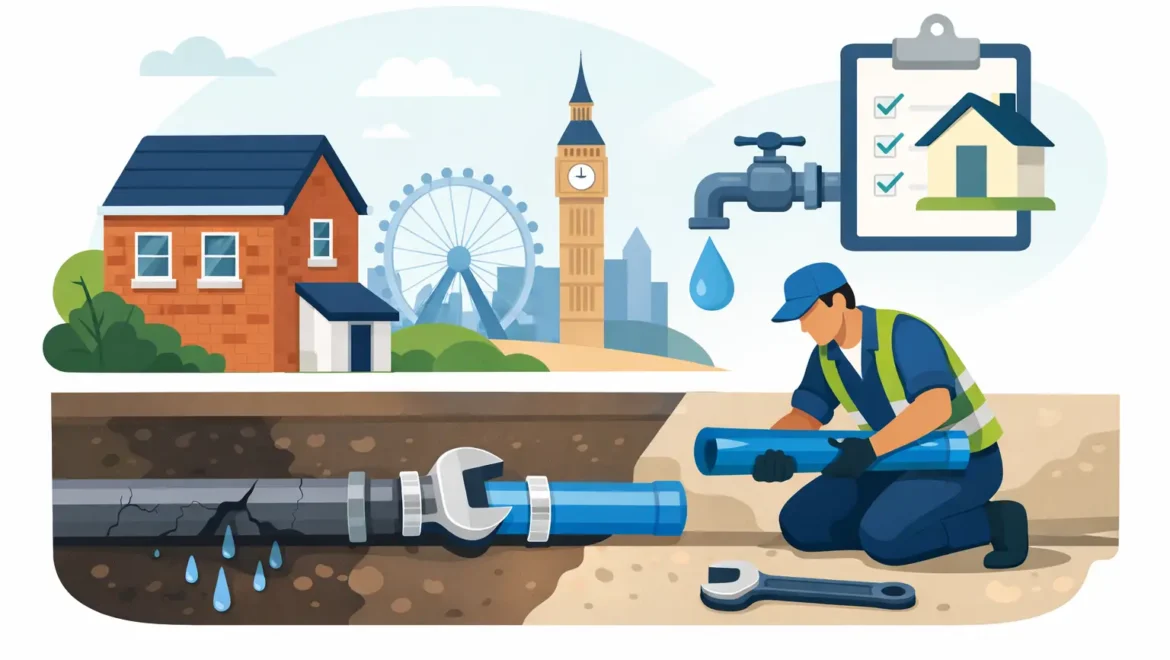

A Guide to Lead Pipe Replacement UK
Blog

A Guide to Lead Pipe Replacement UK

If your water supply pipe was installed before the 1970s, there is a fair chance part of it is still lead. Many homeowners only find out when they spot low pressure, discoloured water, repeated leaks, or they start asking sensible questions about drinking water quality. This guide to lead pipe replacement UK property owners can rely on explains what matters, what the job usually involves, and how to get it done with the least disruption.

Lead pipe replacement is rarely just about swapping one old pipe for a new one. It often sits alongside questions about responsibility, water company approval, excavation, reinstatement and whether a trenchless method could avoid digging up a drive or garden. Getting those points right at the start usually saves time, cost and frustration later.

Why lead pipes are still a problem

Lead was widely used for water supply pipes in older UK properties because it was easy to work with and durable for its time. The issue is that age, wear and changing water conditions can increase the risk of lead entering the water supply. Even where the risk is not obvious day to day, many owners choose replacement because they want a modern, compliant pipework system and peace of mind.

There is also a practical side. Older lead services are often narrower than modern replacements, so they can contribute to weak flow and pressure. If the pipe is leaking underground, you may also be paying for water you never use, while damp ground or repeated repair visits become a recurring nuisance.

For landlords and commercial property managers, the decision can be even more straightforward. Older incoming supplies raise maintenance and compliance concerns, and repeated reactive repairs usually cost more over time than planned replacement.

A guide to lead pipe replacement UK homeowners can actually use

The first thing to understand is which section of pipe is yours. In many cases, the property owner is responsible for the private supply pipe running from the boundary to the building. The water company will usually remain responsible for its section in the public highway. That split matters because a full lead removal job may involve coordination between both sides.

If you are not sure whether the pipe is lead, a specialist contractor can usually identify it during a site survey. Lead pipe has a dull grey appearance, feels relatively soft compared with copper or plastic, and older internal stop tap arrangements can offer clues. A proper assessment is still the best route, particularly if the pipe route is unclear or the issue may involve leaks as well as material replacement.

Once confirmed, the next question is whether the whole pipe should be replaced or only part of it. In most cases, full replacement is the better long-term option. Partial replacement can leave older sections in place and may not deliver the pressure improvement or long service life you want. It can also create a patchwork system that becomes harder to maintain.

What the replacement process usually involves

Most lead pipe replacement jobs begin with a survey. This checks the pipe route, entry point, ground conditions, likely depth, and whether there are surfaces such as block paving, tarmac or landscaping that need protecting. It also helps establish whether trenchless installation is possible.

The actual works usually involve disconnecting the old private supply and installing a new underground water pipe, typically in modern approved materials. The new pipe is then connected, pressure tested and brought into service. Internal connection points may also need minor alterations, especially where older stop taps or outdated arrangements are present.

The biggest difference between one project and another is how the new pipe gets from the boundary to the property. Traditional excavation means digging a trench along the route. That can be suitable on some sites, especially where access is simple and surfaces are already due for replacement. But where there is a driveway, lawn, patio or finished landscaping to protect, trenchless methods can make far more sense.

No-dig methods and when they make sense

Trenchless moling is often the most practical choice for domestic lead pipe replacement. Instead of opening a full trench, the contractor creates small excavations at entry and exit points, then uses specialist equipment to install the new pipe underground. For homeowners, the main benefit is obvious – far less mess and far less reinstatement.

That reduced disruption can have a real cost benefit too. A cheaper excavation quote can quickly stop looking cheap once you factor in the rebuilding of decorative paving, resin surfaces, mature gardens or access routes. No-dig methods are not right for every site, because ground conditions, route length and underground obstructions all matter, but they are often the cleanest solution where appearance and access are important.

For commercial sites, minimising open excavation can also reduce disruption to residents, staff, customers or vehicles. That matters just as much as the pipework itself.

How much does lead pipe replacement cost?

Costs vary because no two sites are exactly alike. The length of pipe run, ground conditions, access, internal connection changes, traffic management requirements and reinstatement all affect the final figure. A straight run across a soft front garden is very different from a replacement beneath a paved driveway with limited access.

This is why a proper site-specific quote matters more than generic online price ranges. If you are comparing quotes, check what is actually included. Some prices cover installation only, while others include excavation, spoil removal, testing, reinstatement and liaison for approvals. A detailed quotation is usually the one that gives you fewer surprises.

It is also worth asking whether the contractor can offer the least disruptive route rather than simply the shortest route. The cheapest line on paper is not always the best outcome once the site is made good.

Can you get help with the cost?

Some water companies offer support schemes or contribution programmes where lead supply pipes are being replaced, especially if their section is also lead. Availability depends on the region and the specific circumstances, so it is worth checking early. Requirements often include approved materials, correct installation standards and inspection arrangements.

This is one reason many owners prefer a specialist contractor rather than a general groundworker. Accredited installers understand the standards, the paperwork and the connection requirements. That can help keep the process moving and reduce the risk of rework.

Choosing the right contractor

Lead pipe replacement looks simple from the outside, but it is a specialist utility job. You need a contractor who understands water regulations, underground installation methods, testing, reinstatement and how to work tidily on occupied properties.

Look for recognised approvals such as WIAPS and Watersafe, clear insurance cover and a workmanship guarantee that gives proper long-term reassurance. Ask how they plan to install the new pipe, what disruption to expect, and whether they can carry out reinstatement to a good standard rather than leaving you to arrange separate trades afterwards.

Speed matters, but clarity matters more. A good contractor should be able to explain the route, the method, the programme and any likely caveats in plain terms. For homeowners and landlords in the North West, that practical, specialist approach is often the difference between a straightforward project and a drawn-out one.

Common questions before work starts

Many customers ask whether they need to leave the property without water for a full day. Usually, no. There is often some interruption during the changeover, but experienced crews aim to keep that period as short as possible.

Another common concern is whether the whole garden or driveway will be dug up. Again, not necessarily. With the right route and the right equipment, a trenchless installation can keep excavations to a minimum.

People also ask whether replacing lead pipe will improve water pressure. It often does, particularly where the old pipe is narrow, restricted or deteriorating. That said, pressure also depends on the wider network and the property’s internal plumbing, so results vary.

When to act sooner rather than later

If you already know you have lead pipe, delaying replacement rarely improves the situation. The pipe will not become easier to access with age, and if there is an existing leak, pressure issue or water quality concern, waiting can mean more disruption later.

The same applies if you are planning other external works. If you are about to resurface a driveway, landscape a front garden or renovate an older property, that is usually the best moment to deal with the incoming supply. It is far more sensible to replace the pipe before new finishes go down than to disturb everything afterwards.

Where speed, cleanliness and compliance matter, specialist contractors such as Watermains & Drains UK can assess the route, advise on the least disruptive method and provide a clear quotation for full replacement work.

A lead pipe is one of those hidden property problems that is easy to ignore until it starts affecting your water, your plans or your budget. Dealing with it properly gives you a modern supply, fewer unknowns underground and one less ageing utility line to worry about.

Lead Pipe Upgrade Before House Sale
Blog

Lead Pipe Upgrade Before House Sale

If a buyer’s survey flags a lead supply pipe a week before exchange, the issue suddenly stops being theoretical. A lead pipe upgrade before house sale can be the difference between a straightforward transaction and a round of price renegotiation, delayed paperwork, or a buyer walking away because they do not want another job to manage after moving in.

For sellers, landlords and property managers, the question is rarely just whether lead pipework should be replaced. It is whether replacing it now will protect the sale, reduce objections and make the property easier to market. In many cases, the answer is yes – but the timing, method and scope matter.

Why a lead pipe can affect a sale

Lead supply pipes still turn up regularly in older UK properties, particularly where the original incoming water pipe has never been upgraded. Buyers are more aware of the health concerns than they were a decade ago, and surveyors are more likely to note suspected lead pipework in reports. Even when the pipe is not actively leaking, it can create uncertainty.

That uncertainty causes problems during conveyancing and negotiation. A buyer may ask whether the incoming supply has been replaced, whether any part of the pipe remains in lead, and whether the work was carried out by an approved contractor. Mortgage lenders do not always make it a formal barrier, but buyers and their solicitors often treat it as a risk that needs a clear answer.

For landlords selling tenanted or recently vacated stock, there is also a practical point. A buyer who sees old pipe materials may assume other hidden services have also been deferred. One issue can shape their view of the whole property.

Should you arrange a lead pipe upgrade before house sale?

A lead pipe upgrade before house sale usually makes the most sense where the property is older, the pipework is clearly identified, or the buyer has already raised concerns. It can also be worthwhile before listing the property if you want to remove a predictable objection upfront.

There are, however, trade-offs. If the property is being sold as a full refurbishment project, some buyers may expect to replace services themselves and may not pay a premium for the upgrade. Equally, if the lead section is short, internal, or part of a wider planned renovation, the best route may depend on the rest of the plumbing layout.

What sellers generally want is certainty. A completed replacement with clear records is easier to explain than a vague assurance that the pipework is probably fine. It gives estate agents, solicitors and buyers something concrete to work with.

What buyers and surveyors usually look for

Surveyors are not excavating drives or tracing every metre of pipe, but they do flag visible indicators. If the incoming pipe appears grey and soft, if it leaves a dull metallic mark when scraped, or if the property age suggests lead is likely, it may be mentioned as requiring further investigation.

Once that note appears on a survey, the buyer often asks follow-up questions. Has the mains supply pipe from the boundary to the house been replaced? Was the work completed to current standards? Is there paperwork? Was disruption to paving, gardens or driveways properly reinstated?

These are sensible questions. Buyers are not only thinking about water quality. They are thinking about cost, mess and the hassle of arranging groundwork after completion.

The value of replacing the supply pipe before marketing

Replacing a lead supply pipe before you go to market can make the sale process cleaner. It reduces the chance of a last-minute issue, helps avoid reactive quoting under pressure, and gives buyers confidence that the property has been properly maintained.

That does not always mean a dramatic jump in sale price. More often, it protects value by limiting reductions. A buyer who was planning to chip away at the agreed figure because of possible pipe replacement costs has less room to manoeuvre when the work is already complete.

It also helps with speed. Delays often happen not because the work itself is complicated, but because no one knows who is responsible, how the pipe is routed, or what reinstatement will be needed. Sorting that out before the property is under offer puts you in control of the timeline.

Minimising disruption matters as much as the upgrade itself

Many sellers hesitate because they picture trenches across the front garden, broken paving and a drawn-out building site while viewings are still taking place. That concern is understandable, but it is also why the installation method matters.

Modern trenchless methods can often reduce excavation significantly. Moling, for example, allows a new water supply pipe to be installed underground with far less surface disruption than open-cut trenching. Where conditions suit the method, that means less mess, quicker completion and less reinstatement to worry about.

For occupied homes, rental properties and commercial premises, minimal disruption is not a nice extra. It is central to the job. Sellers want the property to remain presentable. Landlords want tenants disturbed as little as possible. Facilities teams want works completed safely and efficiently without unnecessary downtime.

This is where specialist contractors stand apart from general trades. They can assess the route, ground conditions, entry point and reinstatement requirements properly, then recommend the most practical method rather than defaulting to excavation.

Why paperwork and approvals matter

A buyer may be reassured by the physical improvement, but solicitors and surveyors will also want evidence that the work was carried out correctly. That is why contractor credentials matter.

Using an accredited specialist with appropriate insurance and recognised water industry approvals gives the buyer a stronger level of confidence. It shows the work has not simply been patched or improvised. A workmanship guarantee also helps because it reduces perceived risk after completion.

For commercial properties and managed blocks, this point is even stronger. Property professionals often need method statements, compliance records and a contractor who understands reinstatement-sensitive sites. Speed is important, but so is doing the job in a way that stands up to scrutiny.

When it may be better to disclose rather than replace

There are cases where immediate replacement is not the right call. If the property is being sold very quickly, if access constraints make the works more involved, or if the pipe issue is only one part of a broader redevelopment, a seller may choose to disclose the situation and price accordingly.

That approach can still work, but it needs honesty and realism. Trying to play down known lead pipework often backfires once the survey is done. A clearer route is to obtain a professional assessment and quotation, then decide whether to complete the work or use that information to support transparent negotiation.

In other words, the real mistake is not always leaving the pipe in place. It is leaving the question unanswered.

Lead pipe upgrade before house sale – practical timing

If you are considering a lead pipe upgrade before house sale, the best time is usually before the property is listed or as soon as the issue is identified. That gives enough space for surveying, quoting, installation and any reinstatement without placing the whole transaction under pressure.

If the sale is already progressing, speed becomes more important. A contractor who can carry out a site visit promptly, explain the likely route clearly and complete the work with minimal disruption can help keep the chain moving.

Across older housing stock in Greater Manchester, Stockport, Warrington, Cheshire and surrounding areas, this kind of upgrade is rarely unusual. The key is treating it as a specialist infrastructure job rather than an afterthought. Companies such as Watermains & Drains UK are brought in for exactly that reason – to replace outdated supply pipes properly, keep excavation to a minimum where possible, and leave sellers with a tidy, documented result they can put in front of buyers with confidence.

What sellers should do next

If you suspect there is still lead on the incoming supply, do not wait for the buyer’s survey to tell you. Get the pipework checked, understand what actually needs replacing and ask how the works would be carried out. A straightforward site assessment can tell you far more than guesswork ever will.

The best outcome is not simply a new pipe underground. It is a sale that keeps moving because one common point of concern has already been dealt with properly. When the job is planned well, completed cleanly and backed by the right approvals, it becomes one less thing for a buyer to question – and one more reason for them to proceed.

Lead Pipe Replacement for Rented Property
Blog

Lead Pipe Replacement for Rented Property

A tenant reports low pressure at the kitchen tap, the water has an odd metallic taste, or a routine check reveals an older supply entering the property in lead. That is usually the point when lead pipe replacement for rented property stops being a future job and becomes something that needs a proper plan. For landlords, it is not just about upgrading old pipework. It is about protecting tenants, avoiding drawn-out disruption, and getting the work done by a contractor who understands both compliance and reinstatement.

Why lead pipes in rented homes need attention

Many older UK properties still have some section of lead pipework, particularly on the incoming water supply. In rented housing, that raises two issues straight away. The first is tenant welfare. The second is your responsibility as the property owner to act reasonably when a known issue affects the water supply.

Lead pipe does not fail in the same way every time. Sometimes the concern is water quality. In other cases, the pipe has simply reached the point where internal build-up, corrosion or leakage makes replacement the sensible option. A landlord may also find the issue during renovation works, a void-period inspection or when preparing a property for a new tenancy.

What matters is not just whether there is lead present, but where it is, what condition it is in, and whether it forms part of the live supply serving the tenants. A short internal section may call for one scope of work. A full replacement from boundary to internal stop tap is a different job entirely.

Who is responsible for lead pipe replacement for rented property?

This is where confusion often starts. In simple terms, the water undertaker is generally responsible for its own mains in the street, while the property owner is usually responsible for the private supply pipe serving the building. If the lead pipe sits on the landlord’s side of the boundary, replacement normally falls to the landlord.

That does not mean every job is identical. In some cases, the communication pipe or shared arrangements between neighbouring properties can complicate matters. Older terraces, converted buildings and properties with unusual service routes often need a proper site assessment before anyone can give firm answers.

For landlords, the practical approach is straightforward – confirm the pipe material, identify the route, and establish exactly which section is private. Guesswork tends to waste time and can lead to incomplete quotations.

Signs a rented property may still have lead pipework

Age of property is often the first clue, especially in homes built before lead use was phased out. But age alone is not enough. Some properties have been partially upgraded over the years, leaving a mix of old and newer materials.

A dull grey incoming pipe that scratches to a shiny silver finish can indicate lead. So can recurring low flow, old-fashioned internal stop tap arrangements, and historic patch repairs around the incoming main. Tenants may not notice any of this unless there is a visible leak or pressure problem, which is why landlord inspections matter.

If you manage multiple properties, it is worth treating one confirmed lead supply as a reason to review others of a similar age and build type. The pattern is often wider than a single address.

What the replacement process usually involves

Lead pipe replacement for rented property starts with identifying the existing supply route and deciding whether a direct replacement is possible or whether a new supply pipe should be installed on a different line. In many cases, a new MDPE supply is the better long-term answer because it avoids trying to work around ageing pipe runs and old joints.

The method used makes a big difference to cost and disruption. Traditional excavation still has its place, particularly where access is poor or services are congested. But for many homes, trenchless moling allows a new pipe to be installed with far less disturbance to gardens, paths and driveways. That is often the deciding factor for landlords who want the work completed quickly and neatly, especially when a tenant is in occupation.

Once the route is prepared, the new supply is installed, connected and pressure tested. Internal connections may need adjustment at the point of entry, and any old lead sections that are no longer required should be safely isolated or removed as appropriate. Reinstatement then becomes part of the quality of the job. A cheap quotation can look less attractive if it leaves visible damage behind.

Replacing pipes in occupied tenancies

Occupied properties need a bit more planning, but the work is usually manageable when handled properly. Access, water shut-off times, and communication with the tenant all need to be organised in advance. Most landlords want a job that is efficient, tidy and predictable rather than one that drags on for several visits.

This is where specialist contractors stand apart from general groundworkers. The best outcome usually comes from a team that can assess the water supply issue, install the new pipe, and reinstate properly without turning a straightforward upgrade into a disruptive building project.

Cost, disruption and the factors that change both

Landlords often ask for a headline figure, but lead pipe replacement costs depend on distance, ground conditions, access, reinstatement requirements and whether the pipe serves one property or forms part of a more complex arrangement. A straight run across a front garden is very different from a supply passing beneath paving, walls, shared access or internal floors.

The good news is that modern no-dig methods can reduce labour time and surface damage significantly. That usually helps on both programme and reinstatement costs. It does not mean trenchless is always the right answer, because buried obstructions and service congestion can still affect the route, but it is often the least disruptive option for a standard domestic supply replacement.

For rented property, there is another cost to consider – tenant inconvenience. If the works involve long shutdowns, repeated attendance or visible mess, the indirect cost in complaints and management time can be just as frustrating as the invoice. Paying for a competent, well-planned installation often proves better value.

Compliance, workmanship and contractor choice

Landlords and property managers should be careful about who carries out this type of work. Replacing a water supply pipe is not just a digging job. It requires the right method, the right materials and a contractor who understands water regulations, testing and final connection standards.

That is why accreditations matter. WIAPS and Watersafe approval give landlords a clearer level of confidence that the installer is competent to work on potable water systems. Public liability insurance matters too, particularly where external excavation, shared access or tenanted premises are involved. Guarantees also have value, not as a sales extra, but because they reduce the risk of paying twice if workmanship issues appear later.

For professional landlords and facilities teams, documentation can be just as important as the installation itself. Clear quotations, scope confirmation, method statements where needed, and tidy sign-off all help keep the process manageable.

When a full upgrade makes more sense than a partial repair

There are situations where a small repair on old pipework is technically possible but commercially unwise. If the incoming lead supply has already shown signs of leakage, restriction or deterioration, patching a single problem area may only postpone a full replacement. That is particularly true where tenants depend on a reliable supply and access to the pipe run is difficult.

A partial repair may seem cheaper in the short term, but if the rest of the pipe remains old and vulnerable, the landlord can end up paying for repeated attendance, further disruption and another round of reinstatement. In those cases, full replacement is often the cleaner and more cost-effective decision.

This is especially relevant during planned refurbishments or between tenancies. If external works, kitchen upgrades or flooring changes are already scheduled, dealing with the incoming supply at the same time can avoid future disruption.

Lead pipe replacement for rented property in older terraces and shared layouts

Some of the most awkward jobs involve older terraces, subdivided houses and properties with unclear service routes. Shared supplies, boundary crossings and historic alterations can all complicate what should be a straightforward replacement.

That does not mean the job cannot be done efficiently. It means the survey stage matters more. A proper assessment can establish whether the property has its own independent supply, whether a new route is needed, and what permissions or notices may be required before work starts. For landlords, that level of clarity is worth having before tenants are informed and dates are agreed.

In North West housing stock, this comes up regularly. Older properties often need a contractor who has seen these layouts before and can offer a practical solution rather than a generic estimate.

A sensible way for landlords to approach the job

If you suspect lead pipework, start with confirmation rather than assumption. Get the supply assessed, understand who owns which section, and ask for a quotation that covers installation method, likely timescale and reinstatement. If the property is occupied, make sure tenant communication is factored in from the start.

A specialist contractor such as Watermains & Drains UK can usually add the most value where speed, minimal disruption and dependable delivery matter just as much as the pipe itself. For landlords, that combination tends to be the difference between a managed upgrade and a problem that keeps returning.

The best time to replace a lead supply is usually before it becomes urgent, but even when the issue is discovered late, the right method can still keep the process clean, fast and under control.

Sewage Treatment Tank Installation Guide
Blog

Sewage Treatment Tank Installation Guide

A failed septic setup usually does not give much warning. You start with slow drains, wet ground near the tank, bad smells after rain, or an Environment Agency concern when a sale or renovation is under way. In those situations, sewage treatment tank installation is not just another groundworks job. It needs the right design, the right fall on the pipework, the right discharge point, and a contractor who can complete the work without turning the whole garden or access road into a building site.

For homeowners, landlords and site managers, the main question is simple: what does a proper installation involve, and how do you avoid paying twice because something was missed first time?

What sewage treatment tank installation actually involves

A sewage treatment tank is different from a basic septic tank. Rather than only separating solids, it treats wastewater to a much higher standard before discharge, usually to a watercourse or drainage field depending on the site and the permissions in place. That makes it a better fit for many rural and semi-rural properties, replacement projects, and sites where older systems no longer meet current expectations.

The installation itself is not just about dropping a tank into a hole. A proper job starts with assessing the existing drainage layout, the property’s daily load, access for plant, soil conditions, groundwater levels and discharge options. Pipe runs, invert depths, ventilation, electrical supply for the treatment unit, alarms where required, and reinstatement all need to be considered from the start.

Where that early planning is weak, the problems show up later. Tanks can sit too high or too low, outlets can fail to achieve correct falls, and drainage fields can be installed in unsuitable ground. Those are expensive mistakes because they usually mean returning to excavate again.

When a sewage treatment tank is the right choice

In practical terms, a treatment tank is often the right answer when an old septic tank is underperforming, when discharge rules make a direct outlet unsuitable, or when a property is being upgraded and the existing foul drainage arrangement cannot cope. It can also make sense during major refurbishments, extensions, barn conversions and new-build work where a mains connection is not available or would be disproportionately costly.

There is always a balance between upfront cost and long-term reliability. A cheaper system on paper can become the more expensive option if it needs regular call-outs, creates drainage complaints, or causes issues when the property is sold. Buyers, surveyors and insurers tend to look more closely at private drainage now than they once did.

Site conditions matter more than most people expect

Every installation depends on the ground. Clay-heavy sites, high water tables, restricted access and sloping gardens all change the method and the programme. A level plot with clear machinery access is one thing. A rear garden behind a terraced property, or a commercial site where access must stay open, is another.

This is where specialist drainage contractors stand apart from general builders. The tank size and type are only part of the picture. The excavation support, spoil handling, backfill specification, pipework alignment and final reinstatement often determine whether the job runs smoothly.

If the installation is near driveways, paving or landscaped areas, minimising disruption becomes a serious part of the plan, not a nice extra. In some cases, trenchless methods can reduce excavation on connecting runs, especially where long pipe routes cross finished surfaces. That does not remove the need for excavation at the tank position itself, but it can reduce the footprint of the overall works.

Regulations, consents and compliance

Sewage treatment tank installation in the UK must be approached with compliance in mind. Requirements vary by site, discharge method and local conditions, but the broad principle is straightforward: the system must be suitable for the property and installed in line with current rules.

That usually means checking building control requirements, discharge arrangements and whether any environmental permissions or exemptions apply. Distances from buildings, boundaries, watercourses and boreholes also matter. So does safe access for maintenance and emptying.

For landlords and commercial property managers, there is an added layer of risk. A non-compliant system can lead to tenant complaints, operational disruption and awkward questions during refinance, sale, or insurance discussions. For that reason, it pays to use contractors who are used to documented processes, clear scopes and professional handover information.

The main stages of sewage treatment tank installation

The best installations follow a clear sequence. First comes the site assessment and design check, then setting out and confirming levels. After that, the excavation is carried out, the base is prepared, the tank is placed and connected, and the discharge arrangement is installed. The system is then tested, commissioned and backfilled correctly before the site is reinstated.

None of that is glamorous, but each stage matters. The base needs to be right for the tank and ground conditions. Connections need to be watertight and correctly aligned. Electrical components need safe installation. Most importantly, the finished system needs to work in normal day-to-day use, not just look tidy on completion.

A contractor who rushes through the levels or skips proper testing may still leave a neat lawn behind. That does not help much if toilets back up two months later.

Replacing an old tank versus installing from new

Replacement work is often more awkward than a new installation because the existing drainage may be poorly mapped, partially collapsed or altered over time. Old tanks are not always where owners think they are, and incoming pipework can be shallower or deeper than expected.

New installations are usually more straightforward from a design point of view, but they still need careful planning around access, falls and discharge. On occupied sites, the challenge is often maintaining usable foul drainage for as much of the programme as possible and keeping the working area safe and tidy.

Cost depends on more than the tank itself

One of the most common misunderstandings is assuming the tank unit is the bulk of the cost. In reality, sewage treatment tank installation pricing is shaped by excavation depth, spoil removal, access restrictions, length of pipe runs, power supply requirements, discharge arrangements and reinstatement.

A straightforward install with good access and simple ground conditions will usually be more cost effective than a technically difficult site, even if the same tank model is used. If a contractor has to protect nearby structures, manage groundwater, work around existing services or carry materials through restricted access, the labour and programme increase quickly.

The cheapest quote is not always the most economical. If reinstatement is vague, disposal is excluded, or commissioning is not clearly stated, the final bill can move around after work starts. Clear quoting matters because it gives property owners a realistic picture from the start.

Choosing the right contractor

This type of work sits between drainage, civils and compliance. That is why experience matters. You need a contractor who understands underground services, site levels, drainage performance and the practical realities of working on lived-in or operational properties.

Look for evidence of proper insurance, relevant approvals where applicable, and a track record of tidy completion. Communication also matters more than people think. A good contractor explains what will be excavated, how long the foul drainage will be interrupted, what access is needed, and what the finished site will look like.

For customers across the North West, especially where access is tight or disruption is a concern, that specialist approach makes a noticeable difference. Contractors such as Watermains & Drains UK are used to planning infrastructure work with minimal mess, clear scheduling and proper reinstatement, which is exactly what most property owners want when drainage problems need fixing without dragging on for weeks.

Common problems that can be avoided

Most failures are not mysterious. They usually come back to poor siting, poor levels, incorrect backfilling, unsuitable discharge arrangements or undersized systems. Sometimes the tank is fine but the drainage field is not. Sometimes the drainage field is serviceable but the incoming pipework has not been laid properly.

Another common issue is underestimating future demand. A system that just about copes now may struggle after an extension, occupancy increase or use change. Planning for realistic usage gives better long-term value than installing to the bare minimum.

How long does installation take?

It depends on the site, but many domestic projects are completed over several days rather than several weeks. Straightforward jobs with clear access move faster. Complicated excavations, poor weather, difficult ground or extensive reinstatement can extend the programme.

The important point is not simply speed. It is controlled delivery. Fast is useful only if the levels are right, the site is left safe and the system performs as it should.

A well-installed treatment tank should quietly do its job for years. That is the outcome worth paying for – a compliant, dependable system, a tidy finish, and no need to revisit the same ground again six months later.

Drain Unblocking Methods for Landlords
Blog

Drain Unblocking Methods for Landlords

A blocked kitchen sink on a Friday evening is inconvenient. A backed-up soil pipe in a tenanted property is a different matter altogether. For landlords, drain unblocking methods for landlords need to be practical, fast and proportionate – not just a guess with a bottle of chemicals and crossed fingers.

The right response depends on what is blocked, where it is blocked and whether the issue sits inside the property or in the external drainage run. In some cases, a simple manual clear is enough. In others, the blockage is only the symptom, and the real problem is a collapsed pipe, root ingress or poor drain condition that will keep causing call-backs until it is properly identified.

Choosing the right drain unblocking method

Landlords are often balancing three things at once: tenant wellbeing, property damage risk and cost control. That is why the first step is not picking a tool. It is working out the likely cause.

A slow-draining bath or basin usually points to hair, soap residue or localised build-up in a trap or short waste run. A kitchen sink that repeatedly backs up is more likely to involve grease, fats and food waste. If a toilet is gurgling, backing up or causing water to rise elsewhere, the blockage may be further down the foul line. When outside gullies overflow during normal use, the problem is often in the underground drain rather than in a single appliance connection.

That distinction matters because the best method for an internal waste pipe is not necessarily the right method for an external drain. Using the wrong approach can waste time, create mess and sometimes make the blockage harder to clear.

Drain unblocking methods for landlords: what works where

Manual clearing for minor internal blockages

For straightforward sink, bath or basin issues, manual clearing is often the first and most cost-effective option. Removing and cleaning the trap, using a plunger, or carefully working through a small hand auger can solve many minor blockages without invasive work.

This is generally suitable where the blockage is close to the fixture and there is no sign of external overflow, foul odour from multiple outlets, or wastewater backing up elsewhere. For landlords with managing agents or maintenance teams, this can be a sensible first response if carried out safely and hygienically.

The trade-off is that manual methods are limited. They do not tell you much about pipe condition, and they are less effective where grease has coated the line over a longer distance or where the obstruction is deeper in the run.

Mechanical rodding for accessible drains

Drain rods remain useful for certain external blockages, especially where there is direct access through inspection chambers. They can break through soft obstructions such as paper build-up, light silt or organic matter in a straightforward run.

Used properly, rodding is a practical method. Used badly, it can compact the blockage, dislodge joints in older pipework or leave part of the obstruction behind. It is also less reliable where the line has multiple bends, where there is a more stubborn build-up, or where a structural defect is causing recurring issues.

For landlords, rodding makes sense when the blockage appears isolated and access is clear. It is less attractive as a repeat solution for the same drain every few months.

High-pressure water jetting for stubborn build-up

Where grease, scale, wipes, silt or debris have built up through the line, high-pressure water jetting is usually the more effective option. This method clears the obstruction and cleans the pipe wall far more thoroughly than a basic poke through the centre of the blockage.

That is why jetting is often the preferred approach for external drains serving rented houses, flats and mixed-use premises. It is particularly useful when the symptoms suggest a longer section of pipe has narrowed over time rather than being blocked by one isolated item.

Jetting is not automatically the answer in every case. If the drain is damaged, displaced or partially collapsed, aggressive cleaning alone will not fix the reason it keeps blocking. In those cases, a survey after clearance is often the sensible next step.

CCTV drain surveys when the problem keeps returning

If tenants report the same drainage issue more than once, a CCTV drain survey stops the guesswork. A camera inspection shows whether the problem is caused by roots, fractures, poor falls, scale build-up, displaced joints or a localised defect.

For landlords, this is often the point where reactive maintenance becomes planned maintenance. Rather than paying for repeated call-outs, you get evidence of what is happening in the line and what level of repair is actually needed.

This can also help where responsibility is unclear, especially in shared drainage situations or managed blocks. A proper survey provides a clear basis for deciding the next step instead of relying on assumptions from different parties.

Repair methods after clearance

Sometimes the blockage is only the visible part of the issue. If a survey shows a localised defect, patch lining can often repair the pipe internally without excavation. Where there is more extensive damage, a full repair or replacement may be required.

This is where method matters beyond unblocking. A contractor with no-dig capability can often complete repair work with far less disruption to paving, gardens or access routes than traditional excavation-led methods. For landlords, that can mean shorter downtime, tidier completion and fewer complaints from occupants.

What landlords should avoid

Chemical drain cleaners are widely marketed as an easy fix, but they are rarely the best answer for rental property drainage issues. They may shift a minor build-up in a waste pipe, but they often do little for a substantial blockage and can create handling risks for tenants and contractors alike.

There is also the wider management issue. If a tenant has already used multiple off-the-shelf products before reporting the problem, the pipework may contain standing chemicals by the time anyone attends. That is not a reason to panic, but it is a reason to use a more controlled and professional approach.

Repeatedly relying on the cheapest short-term fix is another false economy. If the same drain keeps blocking, the question is no longer how to clear it. The question is why it is happening.

Tenant-caused blockage or underlying drain problem?

This is a common landlord concern, and the answer is not always straightforward. Sanitary products, wipes, excessive toilet paper, fats, oils and food waste do cause many blockages. Equally, long-standing pipe defects, root ingress and poor historic drainage layout can produce the same symptoms.

In practice, the fairest approach is evidence-led. If the blockage is a one-off and caused by inappropriate disposal, that points one way. If the line shows structural defects or chronic build-up linked to pipe condition, that points another. A good drainage contractor should explain what they found in plain terms rather than pushing a vague diagnosis.

For managed properties, that clarity matters. It supports communication with tenants, helps prevent disputes and gives you a better record of property condition over time.

Speed matters, but so does method

Emergency attendance is important when wastewater is backing up or a toilet is unusable. But speed on its own is not enough. The right contractor should be able to decide quickly whether the issue needs a basic clear, jetting, a CCTV survey or follow-on repair work.

That is the advantage of using a specialist contractor rather than treating drainage as a generic maintenance job. You want someone who can resolve the immediate problem, identify any deeper defect and recommend the least disruptive repair route if one is needed. For landlords and property managers, that means less repeat attendance and more certainty over the next step.

Providers such as Watermains & Drains UK work this way because drainage issues rarely sit in neat boxes. A blocked drain can turn out to be a repair job. A recurring repair issue can turn out to be a layout or condition issue. The method has to fit the asset, not the other way round.

A sensible approach for rental properties

The most effective drain unblocking methods for landlords follow a simple logic. Start with the symptoms, confirm the likely blockage location, use the least invasive effective method, and investigate further when the same issue returns. That keeps costs controlled without ignoring the bigger risk.

For a small internal blockage, manual clearing may be enough. For a fouled external run, jetting is often the better choice. For repeated incidents, CCTV inspection is usually the point where guesswork should stop. And where defects are identified, modern repair methods can often put the problem right with far less disruption than many landlords expect.

When drainage problems are handled properly, tenants get a quicker resolution, properties stay in better condition and landlords avoid paying twice for the same issue. That is usually the difference between a cheap fix and a useful one.

Lead Pipe Replacement vs Pipe Lining
Blog

Lead Pipe Replacement vs Pipe Lining

If you have an ageing pipe under the drive, a poor-flowing supply, or concerns about lead entering your drinking water, the question often comes down to lead pipe replacement vs pipe lining. They are not interchangeable solutions, and choosing the wrong one can leave you paying for work that does not properly deal with the problem.

For many UK properties, especially older homes across the North West, the right answer depends on one simple point: are you dealing with a water supply pipe that contains lead, or a drain that is structurally damaged? Pipe lining has a place, but not as a fix for every buried pipe. Where a lead water supply is involved, full replacement is usually the proper route.

Lead pipe replacement vs pipe lining: the key difference

Lead pipe replacement means removing a lead supply pipe from service and installing a new replacement pipe, typically a modern plastic water supply pipe that meets current standards. That tackles the issue at source. You are no longer relying on an old lead pipe to deliver drinking water into the property.

Pipe lining is different. It is a trenchless repair method more commonly used on drains and some non-potable pipe systems where the existing pipe remains in place and a new lining is formed inside it. This can restore structural integrity and reduce leakage, but it does not make a lead water supply pipe an acceptable long-term solution for drinking water.

That distinction matters because homeowners sometimes hear “no-dig” and assume lining is a cleaner alternative to replacement in every case. In reality, lining and replacement solve different problems.

Why pipe lining is rarely the answer for lead water supply pipes

If the pipe bringing water into your home is made of lead, the main concern is not just a crack or localised defect. It is the pipe material itself. Even if you could line it, you would still be trying to extend the life of a pipe that is outdated and generally best removed from service.

For potable water supplies, compliance, water quality and future reliability all matter. A lined lead pipe is unlikely to be the preferred approach where a full new supply can be installed. If you are already opening the discussion because of health concerns, low pressure, poor condition or an insurance-related issue, replacement is usually the cleaner and more dependable decision.

This is especially true where the existing pipe is narrow, partially restricted, or has multiple defects. Lining works within the original pipe diameter, and in some applications that can reduce internal space further. A new water supply pipe gives you a fresh start and often a better long-term flow rate.

When pipe lining does make sense

Pipe lining is a very useful method, just usually not for lead water mains into domestic properties. It is commonly suited to damaged drains where excavation would mean lifting finished surfaces, disrupting access, or carrying out expensive reinstatement.

A cracked foul drain under a patio, a root-damaged section beneath a driveway, or a localised defect identified on a CCTV survey can often be repaired with lining or patch lining. In that situation, the goal is to restore the drain with minimal digging. The existing line is cleaned, inspected and repaired from within.

That is why some property owners get mixed messages. They may have heard that trenchless methods avoid disruption, which is true. But the trenchless method used for a damaged drain is not the same decision as how to deal with a lead drinking water supply.

When full replacement is the better option

In most lead pipe replacement jobs, full replacement is the proper recommendation because it removes the health concern, improves the system and aligns the property with modern practice. If the pipe is old enough to raise concerns about lead, it is often old enough to have issues with wear, scale build-up or reduced performance as well.

Replacement is also the stronger option if the pipe has repeated leaks, poor pressure, shallow burial, awkward previous repairs or uncertain routing. Rather than spending money trying to preserve an obsolete asset, you install a new compliant supply and know what you have.

For landlords and commercial property managers, this can be even more important. A replacement pipe gives clearer evidence of corrective action, helps avoid recurring tenant complaints and reduces the risk of future call-backs. It is easier to manage, easier to document and easier to stand behind.

Disruption: not always as bad as people expect

One reason some owners ask about lining is fear of excavation. They picture trenches through the garden, broken paving and a long, messy job. That can happen with traditional open-cut methods, but it is not the only way to replace a pipe.

Modern trenchless installation methods, including moling, allow a new water supply pipe to be installed with far less surface disruption than many people expect. In practical terms, that can mean small launch and receiving pits rather than a continuous trench across your driveway or lawn.

This is where specialist contractors make a real difference. A replacement does not have to mean major upheaval if the route and ground conditions are suitable for no-dig installation. For many homeowners, that changes the whole calculation. The choice is no longer between “cheap and tidy” lining or “messy and expensive” replacement. In the right setting, replacement can also be tidy, fast and cost effective.

Cost depends on what you are really fixing

On a simple price comparison, lining can appear attractive because it avoids extensive excavation. But cost should be measured against the right outcome. If you need to eliminate a lead supply pipe, then lining a different type of defect-repair method into the conversation can create a false comparison.

A cheaper job is not better value if it does not resolve the core issue. If the concern is lead in the supply, then only replacement properly removes that risk. If the concern is a cracked drain under a finished surface, then lining may well be the most economical solution because it avoids unnecessary digging.

The sensible way to assess cost is to ask what result you need five, ten and twenty years from now. A correctly installed new water supply pipe, backed by recognised approvals and a workmanship guarantee, is often the most economical answer over the life of the asset.

Compliance, approvals and peace of mind

With any buried pipework, but especially drinking water supplies, standards matter. Homeowners may only think about getting the water back on. Landlords, facilities teams and insurers usually need more than that. They want to know the work has been carried out properly, by the right contractor, with the right approvals.

That is another reason lead pipe replacement is usually preferred over trying to adapt an outdated supply. A new installation can be designed and installed to current requirements, pressure-tested and signed off correctly. That gives confidence not only in the pipe itself but in the paperwork behind it.

For customers balancing speed with compliance, that matters as much as the physical repair. Watermains & Drains UK approaches these projects as specialist infrastructure works, not as general plumbing jobs, which is exactly what older underground pipe issues require.

How to decide what your property needs

The first step is identifying what type of pipe you are dealing with. If it is your incoming water supply and there is a suspicion of lead, replacement should be the starting point for discussion. If it is a drain with a localised crack or joint failure, lining may be entirely appropriate.

The second step is understanding condition and route. A contractor should assess where the pipe runs, what surfaces are affected, whether trenchless methods are suitable and whether there are wider defects that make repair uneconomical.

The third step is to think beyond the immediate fault. If you own an older property and the supply pipe is original, this is often the moment to solve the problem properly rather than carry out another temporary-minded fix.

The better question to ask

Rather than asking whether lining is better than replacement, ask which method actually fits the pipe, the use and the long-term outcome you need. For lead drinking water pipes, replacement is usually the correct answer because it removes the material entirely and gives you a modern compliant supply. For damaged drains, lining can be an excellent no-dig repair.

That is why a proper site assessment matters. The right contractor should not force every problem into one method. They should explain what the pipe does, what condition it is in, what regulations apply and how to get the best result with the least disruption.

If you are weighing up lead pipe replacement vs pipe lining, the clearest path is usually the one that fixes the actual problem, not the one that only sounds less intrusive. Where lead is involved, a clean new supply pipe is very often the straightforward answer people wish they had chosen first.

Drain Relining vs Excavation Repair
Blog

Drain Relining vs Excavation Repair

A cracked drain under a driveway creates two problems at once – the pipe itself needs repair, and the route to reach it can be expensive to disturb. That is why drain relining vs excavation repair is one of the most common decisions property owners face after a CCTV survey reveals damage.

The right answer depends on what has failed, where the pipe sits, how urgent the issue is, and how much disruption the site can tolerate. For some drains, a no-dig lining is the quickest and cleanest fix. For others, excavation is the only sound option. The key is choosing the method that solves the defect properly rather than simply choosing the one that looks cheaper on first glance.

Drain relining vs excavation repair – what is the difference?

Drain relining is a trenchless repair method. A resin-impregnated liner is inserted into the damaged pipe and cured in place, creating a new lining within the existing drain. In many cases, this avoids the need to dig up patios, tarmac, block paving or landscaped areas.

Excavation repair is the traditional open-cut approach. The ground above the damaged drain is broken out, the faulty pipe section is exposed, removed and replaced, and the surface is then reinstated. It is more invasive, but it gives full access to the pipe and surrounding ground conditions.

Neither method is universally better. A competent contractor will look at pipe condition, access points, depth, alignment, collapse risk and surface reinstatement before recommending one over the other.

When drain relining is usually the better option

Relining works best where the drain is still broadly intact but has localised defects. That might include small cracks, leaking joints, minor root ingress or surface wear inside the pipe. If the drain has kept its shape and flow path, lining can restore serviceability without major excavation.

For homeowners, the main attraction is obvious – less disruption. If a drain runs beneath a driveway, extension, garage access, garden path or finished landscaping, avoiding excavation can save considerable mess and reinstatement work. Commercial sites benefit for the same reason. Less digging often means less impact on parking, access routes and day-to-day operations.

Relining can also be faster. Once the survey confirms suitability, patch lining or full lining may be completed far more quickly than organising a full dig, spoil removal and surface reinstatement. That matters when a landlord needs to reduce tenant disruption or a facilities team needs a repair completed with minimal downtime.

There is also a cost angle, although it is not as simple as saying relining is always cheaper. The drain repair itself may be competitive, but the real saving often comes from not having to break out and rebuild the surface above.

The limits of relining

Relining depends on the host pipe being structurally suitable. If the drain has fully collapsed, has significant deformation, suffers from severe displacement at joints, or has lost line and level, a liner may not be enough. It can repair many defects, but it cannot reliably rebuild a pipe that has already failed beyond a workable shape.

There is also a slight reduction in internal diameter because the liner sits inside the original pipe. In most domestic systems this is not a practical issue, but it still needs to be considered, especially where the drain was already undersized or suffers from poor falls and recurring blockage risk.

When excavation repair is the right call

Excavation becomes necessary when the drain is too badly damaged for trenchless methods to perform properly. A collapsed section is the clearest example. If the pipe has broken away, dropped, flattened or shifted enough to obstruct flow or lose structural integrity, digging down and replacing the damaged section is often the only dependable solution.

Excavation is also appropriate where the defect is linked to surrounding ground movement, poor bedding, voids or other external issues that need to be seen and corrected directly. In those cases, repairing the inside of the pipe alone does not deal with the wider cause of failure.

Sometimes access dictates the method as well. If there are no workable entry points for equipment, or if the pipe arrangement includes bends, junctions or condition issues that make lining impractical, excavation may be the more straightforward route.

For property managers and insurance-related works, excavation can provide a clearer route when a specific section needs full replacement and the condition must be verified visually. It is more disruptive, but it is also comprehensive.

The trade-off with excavation

The obvious drawback is disruption. Breaking out concrete, lifting paving, digging through gardens or accessing drains beneath outbuildings creates mess, noise and reinstatement work. The repair itself may be only part of the overall cost. Replacing surfacing, making good decorative finishes and managing access can push the total higher.

Timescales can also be longer, particularly if the drain is deep, close to other services, or in an area where traffic management, careful hand digging or staged reinstatement is required.

Cost, disruption and lifespan

This is usually where the decision becomes real for customers. They want to know what it will cost, how long it will take, and whether it will last.

In straightforward cases, relining can be more cost effective because it reduces labour, excavation and reinstatement. A drain beneath a garden lawn is one thing. A drain beneath printed concrete, block paving or a resin drive is another. Once surface reinstatement is factored in, no-dig repair can become very attractive.

That said, excavation is not automatically the expensive option in every case. If the damaged section is shallow, easy to reach and in an unmade area, digging out and replacing it may be simple and sensible. Relining becomes less compelling if the set-up is complex but the excavation is easy.

As for lifespan, both methods can provide a long-term repair when used correctly. The issue is not whether one sounds newer and one sounds older. The issue is whether the chosen method matches the condition of the drain. A well-installed liner in a suitable pipe can perform very well for years. A properly excavated and replaced section can do the same. Problems usually arise when the wrong repair is applied to the wrong defect.

How a proper survey decides the method

The decision should not be guesswork. A CCTV drain survey is what separates a temporary-looking fix from the correct repair specification.

The survey shows the type of defect, its exact location, how far the damage extends, and whether the pipe still has the shape and stability needed for relining. It also helps identify contributing issues such as root ingress, displaced joints, scale build-up, partial collapse or standing water caused by poor falls.

For domestic customers, this means clearer quoting and fewer surprises once work starts. For landlords, insurers and commercial clients, it means there is a record of condition to support the repair recommendation. A specialist contractor should be able to explain plainly why patch lining, full lining or excavation is being advised, and what outcome each option is expected to deliver.

Drain relining vs excavation repair for UK homes and sites

Across the North West, one of the biggest factors is surface disruption. Many drains run beneath driveways, extensions, yards and finished external areas where open excavation quickly becomes inconvenient and costly. In those settings, trenchless repair is often the least disruptive route if the pipe condition allows it.

Older properties can be more mixed. Some have ageing clay systems with isolated cracks that respond well to lining. Others have more advanced defects, poor alignment or repeated movement that point towards excavation and replacement. There is no honest one-size-fits-all answer.

At Watermains & Drains UK, this is where specialist assessment matters. The best result is usually the one that restores the drain properly while keeping disruption, reinstatement and repeat visits to a minimum.

So which repair should you choose?

If the drain is cracked, leaking or suffering minor root ingress but still structurally viable, relining is often the smart option. It is tidy, efficient and well suited to properties where preserving the surface matters. If the pipe has collapsed, moved significantly or needs surrounding ground issues addressed, excavation is normally the safer and more complete repair.

The real decision is not trenchless versus traditional as a matter of preference. It is whether the drain can be repaired from within, or whether it needs to be physically uncovered and rebuilt.

A good contractor will tell you when no-dig repair is appropriate and when it is not. That is the standard worth looking for, because the best drain repair is the one that leaves you with a sound system, a clear scope of work and no avoidable disruption.

Lead Pipe Replacement Process Explained
Blog

Lead Pipe Replacement Process Explained

You usually find out you have a lead supply pipe at the worst moment – during a home purchase, after a low-pressure problem, or when a water quality concern raises questions about the incoming main. If you are searching for the lead pipe replacement process explained, what you really want to know is simple: what happens, how disruptive it is, how long it takes, and whether your driveway or garden will be left in a mess.

The good news is that replacing a lead water supply pipe is often far more straightforward than people expect. Modern trenchless methods mean many installations can be completed with very limited excavation, and for most homeowners the job is more about planning the route properly than digging up half the property. The exact method depends on the layout of the site, the condition of the old pipe, and where the boundary stop tap and internal connection point sit.

Lead pipe replacement process explained step by step

The starting point is a site assessment. A specialist contractor needs to establish where the existing supply enters the property, whether the lead pipe serves only your home, and what route a new pipe can take from the boundary to the internal stop tap or another agreed entry point. In some homes, especially older terraces and semis, the original route may pass under paths, extensions, floors, or mature landscaping, so a replacement is planned around least disruption rather than simply copying the old line.

At this stage, the contractor will usually confirm pipe material, check available water pressure, review access constraints, and identify whether trenchless moling is suitable. This matters because no-dig installation is often the cleanest option for gardens, drives, and paved areas, but it is not always the right one. Ground conditions, buried services, and tight working space can change the approach.

Once the route is agreed, preparation work begins. That may include marking out existing utility services, arranging any required permissions, and confirming where excavations are needed. Even a no-dig installation is not completely dig-free. Small launch and reception pits are normally required so the new pipe can be installed underground without opening a full trench across the property.

Is the whole lead pipe always replaced?

In most cases, the aim is full replacement of the private lead supply pipe rather than partial repair. Leaving sections of lead in place reduces the benefit of the work and may create future weak points. For homeowners, full replacement is usually the clearest long-term solution because it improves water quality, reduces leak risk, and removes uncertainty for future surveys or property sales.

There are situations where responsibilities are split. The section within your boundary is usually the property owner’s responsibility, while the water company may be responsible for the communication pipe in the public highway. Whether both sections are replaced at the same time depends on the local water undertaker’s policies and the specifics of the property.

What happens on the day of replacement

On the day of the works, the team will set up the site, protect the working area, and isolate the existing supply where required. If the new pipe is being installed by moling, two or more small excavations are created at planned points. A pneumatic mole is then used to bore underground and pull or install the new water supply pipe along the agreed route.

This method is particularly useful where homeowners want to avoid long trenches through lawns, block paving, or decorative surfaces. It is fast and cost effective in the right conditions, and it significantly cuts reinstatement compared with traditional open-cut excavation. That said, if the route crosses heavily congested utility areas or the ground is unsuitable, trench excavation may still be the safer option.

The new pipe itself is typically a modern approved plastic pipe suitable for potable water. It is laid to the correct depth, sleeved where it enters the building, and brought into the property at the agreed point. The internal connection is then made to the existing plumbing, usually near the internal stop tap, though this varies with property layout.

Internal works and entry points

Many customers are more concerned about internal disruption than the outside digging. In practice, internal works are often limited and controlled. A small core hole may be needed where the new pipe enters the building, and the final connection may involve minor plumbing adjustments.

If the current stop tap is in an awkward position, there may be a discussion about whether it makes sense to improve the internal arrangement while the replacement is being carried out. This is one of those areas where it depends. Keeping to the existing arrangement can reduce cost, but a better entry point may improve access and future maintenance.

How long does lead pipe replacement take?

For a straightforward domestic installation, the physical replacement is often completed within a day. More complex sites may take longer, particularly if there are access restrictions, difficult reinstatement requirements, or coordination with the water company is needed.

The timescale is not only about digging and pipe laying. Testing, connection, flushing, and making good all take time, and a professional contractor will not rush the final stages just to leave early. For landlords and commercial property managers, this matters because reliable scheduling is often more valuable than an optimistic promise that slips.

Testing, commissioning and sign-off

After the new pipe is installed, it needs to be pressure tested and flushed before being brought fully into service. The contractor will check for leaks, confirm a sound connection, and make sure the supply is operating correctly. Water quality considerations are part of the process, especially where an old lead pipe has been taken out of service and a new potable supply is being commissioned.

Where relevant, work should be carried out in line with water industry requirements and approvals. This is why many customers look for accredited specialists rather than a general groundworker or plumber attempting a job that crosses external civils and regulated water supply work. Approvals, insurance cover, and workmanship guarantees are not marketing extras here – they reduce risk for the property owner.

How much disruption should you expect?

This is usually the deciding factor for homeowners. The honest answer is some disruption, but usually far less than people fear. You should expect localised excavations, noise from equipment, temporary water isolation during the switchover, and some site activity around access points. What you should not accept is unnecessary excavation, poor communication, or a site left untidy.

A properly planned trenchless installation keeps the footprint tight and the reinstatement manageable. Driveways, patios, and lawns can often be preserved with only limited openings. Traditional trenching still has a place and may be unavoidable on some sites, but it should be chosen because the ground or route demands it, not because it is the only method the contractor offers.

Reinstatement and finish

Reinstatement quality makes a big difference to how customers judge the whole job. Replacing the pipe is only half the story if paths are left uneven or paved areas are patched poorly. Good contractors plan reinstatement from the outset, especially on visible surfaces such as block paving, flags, resin-bound areas, and decorative gardens.

This is one reason specialist firms tend to outperform general trades on this type of work. The job is not just plumbing and not just excavation. It sits between civils, water compliance, and property reinstatement, so experience across all three matters.

What can affect the method or cost?

No two properties are identical, so quotes can vary for sensible reasons. The length of run, depth of pipe, access limitations, ground conditions, and reinstatement standard all influence the scope. A pipe run under open lawn is very different from one that needs to pass beneath a paved drive and enter through a finished kitchen floor.

Shared supplies can also complicate matters. If neighbouring properties are connected in a way that was common in older housing stock, the replacement may need extra investigation and coordination. Likewise, commercial sites may require method statements, permit controls, or out-of-hours working to avoid operational disruption.

For that reason, the cheapest quote is not always the most cost effective. A contractor using the right method first time, with proper approvals and a clear reinstatement standard, often saves money compared with remedial works later.

Why specialist lead pipe replacement matters

If you want the lead pipe replacement process explained in one line, it is this: assess the route, install a new compliant supply by the least disruptive suitable method, connect it properly, test it thoroughly, and leave the site in good order. That sounds simple because, in experienced hands, it should be.

For customers across the North West, that is exactly why firms such as Watermains & Drains UK focus on specialist water supply replacement rather than treating it as an add-on service. The value is not just in changing a pipe. It is in getting the route right, minimising disruption, meeting approval standards, and finishing the job cleanly.

If you suspect your property still has a lead supply, the sensible next step is not to guess from the age of the house or wait for a bigger problem. A clear site assessment usually answers most of the questions quickly, and once you know the route and method, the job becomes much easier to plan around.

8 Warning Signs of Lead Contamination
Blog

8 Warning Signs of Lead Contamination

If your property was built before the 1970s and still has older plumbing, ignoring the warning signs of lead contamination can become an expensive mistake as well as a health risk. In many homes across Manchester, Stockport, Warrington, Cheshire and the wider North West, the issue is not obvious until a water test, renovation job or supply upgrade brings it to light.

Lead contamination is difficult because it often sits in the background. You usually cannot see it in a glass of water, and symptoms in people are not always immediate or specific. That is why property age, pipework history and practical site clues matter. For homeowners, landlords and facilities teams, the main question is simple – what should make you suspicious, and when is it time to get the supply checked properly?

Why the warning signs of lead contamination are often missed

Lead was widely used in older properties, particularly in water supply pipes that run from the boundary into the building. In some cases, internal plumbing may have been updated while the incoming supply remained untouched. That creates a false sense of security. A kitchen refurb or bathroom replacement does not necessarily mean the lead risk has gone.

The other problem is that contamination does not always behave consistently. Water chemistry, pipe condition and how often the supply is used all affect how much lead can leach into drinking water. A house that seems fine for years can still return elevated readings under the right conditions.

For landlords and commercial property managers, this matters from a compliance point of view as well as a practical one. If tenants raise concerns about water quality, age of services or visible lead pipework, it is better to investigate early than wait for complaints, failed tests or remedial work under pressure.

1. Your property still has original or very old pipework

The clearest warning sign is the age of the supply. Homes built before lead plumbing was phased out are more likely to have lead communication pipes, lead supply pipes or sections of lead internally. Victorian and early to mid-20th century properties are the most obvious examples, but later alterations can make the picture less clear.

If you are unsure, look where the water pipe enters the property, often under the kitchen sink, in a cellar or near the internal stop tap. Lead pipes are dull grey rather than bright copper or plastic, and they feel relatively soft. If gently scraped, they reveal a shinier silver-coloured metal underneath. That is not a DIY invitation to start disturbing old pipework, but it is a useful identification clue.

2. The pipework looks grey, soft or misshapen

Visible lead pipework is one of the strongest warning signs of lead contamination because it points directly to the source. Unlike copper, lead pipe can appear slightly bulged, uneven or shaped by hand rather than machine-fitted in clean modern lines. Older joints may also look wiped or swollen compared with newer compression fittings.

One section of lead does not always mean the entire water system is lead, but even a short run on the incoming main can affect water quality at the tap. In practice, the highest concern is usually the supply feeding drinking water outlets rather than isolated redundant sections left in place after old works.

3. Water has been standing in the pipes for long periods

This is a less obvious sign, but an important one. Lead levels can be higher when water has sat in lead pipework overnight or during periods of low use. That is why first-draw samples are often used in testing. Empty properties, school buildings during holidays, little-used offices and rental homes between tenancies can all be more exposed to this pattern.

If occupants notice concerns mainly first thing in the morning, or after the property has been vacant, that can justify further investigation. It does not prove contamination on its own, but it is a sensible reason to test rather than guess.

4. There are unexplained water quality concerns

Lead in water usually has no reliable taste, smell or colour. Still, some people first start asking questions because water seems unusual in some other way, perhaps after plumbing work, supply changes or recurring concerns about old infrastructure. Discolouration is more commonly linked to other issues such as iron, disturbance in the main or general pipe debris, so it should not be treated as a lead diagnosis.

What matters is the context. If a property has old incoming services, unknown pipe materials and persistent concern about drinking water safety, that combination is more meaningful than any single symptom. In older homes, uncertainty itself is often a warning sign worth acting on.

5. Children or vulnerable occupants live at the property

This is not a physical sign in the pipework, but it changes the urgency. Young children, pregnant women and people with certain health vulnerabilities are at greater risk from lead exposure. If a home with suspected lead pipes is occupied by a family with young children, waiting until a later refurbishment is not usually the best option.

For landlords, this point matters because a low-level issue that seems manageable in a short-term void can become far more serious in an occupied family property. The same applies to nurseries, schools, healthcare settings and older buildings used by the public.

6. Renovation or groundworks have uncovered older materials

Lead contamination is not limited to drinking water. Renovation works can reveal old lead paint, lead flashings, buried service connections or contaminated soil around the property. If walls, woodwork or external areas in an older building are being disturbed, there is a wider contamination risk that should be assessed properly.

This is where trade-offs matter. Not every older painted surface contains lead, and not every lead-related material creates a direct health issue if left sealed and undisturbed. The risk rises when sanding, stripping, cutting or excavating begins. If your project includes extension works, service trenching or alterations to an older property, it makes sense to identify what is in the ground and in the structure before work starts.

7. Previous owners partially upgraded the plumbing

Partial upgrades are common. A homeowner may have replaced visible pipework in the kitchen or fitted a new internal stop tap, while the external supply from the boundary remained original lead. From the surface, the system looks modern enough. In reality, the section that matters most may still be there.

This catches out a lot of buyers and landlords. Survey notes may mention outdated services in broad terms, but unless the incoming main is traced and identified, assumptions creep in. If you know a property has had piecemeal works over the years, that is a reasonable trigger for a more thorough inspection.

8. Testing has never been carried out despite obvious risk factors

Sometimes the biggest warning sign is the absence of any proper check. If the property is old, the incoming supply material is unknown and there has never been a water quality test or pipework inspection, you are working on hope rather than evidence.

Testing is the clearest way to confirm whether lead is present in the water, but it is only part of the picture. If visible lead pipework is already identified, replacement is often the practical solution rather than repeated short-term monitoring. The right approach depends on the building, occupancy and how much of the supply is affected.

What to do if you spot warning signs of lead contamination

Start with identification, not assumptions. Check the age of the property, inspect any visible incoming pipework and note whether there are family occupants, tenants or sensitive users on site. If lead is suspected in the drinking water supply, arrange proper testing and specialist assessment.

Short-term precautions may include flushing standing water through before use and using only cold water for drinking and cooking, since hot water can increase metal leaching. Those steps can reduce immediate concern, but they are not a permanent fix where lead pipes remain in service.

For many properties, the long-term answer is replacement of the lead supply pipe with a compliant modern alternative. That is especially relevant where owners want a clear, lasting solution rather than repeated doubt about water quality. Modern trenchless methods can often install a new water supply with far less disruption to driveways, paths and gardens than people expect, which is why specialist contractors are usually the right choice for this type of work.

If you are managing an older home, rental property or commercial site and several of these signs apply, early action is usually the cheaper and cleaner route. A straightforward site assessment now can prevent drawn-out problems later, and that is often the difference between a planned upgrade and an urgent job under pressure.