Your Water Main, Drainage & Trenchless Solution Specialists

Blog

10 Essential Questions to Ask Drain Contractor
Blog

10 Essential Questions to Ask Drain Contractor

A blocked drain at 7am or a recurring foul smell outside the kitchen gully tends to focus the mind quickly. When you need help fast, it is easy to accept the first quote or the first promise of a quick fix. That is exactly why knowing the essential questions to ask drain contractor matters – it helps you separate a genuine drainage specialist from someone who may only deal with the symptom and leave the real problem behind.

For homeowners, landlords and property managers, the right contractor should do more than clear a blockage. They should identify the cause, explain the best repair method, protect the property and keep disruption to a minimum. A good conversation at the start often tells you a lot about how the job will run.

Why the right questions matter before any drain work

Drainage faults are not all the same. A simple blockage caused by wipes or grease is very different from a collapsed pipe, root ingress or a displaced joint under a driveway. If the contractor treats every issue the same way, you can end up paying twice – once for the temporary fix and again for the proper repair.

The right questions help you understand whether the contractor is diagnosing the issue properly, whether the quote is realistic and whether the proposed method suits your site. They also help you judge professionalism. If someone is vague about insurance, guarantees or how they will reinstate the area afterwards, that usually tells you something important.

The essential questions to ask a drain contractor

1. What do you think is causing the problem?

Start here. You want to know whether the contractor is thinking beyond the immediate symptom. A blocked toilet, slow-draining sink or overflowing inspection chamber can point to several different faults, and each one needs a different response.

A specialist should be able to explain the likely causes in plain English and tell you what they need to confirm before starting major work. If they jump straight to recommending excavation or a full replacement without proper investigation, be cautious. Sometimes that level of work is necessary, but not always.

2. Will you carry out a CCTV drain survey if needed?

Not every blockage needs a camera survey, but many ongoing or repeat issues do. A CCTV survey gives visual evidence of what is happening inside the pipework and can reveal cracks, displaced joints, root ingress, scale build-up or collapses.

This matters because it turns guesswork into diagnosis. If the problem keeps returning, a survey often saves time and money by showing whether you need a repair, a patch liner or simply a thorough clean. For landlords and commercial sites, recorded footage and reporting can also be useful for maintenance records, tenant issues or insurance discussions.

3. Is this an emergency clearance or a long-term repair?

A good contractor should be clear about the difference. Emergency unblocking gets things flowing again. That is important, especially if toilets are backing up or wastewater is escaping. But emergency clearance does not always solve the underlying defect.

Ask whether the proposed work is intended as an immediate response, a permanent repair or the first stage of a wider fix. There is nothing wrong with a temporary solution when speed is the priority, provided that is explained upfront. Problems usually arise when a temporary fix is presented as a permanent one.

4. What repair options do you recommend, and why?

This is one of the most useful essential questions to ask drain contractor because it tells you whether they can offer the right method for the site rather than only the method they happen to use. In some cases, traditional excavation is the correct approach. In others, no-dig repairs such as patch lining can solve the issue with far less disruption.

If the drain runs beneath a driveway, patio, lawn or access route, the repair method matters a great deal. A specialist contractor should explain the trade-off between cost, speed, longevity and disruption. The cheapest quote is not always the cheapest outcome if it means more reinstatement work afterwards.

5. How much disruption should I expect?

This question matters more than many people realise. Drainage work often affects access, parking, tenants, customers or day-to-day living. If the contractor has thought the job through properly, they should be able to tell you what areas need access, whether excavation is likely, how waste will be managed and how the site will be left each day.

For domestic properties, that may mean protecting paving, keeping a route to the front door clear and minimising mess. For landlords and facilities teams, it may mean planning around tenant access, deliveries or business hours. Clear answers here usually indicate a contractor who is used to working in occupied properties rather than empty sites.

6. Are you insured, and do you guarantee the work?

This should never feel awkward to ask. Drainage work involves underground services, excavation risks, contaminated waste and potential property damage if things go wrong. A professional contractor should have suitable public liability insurance and be willing to confirm the level of cover.

Guarantees matter too, but context matters as well. Ask what is guaranteed, for how long and under what conditions. A guarantee on workmanship is not the same as a promise that an old drainage system will never block again. The more clearly this is explained, the less chance of confusion later.

7. Do you have the right accreditations for this type of work?

Not every drainage task requires the same approvals, but if the work connects with water supply infrastructure, reinstatement-sensitive areas or regulated standards, credentials matter. Property managers and commercial clients will already know this. Homeowners should ask anyway.

A specialist contractor should be able to explain what accreditations they hold and why they are relevant. This is less about collecting logos and more about proving competency, safe working practices and compliance where required.

8. What exactly is included in the quote?

This is where many misunderstandings begin. Ask whether the price includes investigation, clearance, CCTV survey, repair, waste removal, reinstatement and VAT. If excavation is a possibility, ask what assumptions the quote is based on.

A clear quote should tell you what is included and what may change if the condition underground is different from what was first expected. Drainage work can uncover surprises, especially on older properties, but the contractor should still be upfront about likely variables. Clear quoting is often a sign of a well-run operation.

9. How soon can you attend, and how long will the job take?

Speed matters, especially with blocked drains, leaks or overflowing systems. But speed without planning is not much use. Ask not only when the contractor can attend, but also how long the job is likely to take once started.

For emergency call-outs, the first attendance may be quick while follow-on repair work is scheduled separately. That is perfectly reasonable if explained clearly. What you want to avoid is vague promises that shift once the work begins.

10. How will you leave the site when the work is finished?

This often separates specialist contractors from general trades. Drains are underground, but the quality of the finish above ground still matters. Ask how surfaces will be reinstated, whether spoil will be removed and what level of tidiness you should expect.

For homeowners, this is about protecting the look and use of the property. For commercial sites, it is about keeping premises safe and presentable. A dependable contractor should treat reinstatement and cleanliness as part of the job, not an afterthought.

What good answers sound like

Good answers are usually straightforward. They explain the likely problem, outline the next sensible step and are honest about what cannot be confirmed until the drain is inspected. They also reflect the realities of the site. A contractor who talks about access, disruption, repair options and guarantees in practical terms is usually approaching the work properly.

Be wary of answers that are overly certain too early, especially on older drainage systems where hidden defects are common. It is better to hear, “We need to confirm that with a CCTV survey,” than to hear a confident diagnosis with no evidence behind it.

A final point before you book anyone

If you are comparing contractors, do not just compare price. Compare clarity. The best contractor is often the one who explains the problem properly, offers the least disruptive suitable method and gives you confidence that the job will be handled professionally from first visit to final clean-up. That is the difference between getting a drain unblocked and getting the problem sorted properly.

How to Prepare for a CCTV Drain Survey
Blog

How to Prepare for a CCTV Drain Survey

A drain survey works best when the engineer can get straight to the problem. If you need to prepare for a CCTV drain survey, a little planning beforehand can save time on site, reduce disruption and help produce a clearer, more useful report.

For homeowners, that might mean knowing where inspection chambers are and making sure access is clear. For landlords, facilities teams and commercial sites, it often means a bit more coordination – access permissions, tenant notice, parking and site contacts. Either way, good preparation helps the survey move quickly and gives the contractor the best chance of identifying the cause of blockages, damage, root ingress or recurring drainage issues.

Why preparation matters before a CCTV drain survey

A CCTV drain survey is not just a camera pushed into a pipe for a quick look. It is a diagnostic process. The quality of the findings depends on access, flow conditions and whether the affected drainage run can be inspected properly.

If chambers are buried under gravel, parked vehicles block access, or the line is still heavily backed up with waste water, the survey may be delayed or only partially completed. In some cases, the first visit becomes a clearance appointment rather than a survey. That is not always avoidable, especially with emergency drainage problems, but it is worth understanding beforehand.

When the site is ready, the engineer can spend more time tracing the line, identifying defects and confirming where repairs may be needed. That usually means a faster answer and a more cost-effective next step.

How to prepare for a CCTV drain survey at your property

The main aim is simple – make it easy to reach the drainage system safely and inspect it without unnecessary hold-ups.

Clear access to manholes and inspection chambers

Start outside. If you know where your manholes or inspection chambers are, make sure they can be opened safely. Move bins, pots, garden furniture and anything else sitting over or around covers. If a chamber is inside an extension, garage or utility area, clear enough working space for the engineer and equipment.

Do not worry if you are not sure where every access point is. On older properties especially, drainage layouts are not always obvious. But if you do know where the covers are, having them visible can save a good deal of time.

On commercial sites, access can be more complicated. Service yards, gated compounds and shared parking areas often need advance notice. If barriers, keys or permits are required, arrange them before the appointment.

Keep parking available near the work area

Survey equipment is portable, but nearby parking still helps. Engineers may need to carry camera reels, jetting equipment or lifting tools across the site. If there is off-road parking or a clear space near the relevant drain run, make that available where possible.

This matters even more for larger properties, blocks of flats and commercial premises where the drainage issue may be some distance from the road. Easy access supports a quicker setup and less disruption to occupiers.

Avoid heavy water use beforehand

One of the most useful things you can do to prepare for a CCTV drain survey is reduce water usage shortly before the visit. Try not to run washing machines, dishwashers or long baths just before the engineer arrives. Heavy flow can make it harder to inspect the pipe clearly, particularly if the issue is localised and the camera view needs to pick up cracks, displaced joints or intruding roots.

Normal toilet and sink use is usually manageable, but if the contractor has advised keeping the line as quiet as possible, it is worth following that guidance. On commercial premises, that may mean timing the survey outside peak usage periods.

There is a trade-off here. Sometimes live flow helps identify how a system is behaving under use, especially where the complaint is slow drainage rather than a full blockage. In those cases, the engineer may want the system used in a normal way. If you are unsure, ask before the appointment.

Mention recent drainage problems clearly

A short, accurate description of the problem helps more than most people realise. Was the toilet backing up only on the ground floor? Does the gully overflow during rain? Has the kitchen drain blocked more than once in six months? Did another contractor already clear part of the line?

Details like these help narrow down whether the issue is likely to be in a foul drain, surface water line or shared connection. They also help the engineer decide where to start and whether additional equipment may be needed.

If you have photographs of previous flooding, overflowing chambers or damaged pipework that has already been exposed, keep them handy. They can support the diagnosis, especially where the problem is intermittent.

If the drain is blocked, should it be cleared first?

Often, yes. A CCTV survey gives the best results when the camera can travel through the pipe and capture a clear image. If the drain is fully blocked with wipes, silt, scale or debris, the camera may not get far enough to show the condition of the pipe behind the obstruction.

That is why many surveys are carried out after drain jetting or mechanical clearance. Clearing first allows the inspection to focus on the cause rather than just the symptom. For example, once the blockage is removed, the camera may reveal a collapsed section, a displaced joint or root ingress that explains why the issue keeps returning.

That said, it depends on the situation. In some cases, an engineer may inspect up to the blockage first to confirm its position before clearing it. On insurance-led work or pre-repair diagnostics, that can be useful. The key point is that a blocked line may limit what the survey can achieve unless clearance forms part of the visit.

Preparing tenants, staff or other occupiers

Not every survey happens at a single-family home. Rental properties, mixed-use buildings and commercial premises need a bit more coordination.

If tenants or staff may be affected, let them know the appointment window and whether access is needed inside. A survey might involve opening an internal rodding point, lifting a cover in a shared yard or briefly running water in a particular area to test flow. Advance notice avoids delays and helps the visit stay on schedule.

For managed properties, it also helps to nominate one point of contact who understands the issue and can authorise access. This is particularly useful where there are multiple units or where drainage runs cross shared areas.

What documents or information should you have ready?

You do not need a technical file to book a survey, but any existing information can help. Previous drainage reports, build-over records, site plans and details of past repairs are all useful if available.

For homeowners, this may be as simple as knowing roughly when the problem started and whether any extension, driveway or landscaping work has taken place over the drain line. For commercial clients, drainage drawings and health and safety requirements are often relevant, especially on restricted or high-traffic sites.

If the survey is linked to a property purchase, subsidence concern or recurring insurance claim, mention that from the outset. The reporting format may need to reflect the intended use.

What happens on the day

Most surveys start with a discussion about the symptoms and the likely route of the drainage system. The engineer will then access the relevant chambers, assess flow conditions and insert the camera through the line.

Depending on the layout, the survey may cover one isolated section or trace a wider run through several chambers. The findings could show a simple maintenance issue, such as fat build-up or scale, or they may point to structural defects that need repair. Where appropriate, recommendations may include jetting, patch lining, excavation repair or further tracing work.

At well-prepared sites, this process is usually straightforward. At more complicated properties, especially older homes and shared systems, there may be limits to what can be seen in one visit. Hidden chambers, heavy silt or poor historic alterations can all affect access. A good contractor will explain that clearly rather than overpromise.

Common mistakes people make before a survey

The most common issue is assuming the engineer will be able to inspect everything without access points. If covers are hidden or inaccessible, the survey may only reach part of the system. Another frequent problem is booking a survey for a drain that is still heavily blocked and expecting a full structural report without clearance.

There is also the question of responsibility. On some properties, especially terraces, flats and commercial units, the affected drain may be shared. That does not stop a survey, but it can change how access and follow-on repairs are handled. Raising that early helps avoid confusion later.

A practical way to get the best result

If you want the survey to answer the right question, think beyond the appointment itself. Good preparation is really about removing the small obstacles that slow diagnosis – poor access, missing information, heavy water use or uncertainty about where the problem sits.

That is why specialist drainage contractors, including Watermains & Drains UK, will usually ask a few practical questions before attending. It is not admin for the sake of it. It is how you get from symptoms to a clear, usable outcome with the least disruption.

If you are arranging a CCTV drain survey, the simplest approach is to make access easy, share the history of the issue and ask upfront whether clearance is likely to be needed first. That gives the engineer the best chance of finding the fault quickly and helps you move to the right repair, rather than paying for guesswork.

WIAPS Approved Contractor Review: What Matters
Blog

WIAPS Approved Contractor Review: What Matters

If you are comparing firms for a new water supply, lead pipe replacement or external pipework, a wiaps approved contractor review should start with one simple question: what does the approval actually tell you? Many property owners see the badge, assume every approved business delivers the same standard, and stop there. That can be a mistake, because approval matters, but so do experience, methods, insurance, communication and how the work is finished on site.

For homeowners, landlords and facilities teams, this is usually not an academic choice. You may be dealing with low pressure, an ageing lead supply, a leak under a driveway or a project where poor reinstatement creates more cost than the original problem. In those situations, the best contractor is rarely just the one with the right accreditation. It is the one that combines compliance with practical delivery.

WIAPS approved contractor review – what WIAPS really means

WIAPS stands for the Water Industry Approved Plumbers’ Scheme. In practical terms, it is an approval scheme linked to water regulations compliance. If a contractor is WIAPS approved, that tells you they have met scheme requirements relevant to carrying out certain works on water supply systems.

That matters because work on private water supplies and connections can affect water quality, system integrity and regulatory compliance. An approved contractor should understand the standards that apply to materials, installation methods and the protection of the public water supply.

What WIAPS does not tell you, on its own, is whether a contractor is the best fit for your particular job. It does not guarantee fast mobilisation, tidy reinstatement, clear pricing or specialist capability in trenchless installation. It also does not tell you how often that contractor handles the sort of work you need, whether that is moling beneath a driveway, replacing a lead communication pipe or managing a commercial water main diversion.

That is why any fair wiaps approved contractor review needs to look beyond the badge.

What to look for beyond the approval

The first thing to check is whether the contractor actually specialises in the work you need. Some approved contractors carry out general plumbing works, while others focus on external underground services. If your issue involves excavation, external pipe routing, leak location or reinstatement, that distinction matters.

A specialist contractor should be able to explain the route of the new supply, the depth of installation, how existing services will be avoided, what material will be used, and whether trenchless methods are suitable. If they cannot talk you through that clearly, approval alone is not enough reassurance.

Experience with minimal-dig methods is another big differentiator. Traditional excavation still has its place, especially where access is limited or the ground conditions are poor, but it is often not the best first option. A contractor with moling or directional drilling capability can often install a new pipe with far less disturbance to gardens, driveways and paths. For occupied homes and busy commercial premises, that can make a real difference to time, mess and final cost.

Insurance and workmanship guarantees should also form part of your review. A properly insured contractor gives you protection if something goes wrong. A meaningful workmanship guarantee shows confidence in the quality of installation, not just the ability to complete the job and leave site.

How reviews help when comparing approved contractors

Customer reviews are useful because they reveal the parts of the job that accreditations do not cover well. In this sector, the most valuable reviews usually mention punctuality, communication, cleanliness and reinstatement. Those details may sound secondary until your driveway has been opened up or your tenants are without water.

Look for patterns rather than one-off praise. If several reviewers mention that the team arrived when promised, kept disruption down and left the area tidy, that is a strong sign of dependable delivery. The same applies if commercial clients mention proper paperwork, clear method statements or jobs completed around operational constraints.

Negative reviews need context. A complaint about timing during severe weather or emergency workload may not be a red flag on its own. Complaints about poor communication, unresolved defects or careless reinstatement are more serious. They suggest operational issues that can affect the whole project, not just the schedule.

In a practical wiaps approved contractor review, reviews are not there to replace technical checks. They are there to show how the contractor behaves once the work starts.

Questions worth asking before you appoint

A good contractor should be comfortable answering direct questions in plain English. Ask whether they regularly carry out external water supply installations rather than occasional one-off jobs. Ask if trenchless installation is an option and under what site conditions it may not be suitable.

You should also ask who handles notification and compliance requirements where needed, what reinstatement is included in the quote, and whether the price allows for likely ground conditions or only the easiest scenario. This is where quotes can differ sharply. One contractor may price for a straightforward dig and then add costs later. Another may build in the practical realities from the outset.

For landlords and facilities teams, ask about access management, tenant communication and scheduling around occupied properties. For homeowners, ask how long the water will be off, what areas of the property will be affected and what the finished surface will look like afterwards. These are often the questions that matter most once the works are under way.

When a cheaper quote is not the better choice

Water supply and underground drainage work is one of those areas where the cheapest quote can become the most expensive job. That does not mean the highest quote is always best. It means you need to understand what is included.

A low price may exclude proper reinstatement, tracing of existing services or the use of trenchless methods that reduce disruption. It may also come from a contractor who is approved on paper but not set up for efficient external works. If the result is delays, damaged surfaces or repeat visits, the saving disappears quickly.

By contrast, a detailed quote from a specialist may look higher at first but offer better value overall. Faster completion, less excavation and fewer remedial works often matter more than the headline figure. This is especially true for landlords managing occupied homes and commercial sites where disruption has a direct cost.

WIAPS approval and specialist delivery

The strongest contractors in this market tend to combine compliance with operational capability. That means they do the work to the required standard, but they also have the equipment, training and site discipline to complete it properly. For external underground services, that combination is what separates a compliant contractor from a genuinely dependable one.

For example, a business such as Watermains & Drains UK is not simply offering approval status as a trust marker. The value comes from pairing recognised approvals with practical delivery – lead pipe replacement, new water supply installation, leak detection, drainage repairs and no-dig methods that keep sites cleaner and reduce excavation. That is the part customers feel on the ground, especially when time and disruption matter.

This is also why reviews often highlight things like respectful teams, tidy completion and clear updates. Those points are not cosmetic. They reflect whether the contractor understands that underground works happen at people’s homes, rental properties and active business sites, not in a vacuum.

A balanced WIAPS approved contractor review

A balanced review should give credit where it is due. WIAPS approval is a meaningful positive. It shows a contractor has met a recognised standard and takes regulated work seriously. That is a stronger starting point than hiring an unapproved firm for water supply works.

At the same time, approval is not a shortcut around due diligence. You still need to assess whether the contractor is experienced in your type of job, properly insured, capable of keeping disruption down and likely to leave the site in good order. The more external and groundworks-heavy the project is, the more important those practical factors become.

In other words, the right question is not just, “Are they WIAPS approved?” It is, “Are they WIAPS approved and clearly set up to deliver this job well?” That is the standard worth using whether you are replacing a lead pipe at a house in Stockport, tracing a leak at a rental property in Warrington or planning utility works for a commercial site in Cheshire.

The best choice usually comes from joining two things together: formal approval and proven site performance. When both are in place, you are far more likely to get what you actually need – compliant work, minimal disruption and a finished result you do not have to chase up afterwards.

Moleing vs Trench Digging Installation
Blog

Moleing vs Trench Digging Installation

If you need a new water supply pipe or a damaged pipe replaced, the method matters almost as much as the pipe itself. When comparing moling vs trench digging installation, most property owners are really asking a practical question: which option gets the job done properly, with the least mess, delay and reinstatement cost?

That is the right question to ask. The cheapest quote on day one is not always the cheapest job by the time a driveway, patio, lawn or internal flooring has been put back. The best installation method depends on access, ground conditions, depth, existing services and how sensitive the surrounding area is to excavation.

Moling vs trench digging installation: the basic difference

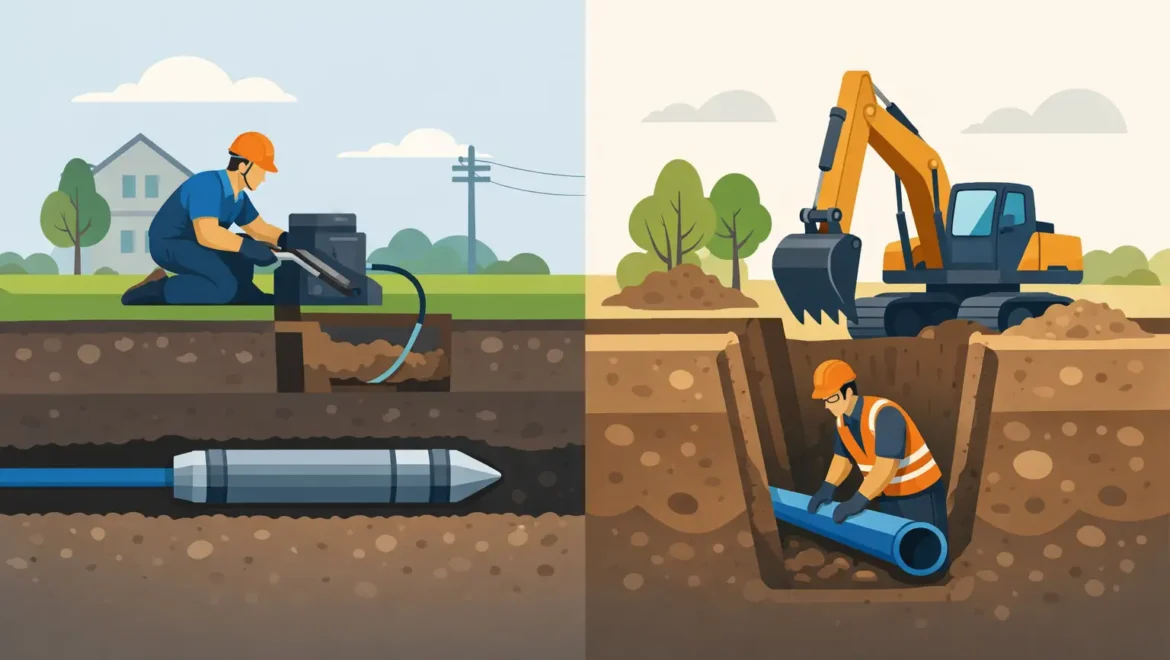
Trench digging installation is the traditional open-cut method. A trench is excavated along the route of the new pipe, the old service is exposed or removed where needed, the new pipe is laid, and the ground is reinstated afterwards. It is straightforward, widely understood, and in some situations it is still the correct approach.

Moling is a trenchless method. Instead of opening the full route, the contractor excavates small launch and reception pits and uses a pneumatic mole to create a bore underground. The new pipe is then pulled through beneath the surface. For many domestic water supply replacements, this avoids digging across gardens, paths and driveways.

For homeowners, the appeal is obvious. Less excavation usually means less disruption, faster completion and less reinstatement. For landlords and commercial sites, it can also reduce disturbance to tenants, customers and day-to-day operations.

Where moling usually has the advantage

Moling is often the preferred option for replacing or installing a water supply pipe from the boundary to the property, especially where the route passes under finished surfaces. A paved driveway, established lawn, decorative landscaping or a path that would be costly to break out and rebuild can make trenchless work the more sensible choice.

It is also useful where access needs to be kept practical during the works. If a full trench across the front garden and drive would affect parking, pedestrian access or general site use, moling can keep the disruption contained to a couple of excavation points.

Speed is another reason it is popular. On suitable ground, trenchless installation can be completed far more quickly than full open-cut excavation. That can reduce labour time and it often shortens the period that the site looks like a work zone.

This is one reason specialist contractors increasingly recommend no-dig methods for domestic supply upgrades, particularly lead pipe replacement. If the old lead supply needs to be abandoned and a new MDPE pipe installed, moling can provide a clean route without tearing through the whole frontage.

The practical benefits of moling

The strongest argument for moling is not that it is always cheaper on paper. It is that the overall job can make more financial sense once reinstatement is considered. Breaking out concrete, lifting block paving, removing shrubs and then rebuilding everything neatly can add time and cost quickly.

A trenchless route often means less spoil to remove, fewer materials to reinstate and less visible evidence that work has taken place. For occupied homes, that usually matters as much as the installation cost itself.

When trench digging is still the right answer

There are plenty of jobs where open trench excavation is the better method. If the pipe route is short, clear and running through soft ground with no expensive surfaces above, trenching can be perfectly efficient. In some cases it may be the most direct and cost-effective option.

Ground conditions are a major factor. Moling works best in suitable soil, but it is not ideal in every ground type. Very rocky ground, heavy obstructions, made-up ground with debris, or uncertain conditions can make accuracy and progress more difficult. If the route is congested with unknown services or old structures, exposing the line through careful excavation may be safer.

Trenching is also useful where the contractor needs full visibility of the pipe run. If there are several existing services, changes in depth, complex connections or repairs to other assets at the same time, open excavation gives complete access.

Why some sites need open excavation

If the job involves more than simply installing a new supply pipe, trenching may be necessary. For example, if drainage runs need repair, if inspection chambers require adjustment, or if the route includes sections that must be visually confirmed for compliance, excavation can give better control.

On some commercial and shared-access sites, method selection is not only about speed. It is about risk management, service avoidance and clear installation records. In those cases, the visibility of a trench can support the wider scope of works.

Cost: the real comparison

People often expect moling to be the premium option and trench digging to be the budget option. Sometimes that is true, but not always.

If you only compare the installation activity itself, trenching can appear cheaper on a simple site. But the full cost includes excavation, spoil removal, making good, surface reinstatement, waste handling and the extra time on site. Once those items are added, moling can compare very well.

The reverse is also true. If the ground is unsuitable for moling, or if extra pits and specialist planning are needed because of buried services and awkward access, trenching may come out better value.

That is why proper site assessment matters. A serious contractor should not push one method for every job. They should look at the route, identify likely obstructions, consider the surface finishes and then recommend the option that gives the best overall result.

Disruption, access and reinstatement

For most homeowners, this is where the decision is made.

A trench through a drive or front garden is more intrusive. There is no point pretending otherwise. Even with tidy working practices and good reinstatement, open excavation creates a larger work area, more spoil and more visible disturbance while the job is underway.

Moling keeps the footprint smaller. That can be particularly helpful on narrow plots, properties with limited parking, or homes where access needs to be maintained as far as possible. It also reduces the amount of reinstatement that needs to be colour-matched, levelled and finished to blend with the existing surface.

This matters even more on decorative block paving, printed concrete, resin-bound finishes and landscaped gardens. Reinstatement can be done well, but many customers would rather avoid disturbing those surfaces in the first place.

Compliance and workmanship still come first

The least disruptive method is only the right choice if it is carried out correctly. Water supply installations need to meet the required standards for materials, depth, routing and connection. That is why experience and accreditation matter.

For property owners, this is not just a technical detail. It affects whether the new supply will be accepted, whether the work is future-proof, and whether there is confidence in the result long after the ground is closed up.

Specialist contractors should be able to explain the method clearly, quote for the full scope including reinstatement, and carry out the work with proper insurance and workmanship guarantees in place. That gives reassurance whether the site is a house, rental property or commercial premises.

How to choose between moling and trench digging

The sensible way to decide is to start with the site, not the preference. Ask what lies above the pipe route, what is below it, how much access is available, and what level of disruption is acceptable.

If the route crosses expensive surfaces and the ground is suitable, moling is often the stronger option. If the ground is uncertain, the route is heavily obstructed, or the works require full exposure and access, trench digging may be the better call.

In practice, some jobs use both. A contractor may trench a short section where visibility or connection access is needed and mole the longer section beneath a driveway or garden. That kind of mixed approach often delivers the best balance of control and minimal disruption.

At Watermains & Drains UK, that is usually the point of the conversation with customers across the North West. Not which method sounds better in theory, but which one solves the problem properly, quickly and with the least avoidable mess.

If you are weighing up moling vs trench digging installation, the right answer is rarely about trends or sales talk. It comes down to ground conditions, reinstatement sensitivity and getting a compliant new pipe in place without creating unnecessary work around it. A good contractor will tell you when no-dig is the smart option, and when a trench is simply the honest choice.

Leak Detection: Signs, Causes and Next Steps
Blog

Leak Detection: Signs, Causes and Next Steps

A damp patch that keeps coming back. A water bill that has jumped for no clear reason. Low pressure at the tap, or the sound of running water when everything is switched off. In most cases, leak detection starts with one of these small warning signs rather than a dramatic burst pipe. Acting early usually means less damage, less disruption and a simpler repair.

For homeowners, landlords and property managers, the difficulty is not always knowing whether there is a leak. It is knowing where it is, how serious it is, and whether finding it will mean digging up a driveway, opening walls or disrupting tenants. That is why professional leak detection matters. The aim is to locate the source accurately, confirm the condition of the pipework or drainage involved, and plan the most practical repair with the least disruption.

What leak detection actually involves

Leak detection is the process of tracing unwanted water loss in supply pipes, internal plumbing or drainage systems. The method depends on the type of property, the layout of the pipework and the symptoms on site.

A hidden leak on a mains supply pipe will behave differently from a leaking underground drain. Clean water leaks often show up as pressure loss, unexplained meter movement or saturated ground. Drainage leaks can present as foul odours, slow flows, subsidence, staining or recurring blockages. The right investigation starts by narrowing down which system is at fault.

This is where experience matters. A specialist contractor will not treat every leak the same way. They will assess whether the issue is likely to be on the incoming water main, a private supply pipe, an internal pipe run, or the drainage side. That avoids wasted time and unnecessary excavation.

Common signs you may need leak detection

Some leaks are obvious. Many are not. Underground supply pipe leaks can continue for weeks before there is any visible pooling, particularly if the water is dispersing into surrounding ground.

The most common signs include higher-than-usual water bills, reduced flow or pressure, damp areas on floors or walls, mould growth, soft or sunken patches outside, and the sound of water movement when no fixtures are in use. On commercial sites, you may also notice repeated top-ups, unexplained consumption patterns or complaints from occupiers about inconsistent supply.

It depends on the location of the leak. A pipe leak beneath a driveway may leave very little visible evidence at first, while a leak under suspended flooring can create staining and odour surprisingly quickly. If the problem is on an older lead or MDPE supply pipe, material condition can also be part of the issue rather than just a single split or failed joint.

Why hidden leaks are more expensive than they look

A small leak rarely stays small in terms of cost. Water escaping underground can wash away fine material, soften sub-bases and affect paths, paving and foundations. Inside a building, long-term moisture can damage plaster, flooring, decorations and stored contents.

There is also the cost that does not show up on the invoice straight away. Tenants may be inconvenienced. Commercial premises may have operational disruption. Insurance claims can become more complicated if there has been a delay in reporting or investigating the issue. Early leak detection reduces that risk because it turns guesswork into evidence.

How professional leak detection is carried out

The first stage is usually straightforward site assessment. This includes speaking to the occupier or facilities contact, checking the property layout, reviewing symptoms and identifying the likely route of the affected pipework or drain.

From there, the investigation may involve pressure testing, meter checks, acoustic methods, tracer techniques or CCTV survey work, depending on the suspected source. Clean water leaks and drainage defects require different approaches. A supply pipe leak is often traced by isolating sections and identifying pressure loss or listening for the leak path. Drain issues are more commonly assessed with CCTV to confirm cracks, displaced joints, root ingress or failed connections.

The important point is accuracy. Good leak detection is not just about finding water. It is about finding the exact defect, or narrowing it down enough to repair the right section first time. That is what keeps costs under control and limits disruption on site.

Leak detection for supply pipes

Private water supply pipes are a common source of hidden leaks, especially on older properties. If you have low pressure, rising consumption or wet ground between the boundary and the building, the incoming supply is often the first place to investigate.

Older pipe materials can be more vulnerable to age-related failure, movement in the ground or poor historic repairs. In some cases, the most cost-effective solution is not a local patch repair but a full replacement of the affected supply pipe. That can be particularly true where lead pipework is still in use, or where repeat leaks suggest the line has reached the end of its service life.

This is where modern installation methods make a difference. If a leak is confirmed on an underground supply pipe, trenchless techniques such as moling can often install a new line with far less disturbance than traditional excavation. Instead of opening up the full route across gardens or driveways, access pits are used to keep the work tidy and efficient.

Leak detection for drains and underground waste pipes

Not every leak relates to the clean water side. Drains can leak too, and the signs are often less direct. You may see repeated blockages in the same run, smell foul odours outside, notice damp patches around inspection chambers, or find sections of ground becoming unstable.

In these cases, a CCTV drain survey is usually the clearest way to identify the problem. It shows whether the issue is a crack, displaced joint, collapsed section or root ingress. It also helps decide whether the drain can be repaired with a localised patch lining or whether excavation is genuinely required.

That distinction matters. Some defects can be resolved with no-dig repair methods that avoid major reinstatement. Others need a more direct excavation-led repair because the pipe has collapsed or the line has been badly displaced. A reliable contractor should explain that trade-off plainly rather than pushing one method for every job.

What to expect from a specialist contractor

When you call in a contractor for leak detection, you should expect more than a rough opinion. You need a clear diagnosis, practical options and a realistic route to repair.

For domestic customers, that means straightforward advice, transparent quoting and a tidy approach on site. For landlords, managing agents and commercial clients, it also means dependable attendance, documentation where needed, and confidence that the contractor understands reinstatement, compliance and the need to minimise disruption for occupiers.

This is one reason customers often prefer a specialist civil and drainage contractor over a general plumber for external and underground leak issues. The investigation is only one part of the job. The real value is in being able to locate the fault and then carry out the repair, replacement or reinstatement properly.

When repair is enough, and when replacement makes more sense

There is no one answer for every leak. A localised repair can be the right call where the pipe is otherwise in good condition and the failure is isolated. It is usually quicker and cheaper in the short term.

But if the pipe is ageing, made from outdated material, or has already leaked more than once, replacement can be the better long-term decision. This is especially true for lead supply pipes or older external water lines where future leaks are likely. Paying for repeated investigations and reactive repairs often costs more over time than replacing the line once and having confidence in it.

A good contractor will talk through both options honestly. The cheapest immediate fix is not always the best value.

Choosing the least disruptive solution

Property owners are often less worried about the leak itself than the mess they expect while it is being found and fixed. That concern is understandable. Traditional excavation can affect paving, landscaping, access routes and day-to-day use of the property.

Modern leak detection and trenchless repair methods reduce that impact significantly where conditions allow. Accurate tracing means less exploratory digging. No-dig installation and repair options can keep surfaces intact or limit the area that needs reinstatement. For busy homes and occupied sites, that can make a major difference to timescales and overall cost.

For customers across the North West, Watermains & Drains UK focuses on that practical outcome – finding the problem quickly, recommending the right repair, and completing the work with as little disruption as possible.

If you suspect a leak, the most useful next step is not to wait for clearer evidence. Small signs are often enough to justify a proper investigation, and early action usually gives you more repair options, cleaner works and a better result.

Best No Dig Drainage Repair Methods
Blog

Best No Dig Drainage Repair Methods

A drain repair does not have to mean digging up a driveway, lifting a patio, or turning a tidy garden into a building site. The best no dig drainage repair methods are designed to fix damaged pipework from within or through small access points, which is exactly why they have become the first choice for many homeowners, landlords and facilities teams.

If the problem is caught early, trenchless repair can be faster, cleaner and more cost effective than traditional excavation. The key is choosing the right method for the fault, the pipe material, the access available and the condition of the line as a whole. No-dig is highly effective, but it is not one single technique and it is not the answer to every drainage issue.

When no-dig repair is the right option

No-dig drainage repair works best where the pipe route runs beneath driveways, lawns, paths, internal floors or landscaped areas that would be expensive and disruptive to excavate. It is commonly used for cracked drains, leaking joints, root ingress, localised fractures and some displaced sections.

Before any repair is specified, a proper CCTV drain survey is usually the starting point. That shows the exact location and extent of the defect, whether the pipe is still structurally viable, and whether a local repair is enough or a longer section needs lining. This matters because treating the wrong problem, or only part of it, can lead to repeat failures.

Best no dig drainage repair methods for common faults

The best method depends on what is actually wrong underground. A fine crack, a failed joint and a fully collapsed pipe do not call for the same approach.

Patch lining for isolated damage

Patch lining is one of the most widely used no-dig repairs for local defects. A resin-impregnated patch is positioned over the damaged section using specialist equipment, then inflated and cured in place. Once set, it forms a new watertight section within the host pipe.

This is often the right choice where there is a single crack, a leaking joint, minor root ingress or a small area of deformation. It avoids replacing an otherwise serviceable run of pipe, which keeps cost and disruption down. For homeowners, that can mean no need to disturb block paving or dig through a finished garden simply to repair one damaged point.

The trade-off is that patch lining is a local repair, not a full reset of the whole line. If the CCTV survey shows several defects across the run, repeated patches may be less sensible than lining a longer section.

Full drain lining for longer runs

Where damage extends across a greater length, cured-in-place pipe lining is often the better solution. In simple terms, a flexible liner coated with resin is inserted into the drain and cured to create a new pipe within the existing one.

This method is effective for multiple cracks, porous joints, water ingress and age-related deterioration where the original pipe still retains enough shape to host a liner. It can restore structural integrity and improve flow without major excavation, which is particularly useful beneath buildings, roads and hard landscaped surfaces.

There are practical limits. Lining slightly reduces the internal diameter of the pipe, so the original drain must be assessed to make sure that reduction will not affect performance. It is also less suitable where the pipe has fully collapsed or where severe deformation prevents the liner from seating correctly.

Robotic cutting and root removal with lining

Tree roots are a common reason drains fail, especially in older systems with vulnerable joints. Simply cutting roots out can provide temporary relief, but if the entry point is left untreated, they often return.

A stronger long-term approach is to remove the roots mechanically, clean the pipe thoroughly, then seal the defective section with a patch liner or full liner. This deals with both the symptom and the cause. It is a good example of why repair planning matters. A fast clearance alone may get flow moving again, but it does not necessarily resolve the defect.

Excavation at one point with trenchless repair beyond

Some drainage jobs are best handled with a hybrid approach. For example, if one section has collapsed completely, a small excavation may be needed to replace that short length, while adjacent sections can then be repaired using no-dig methods.

This still counts as a minimal-disruption strategy and is often the most practical option. It is better to be honest about that than to force a trenchless method where it is not suitable. In drainage repair, the best outcome usually comes from using the least invasive method that still gives a dependable, long-term result.

What no-dig methods can and cannot fix

No-dig drainage repair is highly effective, but there are limits. It can deal with many cracks, fractures, displaced joints, root ingress and leaks. It can also extend the working life of ageing pipework when the structure is basically intact.

What it cannot reliably solve is every case of major collapse, severe backfall, major deformation or poor original drain design. If a pipe has lost its shape entirely, if levels are wrong, or if the system was installed incorrectly in the first place, excavation and replacement may still be necessary.

That is why a clear survey and straightforward advice matter. Customers are better served by a contractor who explains where no-dig is appropriate and where it is not, rather than treating trenchless repair as a one-size-fits-all answer.

How the right method is chosen

Selecting the best no dig drainage repair methods starts with evidence. A CCTV survey identifies the defect, but the decision also depends on pipe diameter, material, depth, access chamber locations, the number of bends, and whether the drain serves a single property or a larger commercial arrangement.

For landlords and commercial clients, there may also be practical and compliance considerations. Repairs in shared access areas, tenanted buildings or operational sites often need to be planned around occupancy and usage. In those cases, no-dig methods are especially valuable because they reduce disruption, shorten programme time and limit reinstatement.

For homeowners, the priorities are usually simpler but no less important. People want the fault fixed properly, without unnecessary mess, hidden extras or weeks of disruption. A clean site, a clear quote and a repair that lasts are what matter.

Why no-dig repair is often better value

Traditional excavation can look straightforward on paper, but the real cost is rarely just the digging. There is also spoil removal, access issues, damage to paving or landscaping, and the cost of reinstating surfaces afterwards. Once those are taken into account, trenchless repair is often the more economical route.

It also tends to be quicker. Less excavation means less labour on reinstatement and less impact on daily life or site operations. For a busy landlord, that can reduce tenant complaints. For a facilities manager, it can mean less downtime and easier scheduling. For a homeowner, it can simply mean keeping the driveway intact.

What to look for in a drainage contractor

No-dig repair only works well when the diagnosis is correct and the installation is done properly. Look for a specialist contractor with CCTV capability, trenchless repair experience, suitable insurance and clear workmanship guarantees. If the work involves wider water or drainage infrastructure, it also helps to use a contractor used to operating to proper standards rather than a generalist trying to cover every trade.

Watermains & Drains UK carries out CCTV surveys, drain repairs and patch lining with a strong focus on minimal disruption, clear quoting and tidy completion. For customers across the North West, that combination of trenchless capability and practical site delivery is often what makes the difference.

Best no dig drainage repair methods in real terms

The phrase sounds simple, but the best no dig drainage repair methods are really the ones that match the defect, protect the surrounding property and give a dependable long-term result. Sometimes that is a straightforward patch liner. Sometimes it is full lining. Sometimes it is a small excavation supported by trenchless repair either side.

What matters most is not choosing the newest-sounding method. It is choosing the method that solves the problem with the least disruption and without compromising quality. If your drain is showing signs of repeated blockage, foul odours, slow flow or subsidence around the line, early investigation usually gives you more repair options and a better outcome.

A tidy repair starts long before any equipment arrives on site – with the right survey, the right recommendation and a contractor prepared to fix the fault properly, not just cover it up.

Best Solutions for Recurring Drain Blockages
Blog

Best Solutions for Recurring Drain Blockages

A drain that blocks once is a nuisance. A drain that keeps backing up into a kitchen sink, gully or toilet is usually a sign that the real fault has not been found. The best solutions for recurring drain blockages are rarely about stronger chemicals or repeated plunging. They start with identifying why the blockage keeps returning, then choosing a repair or maintenance approach that deals with the cause rather than the symptom.

For homeowners, landlords and property managers, that matters because repeat call-outs quickly become more expensive than a proper fix. They also increase the risk of internal water damage, foul odours, tenant complaints and disruption to normal use of the property. If the issue affects a commercial site, recurring drainage problems can also create hygiene and compliance concerns.

Why drain blockages keep coming back

Recurring blockages usually point to one of four issues. The first is a build-up problem, where fat, grease, food waste, wipes, scale or silt are collecting faster than the pipe can carry them away. The second is a structural defect such as a cracked pipe, displaced joint or a section that has dropped and now holds standing water. The third is root ingress, where roots enter through defects and steadily catch debris. The fourth is poor drainage design, including inadequate falls, undersized pipework or awkward junctions.

This is why a simple unblocking visit can solve the immediate overflow but not the ongoing problem. If the line is cleared without checking the condition of the pipe, the same obstruction may return within weeks. In older properties across the North West, it is also common to find ageing drains with multiple defects rather than a single isolated blockage.

The best solutions for recurring drain blockages depend on the cause

There is no single answer that suits every property. The right solution depends on what is inside the drain, what condition the pipe is in, how accessible the system is and whether the problem is domestic or commercial.

A house with grease build-up in a kitchen waste line needs a different approach from a shared drainage run with root ingress, or a commercial premises dealing with frequent sediment and scale. Good drainage contractors will not treat all repeat blockages as routine unblocking jobs. They will assess the pattern, inspect the line properly and recommend the least disruptive fix that is likely to last.

High-pressure water jetting for heavy build-up

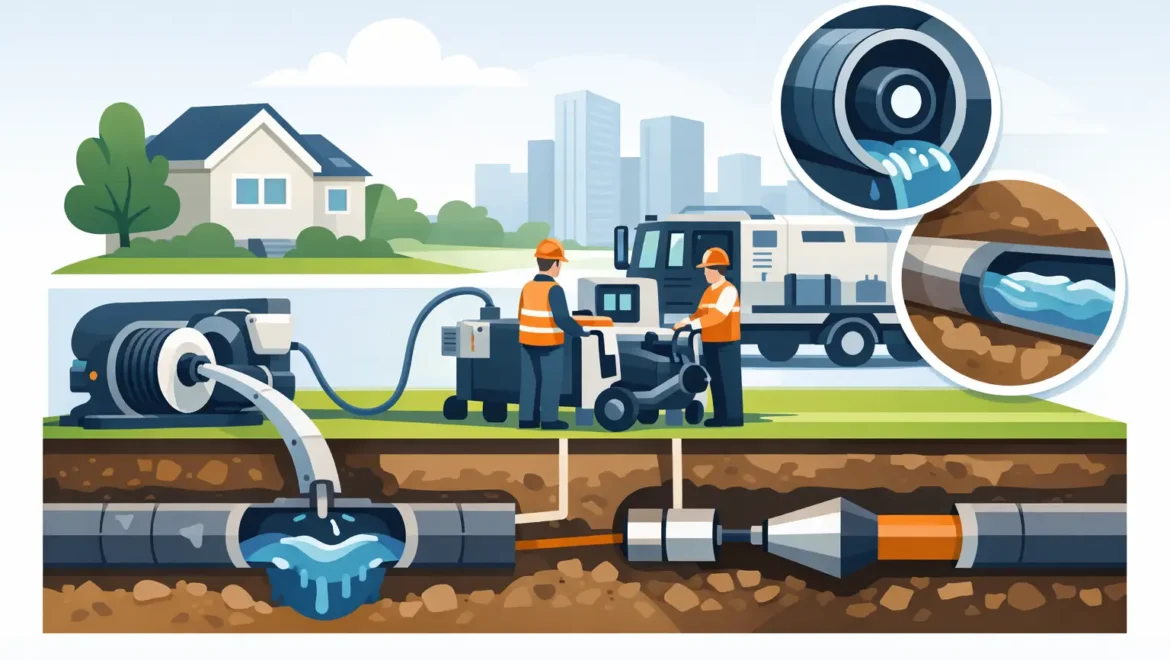
If recurring blockages are caused by grease, sludge, soap residue or compacted debris, high-pressure water jetting is often the most effective first-line solution. It does more than punch a hole through the blockage. Done properly, it cleans the internal wall of the pipe and removes the material that ordinary rodding often leaves behind.

That makes jetting a strong option where drains are technically sound but continually narrowing due to deposits. It is commonly used on kitchen lines, external gullies and commercial drainage systems where usage is heavy. The trade-off is that jetting will not solve a broken pipe, root entry or poor falls. If a pipe is damaged, the blockage will usually return.

CCTV drain surveys to find the real fault

When a drain has blocked more than once, a CCTV survey is often the most cost-effective next step. It shows whether the problem is simply recurring build-up or whether there is a physical defect causing debris to catch and accumulate.

For landlords and facilities teams, this is especially useful because it provides evidence for repair decisions, insurance discussions and planned maintenance. For homeowners, it avoids paying for repeated emergency attendance without knowing what sits beneath the surface. A proper survey can identify fractures, open joints, root ingress, collapsed sections, scale, standing water and previous poor-quality repairs.

In practice, CCTV is often the point where a recurring problem stops being guesswork and becomes a defined repair job.

When recurring drain blockages are caused by damaged pipes

If the survey shows structural damage, the best solution is usually repair rather than continued cleaning. A cracked or displaced pipe may still flow for a while after jetting, but the defect will keep collecting paper, wipes, grease or silt until the line blocks again.

Patch lining for localised defects

For isolated cracks, joint defects or minor root ingress, patch lining can be a very effective no-dig repair. A resin-impregnated liner is installed inside the damaged section, creating a new internal surface without excavating the whole run.

This suits many domestic and commercial sites because disruption is low, reinstatement costs are reduced and access requirements are simpler than full excavation. It is not right for every situation. If a pipe has fully collapsed or there are several defects along a long section, a patch repair may be too limited.

Full drain repairs or replacement

Where there is severe damage, poor installation or sections of drain that have lost line and level, full repair or replacement may be the only reliable option. This is particularly true if there is a backfall in the system and waste is sitting in the pipe instead of draining freely.

Although replacement sounds more disruptive, modern methods can keep excavation to a minimum. A specialist contractor will usually look for the most direct and least disruptive approach first, especially where driveways, gardens or paved areas are involved. The goal is not simply to renew the drain, but to restore proper performance with as little disturbance to the property as possible.

Root ingress needs more than cutting roots back

Tree roots are a common cause of repeat drain blockages, particularly in older systems. Cutting the roots out may restore flow in the short term, but if the entry point remains open, roots will return. That is why root problems need both clearance and repair.

In some cases, root cutting followed by patch lining is enough. In others, a damaged section needs replacing. The right answer depends on how far the roots have spread and whether the pipe wall is still structurally sound. This is another area where CCTV matters, because root ingress can look like a simple blockage from above ground but actually indicate a more significant defect below.

Planned maintenance can be the best answer for high-use systems

Not every recurring blockage points to a broken drain. In some properties, especially commercial kitchens, multi-occupancy buildings and sites with heavy use, the issue is volume and usage pattern rather than pipe failure.

In those cases, scheduled maintenance can be the best long-term solution. Periodic jetting and inspection help remove build-up before it causes disruption. For landlords and managing agents, this can be more cost-effective than repeated emergency call-outs and the associated tenant dissatisfaction.

The key is to be honest about whether maintenance is managing a known usage issue or masking a repair need. A competent contractor should make that distinction clear.

What to avoid if you want a lasting fix

Repeated use of off-the-shelf drain chemicals is rarely a good long-term answer. They may shift light build-up, but they do not address structural faults and can damage pipework over time, particularly in older systems. They also create safety issues for anyone who later has to work on the drain.

Constantly rodding the same line has similar limits. It may reopen the pipe temporarily, but if wipes are catching on a broken joint or grease is building in a poorly draining section, the blockage will simply return. A cheaper visit today often becomes a more expensive pattern over time.

Choosing the right contractor for recurring drainage problems

This type of issue needs more than a basic unblock service. It needs a contractor who can move from emergency response to diagnosis and repair without unnecessary delay. That means having the equipment and experience to clear the line, inspect it, explain the fault clearly and carry out the required remedial work.

For domestic customers, that usually means straightforward advice, rapid attendance and tidy completion. For commercial clients and property professionals, it also means documented findings, reliable scheduling and repair methods that limit disruption to access areas and surfaces.

Where excavation is required, no-dig and low-disruption methods are worth asking about. They can make a significant difference to programme time, reinstatement cost and the overall impact on the property. Watermains & Drains UK works with this approach in mind, combining reactive drainage support with CCTV surveys, repairs and trenchless methods where they are the right fit.

The practical way to stop repeat blockages

If your drain has blocked more than once, the sensible next step is not another temporary fix. It is to establish whether you are dealing with build-up, damage, roots or design issues, and then choose the least disruptive repair or maintenance plan that matches the fault.

That may be as simple as a thorough jet clean and better maintenance intervals. It may mean a CCTV survey followed by patch lining or a targeted repair. Either way, the best results come from treating recurring blockages as a drainage fault to diagnose properly, not just a blockage to clear again.

A drain should not keep demanding attention. When the cause is identified and dealt with properly, the problem usually becomes far simpler, cleaner and less costly to live with.

Replacing Water Pipe Under Driveway
Blog

Replacing Water Pipe Under Driveway

If you are looking at replacing water pipe under driveway, the main concern is usually not the pipe itself – it is the thought of digging up a finished drive, blocking access and paying for reinstatement on top of the repair. In many cases, that level of disruption is not necessary. The right method depends on the pipe route, the surface above it, the depth, and whether the existing supply can be abandoned and replaced with a new line.

When replacing water pipe under driveway becomes necessary

A water supply pipe under a driveway is often out of sight for years, then suddenly becomes urgent. You might notice a drop in pressure, a higher water bill, damp ground near the entrance, or recurring leaks that never seem fully resolved. In older properties, especially across parts of Manchester, Stockport, Warrington and Cheshire, the issue can also be the age and material of the pipe rather than a single break.

Lead supply pipes are a common example. Even where they are not actively leaking, many homeowners and landlords choose replacement to improve water quality and avoid future failure. Older plastic or metal pipework can also suffer from crushed sections, poor past repairs, joint failure or ground movement beneath the drive.

For landlords and commercial sites, there is another factor – disruption. A leaking or restricted supply affects tenants, staff and visitors quickly. That makes speed, access planning and tidy reinstatement just as important as the pipe replacement itself.

The first question: does the driveway need to be dug up?

Not always. This is where specialist contractors differ from general excavators. Traditional open-cut excavation still has a place, but it is no longer the default option for every job.

Where conditions allow, trenchless installation methods can often avoid full excavation across the driveway. Instead of cutting a continuous trench from the boundary to the property, the contractor creates small launch and reception pits and installs a new water pipe beneath the surface. For many domestic jobs, this is done using moling. On more complex routes or larger sites, horizontal directional drilling may be the better fit.

That matters because the biggest cost is not always the pipework. It is often the making good afterwards – block paving, tarmac, concrete or decorative finishes can all add time and expense if they need to be broken out and replaced.

When trenchless replacement is usually suitable

Trenchless methods are often a good option where the route is fairly direct, the ground is suitable, and there are no major obstructions that force an open excavation. They work particularly well when a new supply pipe can be installed on a fresh line and the old one left out of use.

This is common on domestic properties where the goal is a new, reliable connection from the boundary stop tap into the house with as little disruption as possible.

When excavation is still needed

There are cases where digging cannot be avoided. If the pipe route passes through congested ground, if there are unknown services beneath the driveway, or if the depth and entry points are awkward, an open trench may still be the safer and more practical method. The same applies where precise repairs are needed at a known damaged section rather than full replacement.

A good contractor will not push a no-dig method where it is not suitable. The right answer is the one that gives a dependable result with the least overall disruption.

How the job is usually approached

Replacing a supply pipe under a driveway starts with identifying the existing arrangement. That includes where the current pipe runs, where it enters the property, the likely material, and whether there are signs of leakage or restriction. On some jobs, the route is straightforward. On others, older properties may have pipework installed in unpredictable positions.

The next step is planning the new supply. In many cases, replacing the whole private supply pipe is more cost effective than carrying out repeated spot repairs. A full new line gives you a clean start, improves reliability and can often improve flow and pressure at the same time.

If the driveway is to be protected, the contractor will look at a trenchless route first. Small excavations are made at each end, the bore is completed beneath the drive, and the new pipe is drawn through. Internal connection work is then completed, the old pipe is isolated, and the excavated areas are reinstated.

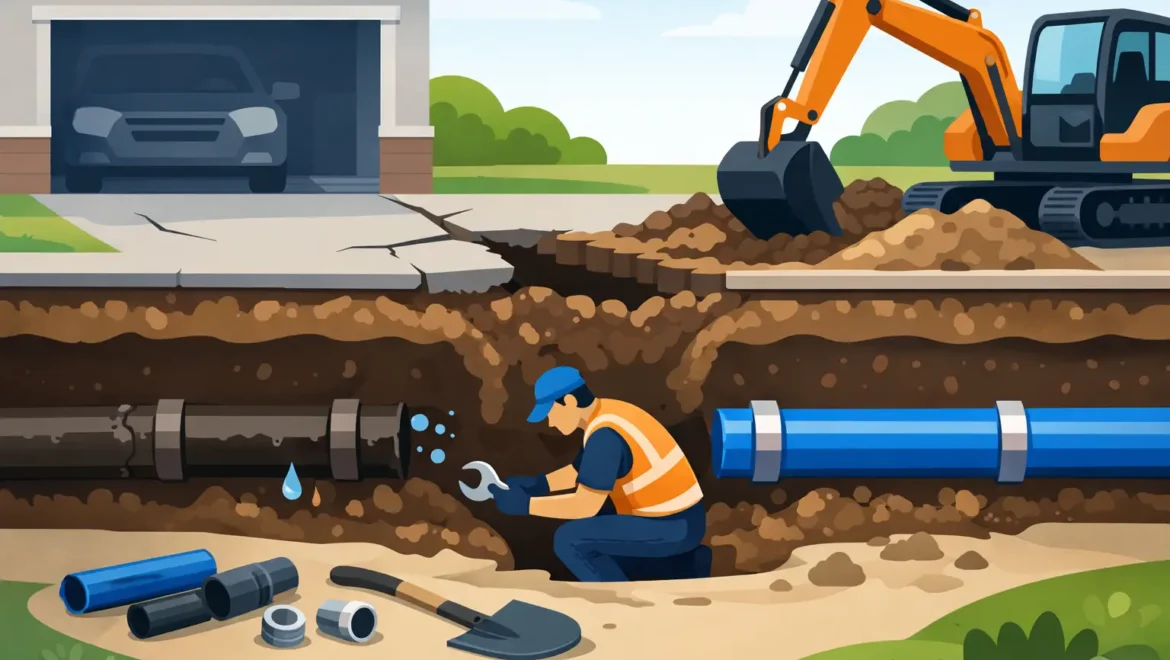
Where excavation is required, the work should still be controlled and tidy. That means a clearly marked trench line, safe spoil management, proper bedding and backfill, pressure testing, and reinstatement that matches the surrounding surface as closely as possible.

Replacing water pipe under driveway: costs and what affects them

There is no fixed price for replacing water pipe under driveway because the main cost drivers vary from site to site. Length is one factor, but surface type, access, ground conditions and reinstatement usually have just as much impact.

A straightforward domestic replacement beneath a standard driveway may be relatively contained if a trenchless method is suitable. If the route is longer, the pipe enters the property in a difficult location, or the drive surface is premium paving that needs careful lifting and relaying, the cost will rise.

You may also need to factor in connection changes, internal plumbing alterations near the point of entry, and any coordination required with the water authority if boundary-side works are involved.

For landlords and commercial clients, cost should also be weighed against downtime and disruption. A cheaper excavation-led quote is not always better value if it leaves access restricted for longer, creates a larger reinstatement liability, or causes avoidable inconvenience for occupiers.

How long does it take?

Many domestic replacements can be completed quickly once the route and method are confirmed. A simple trenchless installation may be completed within a day, while more involved work can take longer if there are access constraints, difficult ground or additional connection works inside the property.

Weather, surface reinstatement and utility checks can also affect programme. The key point is that specialist planning usually shortens the overall job. Less excavation generally means less spoil, less reinstatement and a faster return to normal use of the driveway.

That is particularly important for homes with limited parking and for commercial premises where access needs to be kept open as far as possible.

Why specialist contractors matter on this type of work

This is not just a plumbing issue and not just a digging job. Replacing a buried water supply under a finished driveway sits between underground utility work, surface reinstatement and property access management. That is why method choice matters.

A specialist contractor should be able to assess whether moling, directional drilling or excavation is most suitable, explain the trade-offs clearly, and complete the work to a standard that protects both the new pipe and the surface above it. Accreditations such as WIAPS and Watersafe also matter because they give reassurance that the installation is being carried out to recognised standards.

For property owners, insurance cover and workmanship guarantees are also worth checking. If a contractor is working on buried services and finished surfaces, you want confidence not only in the installation itself but in how any incidental issues would be handled.

What to ask before you go ahead

Before booking the work, ask how the new route will be installed, whether the driveway can be crossed without full excavation, what reinstatement is included, and whether the quote covers testing and final connection. If the answer is vague, that is usually a warning sign.

You should also ask who is responsible for approvals if any are required, how access will be managed during the work, and whether the contractor regularly handles this type of replacement rather than treating it as occasional groundwork.

A clear quote and method statement are especially useful for landlords, managing agents and commercial sites, where scheduling and tenant communication are part of the job.

Choosing the least disruptive solution

The best result is not simply a new pipe in the ground. It is a reliable water supply installed with minimal mess, minimal delay and minimal impact on the property. That is why trenchless methods are increasingly preferred where conditions allow.

At Watermains & Drains UK, this is exactly the kind of job where specialist no-dig installation can make a real difference – particularly on finished driveways, paved frontages and properties where access needs to be preserved.

If your supply pipe runs beneath a driveway, the sensible next step is not to assume the worst. Get the route assessed properly, understand the installation options, and choose the method that solves the problem without turning a necessary repair into a larger building job.

Guide to Commercial Drainage Maintenance Plans
Blog

Guide to Commercial Drainage Maintenance Plans

A blocked drain at a commercial site rarely starts as an emergency. More often, it begins as a slow-running gully, standing water in a yard, foul odours near a kitchen line, or repeated call-outs that seem unrelated until trading is affected. That is why a proper guide to commercial drainage maintenance plans matters. For property managers, facilities teams and landlords, the right plan reduces disruption, controls cost and gives you a clearer route when something does go wrong.

What a commercial drainage maintenance plan is really for

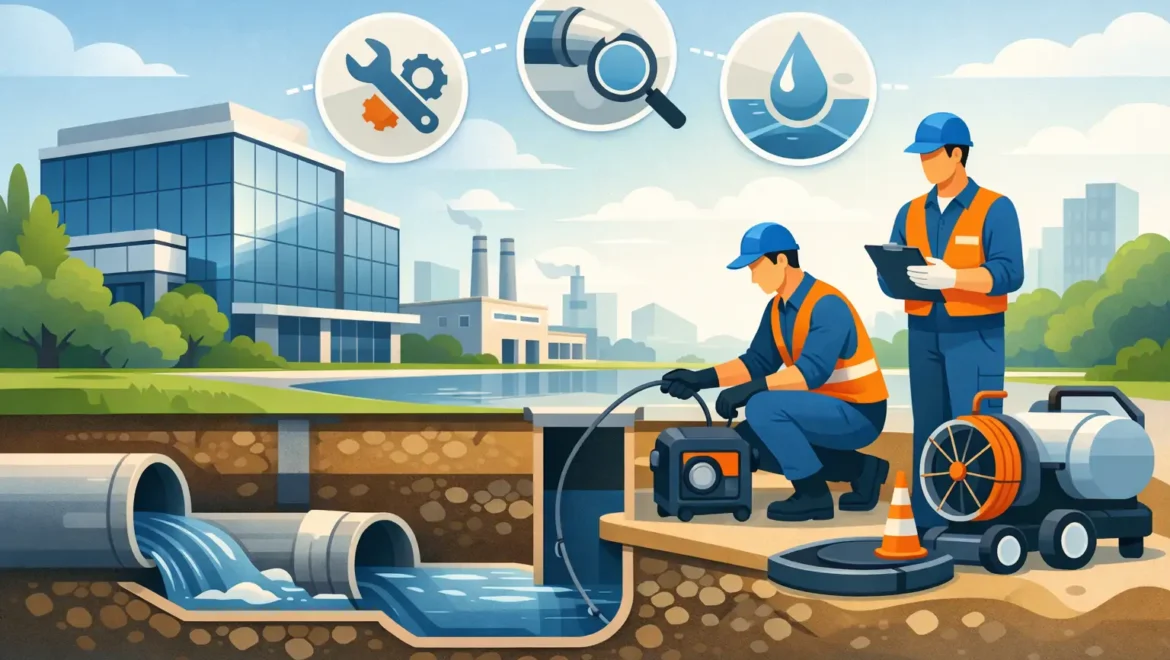
A maintenance plan is not just a diary reminder to clear drains once a year. It is a practical schedule built around the way a site is used, the condition of the drainage system and the consequences of failure.

For a small office, that may mean periodic inspection and occasional cleaning. For a restaurant, care home, industrial unit or multi-let property, the plan usually needs to be more active. Higher wastewater volumes, grease, silt, scale, wipes and surface water all increase the risk profile. The goal is simple – prevent avoidable blockages, spot deterioration early and deal with defects before they become expensive repairs.

That is the difference between planned maintenance and reactive attendance. Reactive work gets you moving again. Planned work helps stop the same problem returning every few weeks.

Guide to commercial drainage maintenance plans by site type

No two sites need exactly the same programme. A sensible plan starts with how the building operates.

Food premises often need more frequent line cleaning because fats, oils and grease build up quickly. Schools and public buildings can suffer from misuse, sanitary blockages and high demand at fixed times of day. Warehouses and yards may be more vulnerable to silt, debris and surface water issues, particularly where gully maintenance has been missed. Residential blocks can have a mix of foul drainage defects, poor access records and tenant-related misuse.

This is where many maintenance plans fail. They are copied from another site, priced to look tidy on paper, and then prove too light to prevent call-outs. A better approach is to match inspection and cleaning frequency to actual risk. If a line has blocked three times in twelve months, annual jetting is unlikely to be enough.

Start with a clear picture of the drainage system

Before setting a schedule, you need to know what you are maintaining. That sounds obvious, but many commercial properties have incomplete drainage records, altered layouts or legacy pipework that nobody has fully mapped.

A good starting point is a site review that identifies access chambers, manholes, gullies, downpipes, foul and surface water runs, and any known problem areas. If the history is unclear, a CCTV drain survey can save time and money. It shows whether recurring issues are caused by misuse, poor falls, root ingress, fractures, displaced joints or collapses rather than simple build-up.

Without that baseline, maintenance can become guesswork. You may keep cleaning a line that actually needs patch lining or local repair. Equally, you may assume a defect is structural when the real issue is inadequate routine servicing.

What should be included in commercial drainage maintenance plans

A useful plan combines inspection, cleaning, reporting and escalation. It should set out what is being checked, how often, and what happens if defects are found.

Routine inspections usually focus on signs of blockage, damage, odour, flooding risk and poor flow. Cleaning may include high-pressure water jetting, gully clearance and removal of silt or debris from key points. Where CCTV is part of the programme, reports should be clear enough for facilities teams, insurers or managing agents to act on.

It also helps to agree thresholds for repair. If an inspection finds a minor crack with no infiltration, monitoring may be reasonable. If there is evidence of repeated ingress, loss of bedding or local collapse risk, repair should move up the priority list. That balance matters because not every defect needs immediate excavation, but delaying the wrong one can lead to larger reinstatement costs later.

Frequency depends on risk, not guesswork

There is no universal timetable that suits every commercial property. The right frequency depends on usage, age, drainage design, previous incidents and the impact of failure on operations.

High-risk sites may need monthly or quarterly attendance. Moderate-risk sites often work well with six-monthly inspections and annual cleaning. Lower-risk properties with modern, well-performing systems may only need annual checks, with additional visits after heavy weather or tenant changes.

Seasonal pressure should also be considered. Autumn can increase debris in surface water systems. Winter can expose existing defects when rainfall is high and drainage capacity is tested. Retail and hospitality sites may need more attention before peak trading periods, not after disruption has already started.

The practical point is this: frequency should be evidence-led. If attendance records show recurring issues between planned visits, the programme needs adjusting.

Compliance, records and contractor accountability

For commercial sites, maintenance is not only about keeping drains flowing. It is also about having records that show a reasonable standard of care. Property managers and facilities teams are often expected to demonstrate what was inspected, when it was serviced and how defects were handled.

That is especially relevant where there are tenant obligations, insurance claims, environmental concerns or health and safety scrutiny. If flooding, pollution or repeated internal backing-up affects a site, poor records make everything harder.

A dependable contractor should provide clear visit reports, photographs where useful, CCTV findings when requested and practical recommendations rather than vague observations. Method statements, insurance cover and recognised approvals also matter on commercial work, particularly where access, reinstatement and risk management are under closer review.

When maintenance should lead to repair work

A drainage maintenance plan should not become an excuse to keep sending jetting teams to the same defect. Repeated cleansing has its place, but it does not solve cracked pipes, displaced joints, root ingress or poorly installed sections.

This is where condition-based repair becomes part of the plan. In some cases, a localised no-dig patch lining repair is the quickest and least disruptive answer. In others, a more substantial repair or replacement is the right call, particularly if the line is badly deformed or has already begun to fail structurally.

The benefit of planned maintenance is that these decisions are made earlier, when there is usually more choice. Emergency repairs tend to be more disruptive, harder to schedule and more expensive once flooding, contamination or business interruption enters the picture.

Budgeting for a drainage plan without under-scoping it

One of the most common mistakes is buying the cheapest plan rather than the most suitable one. A low annual figure can look attractive, but if it excludes meaningful inspection, proper reporting or enough visits for the site type, it often shifts cost into emergency call-outs and lost time.

A better budget looks at whole-life cost. What does one blocked drain incident cost in staff time, access issues, tenant complaints, cleanup, lost trade or damage to stock? On many sites, a slightly more active maintenance plan is cheaper than two or three avoidable emergencies a year.

That does not mean every property needs an intensive contract. It means the plan should be proportionate. Some sites need regular jetting and CCTV review. Others only need annual servicing with a clear reactive route if conditions change.

Choosing a contractor for planned drainage work

Commercial drainage maintenance needs more than basic drain clearing. You want a contractor who can inspect, diagnose, clean and repair without turning one supplier issue into three separate appointments.

Look for practical capability as well as responsiveness. If a survey finds a defect, can the same contractor advise on repair options? Can they work with minimal disruption to tenants, staff or customers? Can they provide straightforward reporting and sensible scheduling rather than overcomplicating simple works?

For many commercial clients, it also helps to use a contractor that understands reinstatement-sensitive sites and modern repair methods. Where excavation can be avoided, disruption is lower and programmes are often easier to manage. For businesses that cannot afford prolonged access restrictions, that makes a real difference.

A sensible guide to commercial drainage maintenance plans starts with the problem areas

If you are putting a plan in place for the first time, start with evidence rather than assumptions. Review call-out history, identify repeat blockage locations, check whether site drawings are accurate and inspect the areas most likely to affect operations if they fail. Build the schedule around those risks first.

From there, the plan can be refined over time. Some sites stabilise quickly once key lines are cleaned and defective sections repaired. Others reveal more underlying issues as soon as the first proper survey is carried out. That is normal. The point of a maintenance plan is not to pretend everything is fine. It is to create a controlled, cost-aware way of keeping the system serviceable.

For commercial properties across the North West, that usually means working with a specialist contractor who can combine planned maintenance with CCTV surveys, repairs and minimal-disruption methods when needed. If you need practical advice on setting the right schedule for your site, Watermains & Drains UK can help you assess the system properly and quote for a plan that fits the way the property is actually used.

A drainage system does not need much attention when it is working well, but it needs the right attention before it stops.

Who Pays for Shared Drains in the UK?
Blog

Who Pays for Shared Drains in the UK?

A blocked drain is bad enough. It gets more frustrating when the pipe serves more than one property and nobody is sure who should deal with the bill. If you are asking who pays for shared drains, the answer usually depends on where the pipe sits, how many properties it serves, and whether the issue is classed as private or public.

For homeowners, landlords and property managers, that distinction matters. It affects who arranges the repair, who gives access, and whether you should be calling a drainage contractor or your local water company first.

Who pays for shared drains?

In many cases across the UK, the water and sewerage company is responsible for shared drainage pipework outside the boundary of a single property. That often includes a lateral drain and many shared sewers, even when they run through private land. If the pipe only serves your property and sits within your boundary, responsibility is more likely to rest with you.

That is the broad rule, but there are exceptions. Newer developments, private pumping systems, unadopted sewers and some commercial arrangements can fall outside the standard position. This is why shared drain problems are not always as simple as reading a map and splitting a bill between neighbours.

The key difference between a drain, lateral drain and sewer

The most useful place to start is with the terminology, because responsibility follows the pipe type.

A drain usually carries foul water or surface water from a single property. If that pipe only serves your house and remains inside your boundary, it is generally your responsibility.

A lateral drain is the section that continues beyond your boundary before connecting into the public sewer. In many parts of the UK, the water company is responsible for that section, even though it carries waste from your property.

A sewer serves more than one property. Once pipework is shared by two or more homes, it is commonly classed as a shared sewer and is often the water company’s responsibility. That is why a blockage affecting several houses in a terrace or a pair of semis may not be something neighbours need to fund privately.

When homeowners may still have to pay

There are still situations where a homeowner or landlord may have to cover the cost of work linked to shared drainage.

If the problem is actually within a private drain on your land before the point where it becomes shared, that section is yours. The same applies if damage has been caused by something directly attributable to your property, such as poor building work, a collapsed private connection, or unsuitable items being flushed and causing a local obstruction.

On some sites, especially rural properties, converted buildings and private estates, drainage systems may not have been adopted by the water company. In that case, what looks like a shared sewer may still be privately owned. Leasehold developments can also work differently, with responsibility sometimes sitting with a management company and costs then recovered through service charges.

For landlords, there is another practical issue. Even if a tenant caused the blockage through misuse, the landlord may still need to arrange the repair quickly and recover costs later if the tenancy agreement allows it.

If several neighbours are affected, who pays?

If multiple properties are backing up, slow draining or suffering repeated blockages at the same time, that is often a sign the issue is in shared pipework. Where the shared sewer or lateral drain has been adopted, the water company would normally be responsible for investigation and repair.

If the shared section is private, neighbours may need to agree how the cost is split. Sometimes that is straightforward. Sometimes it is not. One owner may be absent, another may be renting out the property, and access may be through a rear garden or extension.

That is where a clear diagnosis matters. Before anyone argues over payment, you need to know exactly where the defect is. A professional CCTV drain survey can identify whether the issue sits in a private connection, a shared line, or a public section outside your control. It can also show whether the problem is a simple blockage, root ingress, a displaced joint or a collapsed pipe.

Shared drains and water company responsibility

Since changes to sewer ownership rules in England and Wales, many shared sewers and lateral drains transferred to water company responsibility. In practical terms, that means a large number of problems once dealt with privately are now handled by the statutory sewerage undertaker.

That does not mean every shared drain issue is free of charge. If a contractor is called out to investigate a problem that later turns out to be on your private drain, the cost may still sit with you. It also does not remove the need for access, safe working space and proper diagnosis, especially where pipe routes are unclear or there have been historic alterations.

For commercial sites, responsibility can be even more fact-specific. Mixed-use premises, business parks and older industrial properties often have altered drainage layouts that do not follow a simple domestic pattern. If compliance, site disruption and record keeping matter, it is worth getting the pipework traced properly rather than relying on assumptions.

What if the blockage starts on your property?

This is where disputes often begin. A neighbour may say, quite reasonably, that the blockage must be yours because the manhole nearest the problem is in your garden. But location alone does not decide liability.

A shared sewer can pass through one property while serving several. Equally, a private drain can begin in your kitchen gully and only become shared further downstream. The only reliable way to separate those issues is to inspect the drainage run and understand the layout.

That is why experienced drainage contractors tend to focus first on facts rather than blame. A fast clearance may be possible, but if the problem keeps returning, the better outcome is to confirm ownership and condition so the right party can take responsibility.

Repairs, patch lining and excavation

Once liability is clear, the next question is how the repair should be carried out. Not every shared drain problem needs a full excavation.

If the pipe is structurally sound apart from a local defect, patch lining can often repair the damaged section internally with minimal disruption. For landlords and facilities teams, that can be a far better result than breaking out hard landscaping or disturbing tenants. If the pipe has fully collapsed or has major displacement, excavation may still be necessary, but it should be targeted and justified.

This is where specialist contractors add value. A proper survey, clear report and sensible repair method can keep cost, disruption and reinstatement under control. Where access is tight or external surfaces need protecting, trenchless methods are often the practical option.

How to handle a shared drain problem properly

If you suspect a shared drain issue, start by noting which fixtures are affected and whether neighbouring properties have the same problem. That helps establish whether the fault is likely to be local or shared.

Next, check whether there is overflowing waste, internal flooding or a hygiene risk. If there is, treat it as urgent. Drainage problems can escalate quickly from inconvenience to property damage.

Then get the pipework assessed. In some cases, your water company should be your first call, especially if the issue appears to be in an adopted shared sewer. In others, particularly where the ownership is unclear or immediate investigation is needed, a drainage specialist can trace the system, clear accessible blockages, carry out CCTV inspection and provide evidence of where responsibility sits.

For property managers and landlords, good reporting is not a nice extra. It is often the difference between recovering costs, instructing the correct party and avoiding repeated call-outs for the same defect.

Who pays for shared drains when insurance is involved?

Insurance may help, but it rarely changes the underlying question of legal responsibility. Buildings insurance sometimes covers accidental damage to private drains, but not wear and tear, poor maintenance or every type of blockage. Policies also vary on shared infrastructure, excess levels and emergency attendance.

If the damaged pipe is the water company’s responsibility, the claim route may be irrelevant because they should deal with the repair directly. If it is private and shared between owners, insurers may each need evidence before agreeing payment. Again, a proper survey and clear defect report make that process easier.

The practical answer most people need

When people ask who pays for shared drains, they are usually really asking who should act now. The practical answer is this: if the fault is in adopted shared pipework, the water company is often responsible. If it is in a private drain serving only your property, you usually pay. If the layout is private but shared, the cost may need to be agreed between owners or handled through a landlord or management company.

The difficulty is that shared drainage is not always obvious from the surface. Gardens get altered, extensions are built, old pipe runs are forgotten, and ownership assumptions get passed from one owner to the next without being checked.

If you need clarity, the quickest route is usually a proper investigation by a specialist who understands both drainage faults and the practical realities of access, repair and reinstatement. For homeowners and property managers, that means fewer assumptions, faster decisions and less disruption when it matters most.

If a shared drain is causing trouble, the best next step is not guessing who owes what. It is getting the fault located properly so the right party can sort it without delay.